Descripción del Producto
1) A series chains:
A) Simplex: 25-1 ~ 240-1
B) Duplex: 25-2 ~ 240-2
C) Triplex: 35-3 ~ 240-3
D) Quadruplex: 40-4 ~ 240-4
E) Quintuple: 40-5 ~ 240-5
F) Sextuple: 40-6 ~ 240-6
G) Octuple: 40-8 ~ 240-8
2) B series chains:
A) Simplex: 04B-1 ~ 48B-1
B) Duplex: 04B-2 ~ 48B-2
C) Triplex: 06B-3 ~ 48B-3
D) Quadruplex: 08B-4 ~ 48B-4
E) Quintuple: 08B-5 ~ 48B-5
F) Sextuple: 08B-6 ~ 48B-6
G) Octuple: 08B-8 ~ 48B-8
3) Colors available: Natural, yellow, blue, black
4) Materials: Alloy, Carbon steel, stainless steel
/* 22 de enero de 2571 19:08:37 */!function(){function s(e,r){var a,o={};try{e&&e.split(“”,).forEach(function(e,t){e&&(a=e.match(/(.*?):(.*)$/))&&1
| Usage: | Transmission Chain |
|---|---|
| Material: | Alloy |
| Surface Treatment: | Polishing |
| Feature: | Heat Resistant |
| Chain Size: | 1/2"*11/128" |
| Structure: | Roller Chain |
| Personalización: |
Disponible
| Solicitud personalizada |
|---|
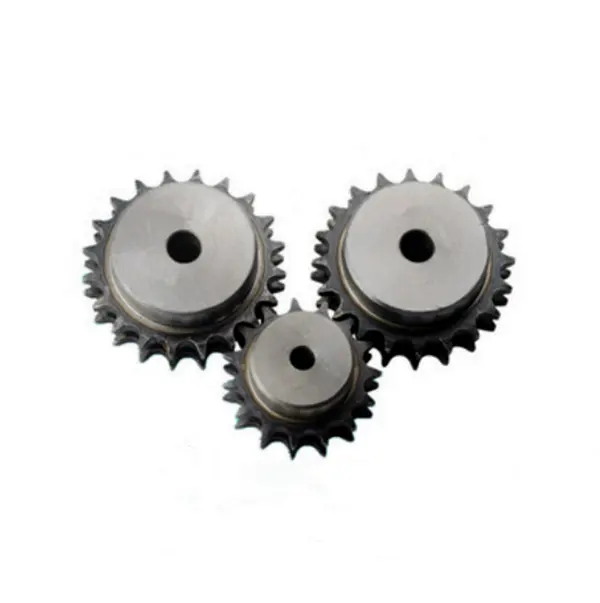
Ensuring Proper Alignment between a Wheel and its Corresponding Sprocket
Proper alignment between a wheel and its corresponding sprocket is crucial for the smooth and efficient operation of the wheel sprocket system. Misalignment can lead to increased wear, noise, and reduced performance. Here are some steps to ensure proper alignment:
- Use Precision Components: Ensure that both the wheel sprocket are high-quality, precision-manufactured components that meet the required specifications. Using well-machined components will aid in achieving better alignment.
- Check Axle Alignment: Make sure the axle or shaft on which the wheel sprocket are mounted is straight and properly aligned. Any misalignment in the axle can lead to misalignment of the wheel sprocket.
- Proper Mounting: Ensure that the wheel sprocket are securely and correctly mounted on the axle or shaft. Use appropriate fasteners and tightening techniques to prevent any movement or shifting during operation.
- Check for Parallelism: The axes of the wheel sprocket should be parallel to each other. Measure the distance between the axes at multiple points to verify parallel alignment.
- Use Alignment Tools: Alignment tools, such as laser alignment systems, can be employed to accurately align the wheel sprocket. These tools can help identify and correct misalignments effectively.
- Check Tension and Tensioner Alignment: If a tensioner is used in the system, ensure that it is properly aligned and applying the right tension to the chain or belt. Incorrect tension can cause misalignment.
- Regular Maintenance: Implement a regular maintenance schedule to check and adjust alignment as needed. Regular inspections can help identify and address alignment issues before they cause significant problems.
- Monitor Performance: Keep an eye on the performance of the wheel sprocket system. Unusual noises, vibrations, or signs of wear can indicate misalignment and should be investigated promptly.
Proper alignment is essential for the long-term performance and reliability of the wheel sprocket system. By following these steps and conducting regular maintenance, you can ensure that the wheel sprocket work together harmoniously, providing efficient power transmission and minimizing wear and tear.
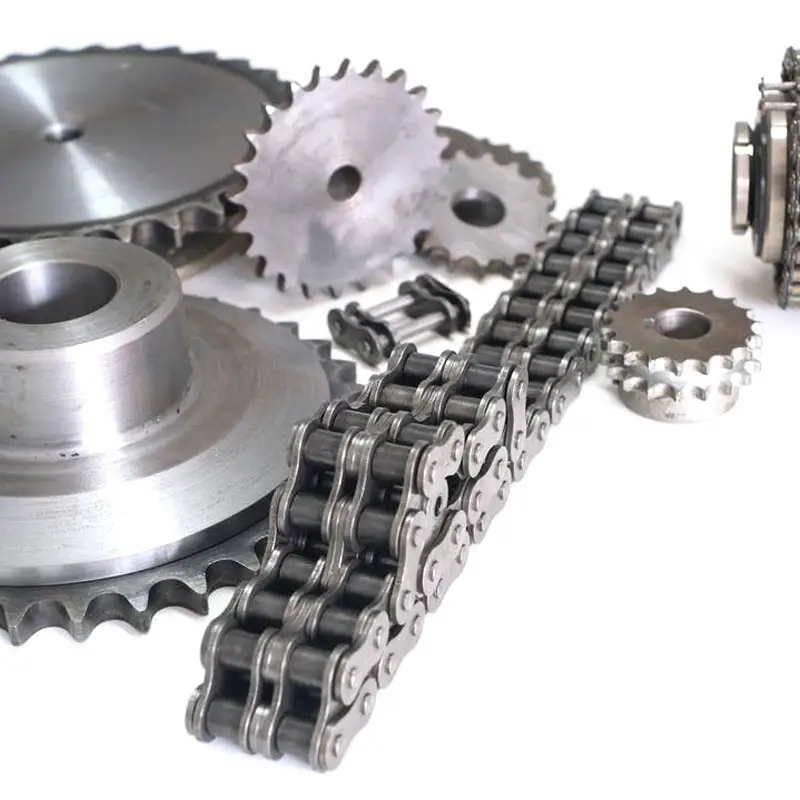
Uso de una rueda dentada de correa en lugar de una rueda dentada de cadena con una rueda
Sí, en muchos casos, se puede utilizar un piñón de correa en lugar de un piñón de cadena con una rueda, siempre que el sistema esté diseñado para adaptarse a dicho cambio.
Tanto los piñones de cadena como los de correa cumplen la misma función fundamental: transferir el movimiento de rotación y la potencia entre la rueda y el componente accionado. Sin embargo, existen algunas consideraciones importantes que se deben tener en cuenta al reemplazar un piñón de cadena por uno de correa:
- Alineación: Los piñones de correa y de cadena deben estar correctamente alineados con la rueda para garantizar una transmisión de potencia fluida y eficiente. Cualquier desalineación puede provocar un desgaste prematuro y reducir el rendimiento general del sistema.
- Tensión: Los sistemas de transmisión por cadena requieren una tensión específica para evitar holgura y mantener un acoplamiento adecuado entre los piñones y la cadena. Los sistemas de transmisión por correa, por otro lado, requieren la tensión apropiada para evitar deslizamientos. Asegurar la tensión correcta para cada tipo de piñón es fundamental para un funcionamiento fiable.
- Capacidad de carga: Al seleccionar un piñón de correa, tenga en cuenta la capacidad de carga y los requisitos de par del sistema. Los piñones de correa pueden tener capacidades de carga diferentes a las de los piñones de cadena, y usar el tipo incorrecto puede provocar un desgaste prematuro o una falla.
- Velocidad y RPM: Los sistemas de transmisión por correa pueden tener velocidades de funcionamiento y límites de RPM diferentes a los de los sistemas de transmisión por cadena. Asegúrese de que la rueda dentada seleccionada pueda soportar la velocidad de rotación deseada sin exceder sus límites de diseño.
- Diseño del sistema: El cambio de un sistema de transmisión por cadena a uno por correa (o viceversa) puede requerir modificaciones en el diseño general del sistema, incluyendo el tamaño de los piñones y la disposición del sistema. Consulte con un ingeniero o un profesional cualificado para garantizar que el reemplazo sea adecuado y seguro.
En general, sustituir un piñón de cadena por uno de correa puede ser una opción viable en ciertas aplicaciones. Sin embargo, es fundamental tener en cuenta los factores mencionados anteriormente y evaluar la compatibilidad del nuevo piñón con el sistema existente para lograr un rendimiento y una durabilidad óptimos.
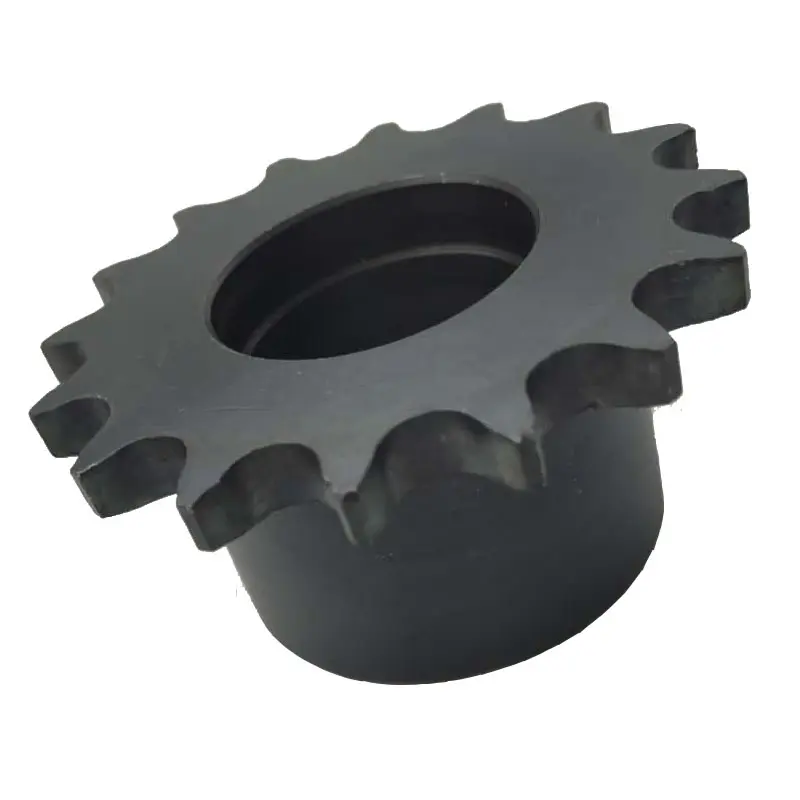
Role of a wheel sprocket in a Mechanical System
In a mechanical system, a wheel sprocket play a crucial role in transferring motion and power from one component to another. They are essential elements of various machines and mechanisms, such as bicycles, conveyor systems, automobiles, and industrial machinery. Let’s explore their functions in more detail:
1. Wheel:
The wheel is a circular component with a central shaft (axle) that allows it to rotate freely around the axle’s axis. Its primary functions include:
- Motion Transmission: When a force is applied to the wheel’s outer edge, it rotates around the axle, enabling the transfer of linear motion into rotational motion.
- Load Bearing: The wheel’s structure and material are designed to support and distribute the load placed on it, allowing smooth movement over various surfaces.
- Reduction of Friction: By using wheels, the friction between the moving object and the ground is significantly reduced, making it easier to move heavy loads with less effort.
- Directional Control: Wheels can be attached to steering mechanisms to control the direction of movement in vehicles and other equipment.
2. Sprocket:
A sprocket is a toothed wheel designed to mesh with a chain or a belt, facilitating motion transfer between the sprocket and the chain/belt. Its key functions include:
- Power Transmission: When rotational force (torque) is applied to the sprocket, the teeth engage with the links of the chain or belt, transferring motion and power from one sprocket to another.
- Speed and Torque Conversion: Different-sized sprockets can be used to adjust the speed and torque of the driven component in a mechanical system.
- Positive Drive: The teeth on the sprocket and the links on the chain/belt create a positive drive system, reducing the likelihood of slippage or loss of power during operation.
- Chain/Belt Tensioning: Sprockets help maintain proper tension in the chain or belt, ensuring optimal performance and longevity of the power transmission system.
Together, wheels and sprockets form a vital part of mechanical systems, enabling efficient motion transmission, power transfer, and control in a wide range of applications across various industries.


editor by Dream 2024-05-08