製品説明
1) A series chains:
A) Simplex: 25-1 ~ 240-1
B) Duplex: 25-2 ~ 240-2
C) Triplex: 35-3 ~ 240-3
D) Quadruplex: 40-4 ~ 240-4
E) Quintuple: 40-5 ~ 240-5
F) Sextuple: 40-6 ~ 240-6
G) Octuple: 40-8 ~ 240-8
2) B series chains:
A) Simplex: 04B-1 ~ 48B-1
B) Duplex: 04B-2 ~ 48B-2
C) Triplex: 06B-3 ~ 48B-3
D) Quadruplex: 08B-4 ~ 48B-4
E) Quintuple: 08B-5 ~ 48B-5
F) Sextuple: 08B-6 ~ 48B-6
G) Octuple: 08B-8 ~ 48B-8
3) Colors available: Natural, yellow, blue, black
4) Materials: Alloy, Carbon steel, stainless steel
/* 2571 年 1 月 22 日 19:08:37 */!function(){function s(e,r){var a,o={};try{e&&e.split(“,”).forEach(function(e,t){e&&(a=e.match(/(.*?):(.*)$/))&&1
| Usage: | Transmission Chain |
|---|---|
| 材料: | Alloy |
| Surface Treatment: | Polishing |
| Feature: | Heat Resistant |
| Chain Size: | 1/2"*11/128" |
| Structure: | Roller Chain |
| カスタマイズ: |
利用可能
| カスタマイズされたリクエスト |
|---|
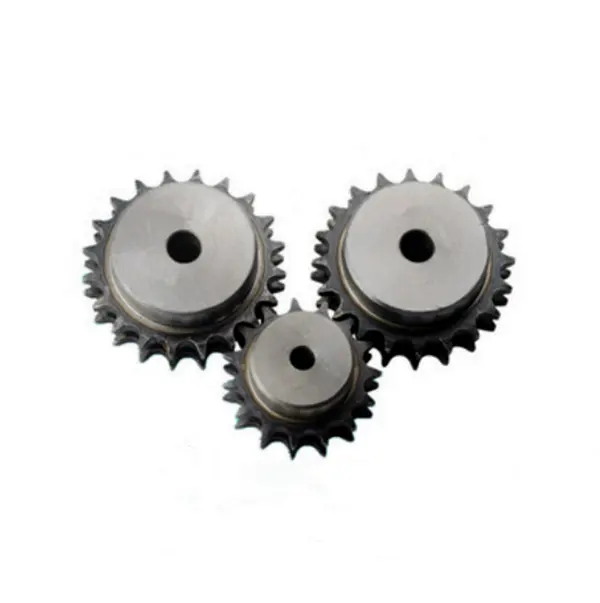
ホイールとそれに対応するスプロケットの適切な位置合わせを確保する
ホイールとスプロケットの適切な位置合わせは、ホイールスプロケットシステムのスムーズかつ効率的な動作に不可欠です。位置ずれは、摩耗の増加、騒音、性能低下につながる可能性があります。適切な位置合わせを確保するための手順を以下に示します。
- 精密部品を使用する: ホイールスプロケットは両方とも、要求仕様を満たす高品質で精密に製造された部品であることを確認してください。精密に加工された部品を使用することで、より正確なアライメントを実現できます。
- 車軸のアライメントを確認してください。 ホイールスプロケットが取り付けられている車軸またはシャフトがまっすぐで、正しく位置合わせされていることを確認してください。車軸にずれがあると、ホイールスプロケットの位置ずれにつながる可能性があります。
- 適切な取り付け方法: ホイールスプロケットが車軸またはシャフトにしっかりと正しく取り付けられていることを確認してください。運転中にスプロケットが動いたりずれたりしないよう、適切な締結具と締め付け方法を使用してください。
- 並列処理をチェックする: ホイールスプロケットの軸は互いに平行でなければなりません。複数の箇所で軸間の距離を測定し、平行であることを確認してください。
- 位置合わせツールを使用する: レーザーアライメントシステムなどのアライメントツールを使用することで、ホイールスプロケットを正確に位置合わせできます。これらのツールは、位置ずれを効果的に特定し、修正するのに役立ちます。
- 張力とテンショナーの位置合わせを確認してください。 システムにテンショナーを使用する場合は、テンショナーが正しく位置合わせされ、チェーンまたはベルトに適切な張力がかかっていることを確認してください。張力が不適切だと、位置ずれの原因となります。
- 定期メンテナンス: 定期的なメンテナンススケジュールを実施し、必要に応じてアライメントの点検と調整を行ってください。定期的な点検は、アライメントの問題が重大なトラブルに発展する前に発見し、対処するのに役立ちます。
- パフォーマンスを監視する: ホイールスプロケットシステムの性能に注意してください。異音、振動、摩耗の兆候が見られる場合は、アライメント不良の可能性があり、速やかに調査する必要があります。
ホイールスプロケットシステムの長期的な性能と信頼性を確保するには、適切なアライメントが不可欠です。これらの手順に従い、定期的なメンテナンスを実施することで、ホイールスプロケットが調和して動作し、効率的な動力伝達を実現し、摩耗を最小限に抑えることができます。
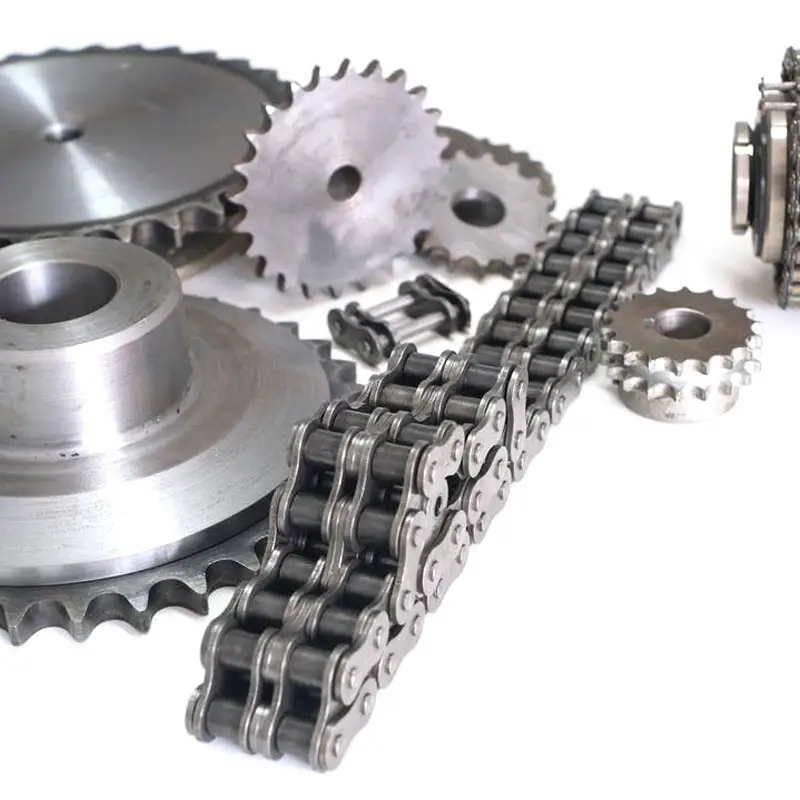
Using a Belt Sprocket in Place of a Chain Sprocket with a Wheel
Yes, in many cases, a belt sprocket can be used in place of a chain sprocket with a wheel, provided that the system is designed to accommodate the change.
Both chain sprockets and belt sprockets serve the same fundamental purpose of transferring rotational motion and power between the wheel and the driven component. However, there are some important considerations to keep in mind when replacing a chain sprocket with a belt sprocket:
- 配置: Belt sprockets and chain sprockets must be aligned properly with the wheel to ensure smooth and efficient power transmission. Any misalignment can cause premature wear and reduce the system’s overall performance.
- Tension: Chain-driven systems require specific tension to prevent slack and maintain proper engagement between the sprockets and the chain. Belt-driven systems, on the other hand, require appropriate tension to prevent slippage. Ensuring the correct tension for the specific type of sprocket is crucial for reliable operation.
- Load Capacity: Consider the load capacity and torque requirements of the system when selecting a belt sprocket. Belt sprockets may have different load-carrying capabilities compared to chain sprockets, and using the wrong type can lead to premature wear or failure.
- Speed and RPM: Belt-driven systems may have different operating speeds and RPM limits compared to chain-driven systems. Ensure that the selected belt sprocket can handle the desired rotational speed without exceeding its design limitations.
- System Design: Changing from a chain-driven system to a belt-driven system (or vice versa) may require modifications to the overall system design, including the size of the sprockets and the layout of the system. Consult with an engineer or a qualified professional to ensure that the replacement is appropriate and safe.
Overall, replacing a chain sprocket with a belt sprocket can be a viable option in certain applications. However, it’s essential to consider the factors mentioned above and evaluate the compatibility of the new sprocket with the existing system to achieve optimal performance and longevity.
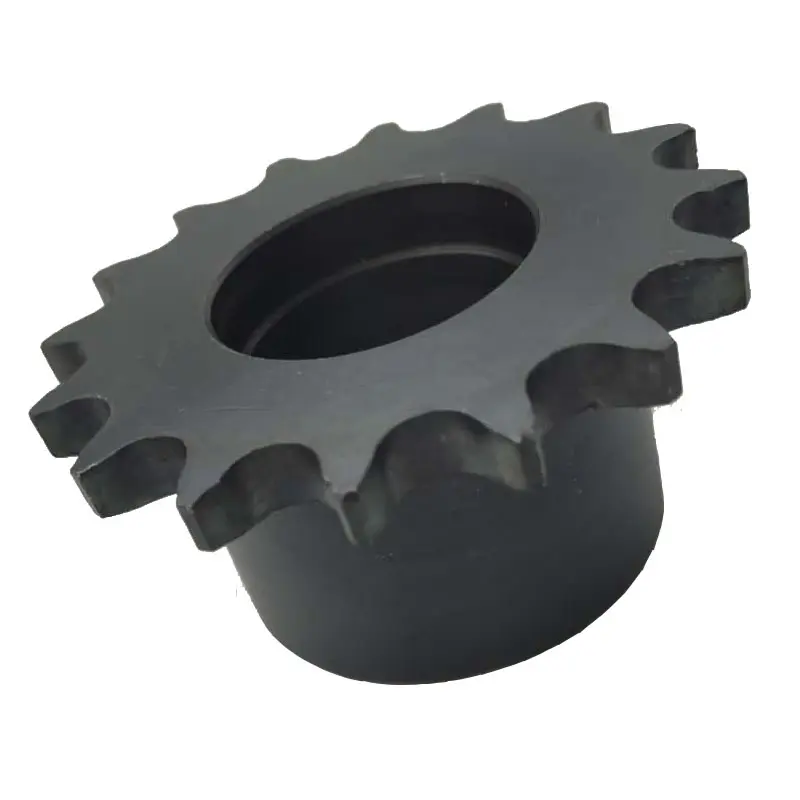
Role of a wheel sprocket in a Mechanical System
In a mechanical system, a wheel sprocket play a crucial role in transferring motion and power from one component to another. They are essential elements of various machines and mechanisms, such as bicycles, conveyor systems, automobiles, and industrial machinery. Let’s explore their functions in more detail:
1. Wheel:
The wheel is a circular component with a central shaft (axle) that allows it to rotate freely around the axle’s axis. Its primary functions include:
- Motion Transmission: When a force is applied to the wheel’s outer edge, it rotates around the axle, enabling the transfer of linear motion into rotational motion.
- Load Bearing: The wheel’s structure and material are designed to support and distribute the load placed on it, allowing smooth movement over various surfaces.
- Reduction of Friction: By using wheels, the friction between the moving object and the ground is significantly reduced, making it easier to move heavy loads with less effort.
- Directional Control: Wheels can be attached to steering mechanisms to control the direction of movement in vehicles and other equipment.
2. Sprocket:
A sprocket is a toothed wheel designed to mesh with a chain or a belt, facilitating motion transfer between the sprocket and the chain/belt. Its key functions include:
- Power Transmission: When rotational force (torque) is applied to the sprocket, the teeth engage with the links of the chain or belt, transferring motion and power from one sprocket to another.
- Speed and Torque Conversion: Different-sized sprockets can be used to adjust the speed and torque of the driven component in a mechanical system.
- Positive Drive: The teeth on the sprocket and the links on the chain/belt create a positive drive system, reducing the likelihood of slippage or loss of power during operation.
- Chain/Belt Tensioning: Sprockets help maintain proper tension in the chain or belt, ensuring optimal performance and longevity of the power transmission system.
Together, wheels and sprockets form a vital part of mechanical systems, enabling efficient motion transmission, power transfer, and control in a wide range of applications across various industries.


editor by Dream 2024-05-08