उत्पाद वर्णन
The High Quality Made to Order Roller Chain Sprocket Supply (Standard America, KANA, Europen, ANSI Standard or made to drawing)
उत्पाद वर्णन
1. Produce strictly in accordance with standard dimension
2. Material: 1045 Steel / Alloy Steel / Stainless Steel 304 & 316
3. Standard: ANSI, DIN, JINS, ISO, KANA,Standard America or customer’s drawing
4. Pilot bore, finished bore, taper bore and special bore.
5. Bright surface / high precision / Blacking /Electrophoretic-Coated
6. Advanced heat treatment and surface treatment craft
7. Best quality and competitive price.
8. Welcome OEM / ODM
9. Processing Equipment: Hobbing machine, Slotting machine, CNC lathes and other equipment.
10. Sprocket Models: Contains special sprocket according to customer’s drawings, standard sprocket (American standard and metric).
विस्तृत तस्वीरें
View more products,please click here…
कंपनी प्रोफाइल
| मानक या गैर-मानक: | मानक |
|---|---|
| आवेदन पत्र: | Machinery, Agricultural Machinery, Industry |
| कठोरता: | कठोरता |
| 60: | 3/4" |
| 80: | 1" |
| 50: | 5/8" |
| उदाहरण: |
US$ 0/Piece
1 पीस (न्यूनतम ऑर्डर) | |
|---|
| अनुकूलन: |
उपलब्ध
| अनुकूलित अनुरोध |
|---|
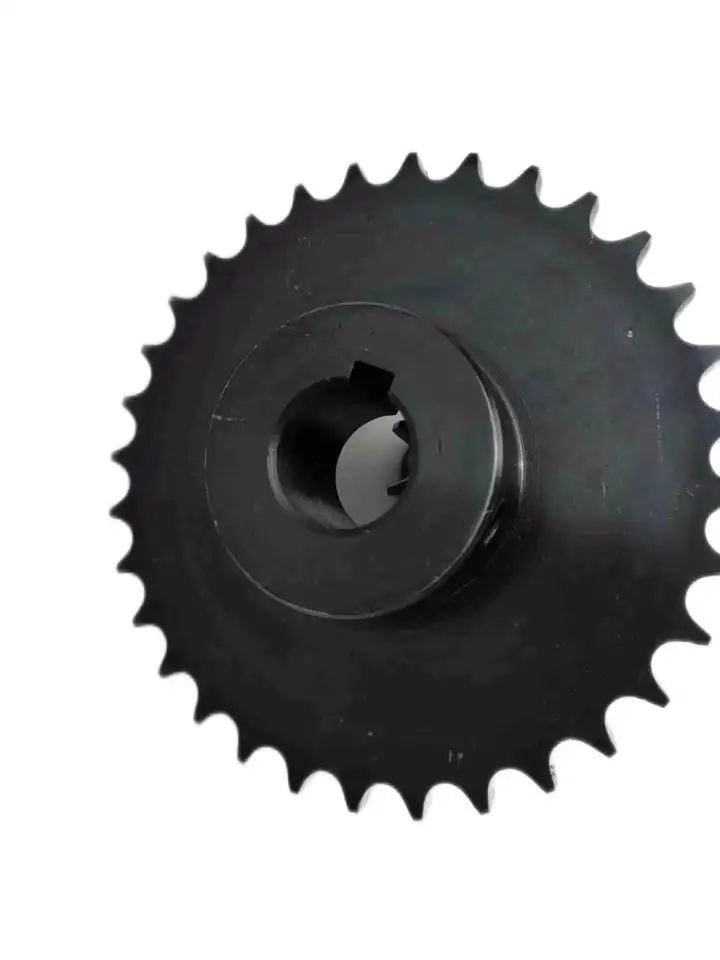
Calculating Torque Requirements for a wheel sprocket Assembly
Calculating the torque requirements for a wheel sprocket assembly involves considering various factors that contribute to the torque load. The torque requirement is crucial for selecting the appropriate motor or power source to drive the system effectively. Here’s a step-by-step guide:
- 1. Determine the Load Torque: Identify the torque required to overcome the resistance or load in the system. This includes the torque needed to move the load, overcome friction, and accelerate the load if applicable.
- 2. Identify the Sprocket Radius: Measure the radius of the sprocket (distance from the center of the sprocket to the point of contact with the chain or belt).
- 3. Calculate the Tension in the Chain or Belt: If using a chain or belt drive, calculate the tension in the chain or belt. Tension affects the torque required for power transmission.
- 4. Account for Efficiency Losses: Consider the efficiency of the system. Not all the input power will be converted into output power due to friction and other losses. Account for this efficiency in your calculations.
- 5. Use the Torque Equation: The torque (T) can be calculated using the following equation:
T = (Load Torque × Sprocket Radius) ÷ (Efficiency × Tension)
It’s essential to use consistent units of measurement (e.g., Newton meters or foot-pounds) for all values in the equation.
Remember that real-world conditions may vary, and it’s advisable to add a safety factor to your calculated torque requirements to ensure the system can handle unexpected peak loads or variations in operating conditions.
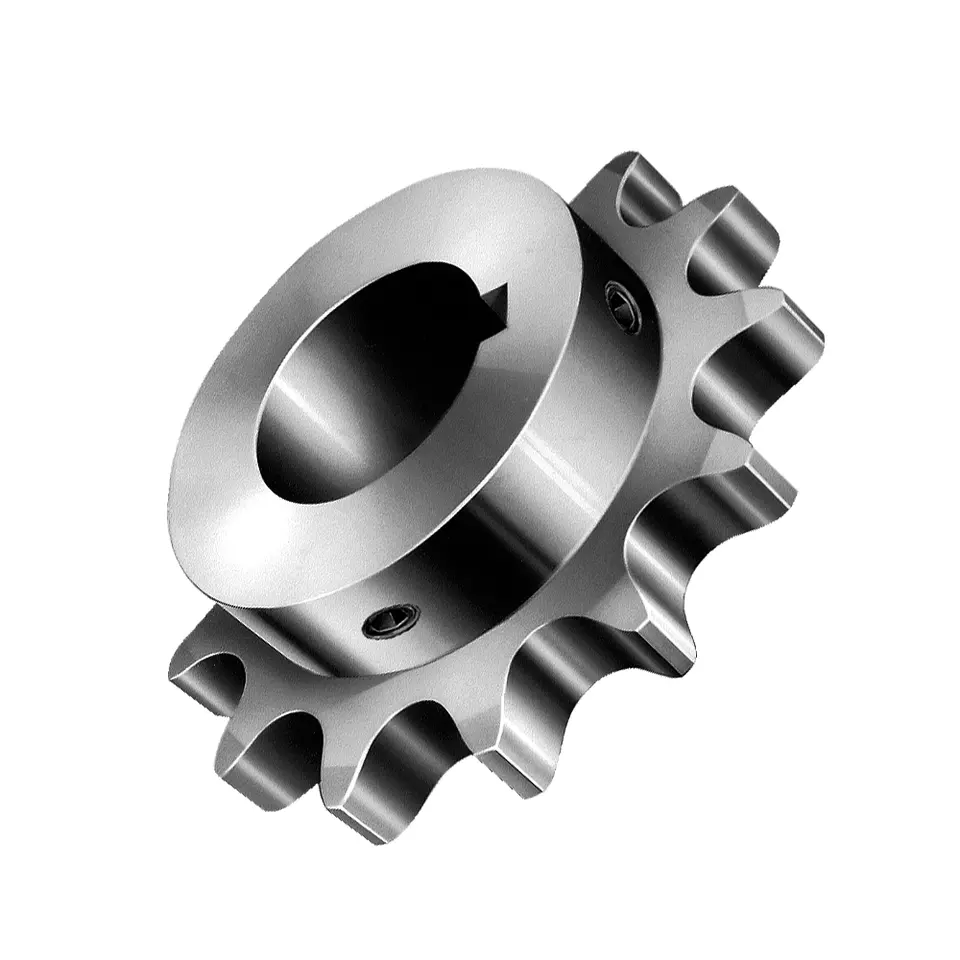
Choosing the Right Material for a Sprocket to Ensure Longevity
Choosing the right material for a sprocket is crucial to ensure its longevity and reliable performance in a given application. The material selection depends on various factors such as load, speed, operating environment, and budget. Here are some common materials used for sprockets and their considerations:
- इस्पात: Steel sprockets are widely used in a wide range of applications due to their excellent strength, durability, and wear resistance. They are suitable for heavy-duty and high-speed operations. Different grades of steel, such as carbon steel or alloy steel, offer varying levels of hardness and strength.
- स्टेनलेस स्टील: Stainless steel sprockets are preferred when corrosion resistance is essential, making them suitable for applications where the sprocket is exposed to moisture, chemicals, or outdoor elements. They are commonly used in food processing, pharmaceutical, and marine industries.
- Cast Iron: Cast iron sprockets offer good wear resistance and are often used in low to medium-speed applications. They are cost-effective and provide excellent performance in less demanding conditions.
- प्लास्टिक: Plastic sprockets are lightweight and corrosion-resistant. They are commonly used in applications where low noise, self-lubrication, and resistance to chemicals or moisture are required. However, they have limited load-carrying capacity and may not be suitable for heavy-duty applications.
- एल्युमिनियम: Aluminum sprockets are lightweight and commonly used in applications where weight reduction is critical, such as aerospace and certain machinery. However, they are not as durable as steel sprockets and are not suitable for high loads or harsh environments.
When choosing the right material for a sprocket, consider the following:
- Load Capacity: Select a material that can handle the expected loads in the application without deforming or wearing excessively.
- Speed: Higher speeds may require materials with better heat dissipation and wear resistance.
- Environment: Consider factors such as moisture, chemicals, temperature, and outdoor exposure. Choose a material with suitable corrosion resistance and resilience to environmental conditions.
- Maintenance: Some materials may require more frequent maintenance or lubrication to ensure longevity.
- Cost: Balance the material’s performance with the budget constraints of the project.
It’s essential to consult with sprocket manufacturers or material experts to determine the most appropriate material for your specific application. They can provide valuable insights and recommendations based on your requirements, helping to ensure the longevity and optimal performance of the sprocket in your machinery or equipment.
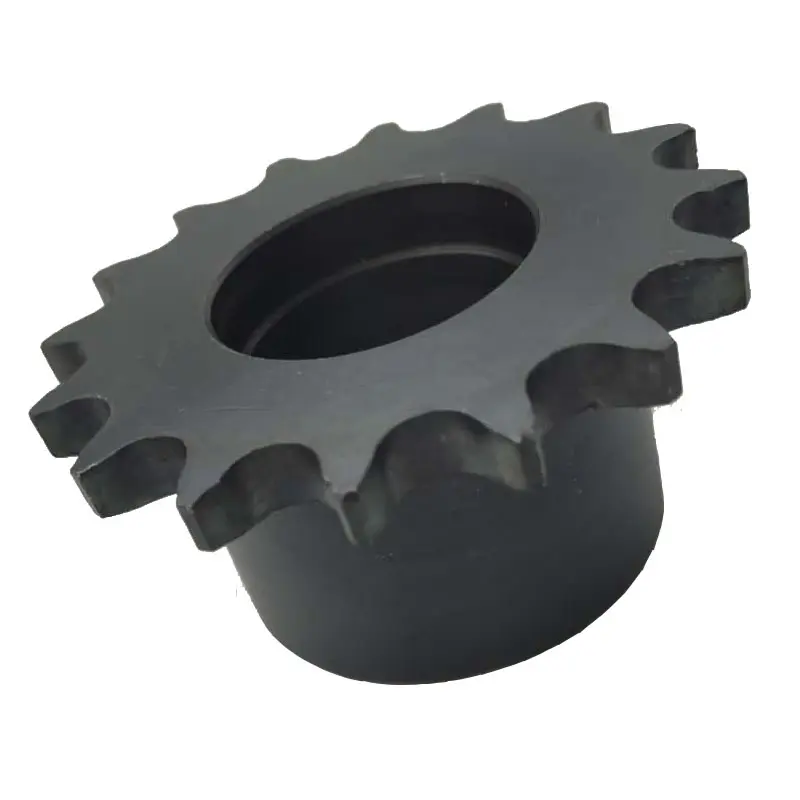
किसी यांत्रिक प्रणाली में व्हील स्प्रोकेट की भूमिका
किसी भी यांत्रिक प्रणाली में, पहिए का स्प्रोकेट एक घटक से दूसरे घटक तक गति और शक्ति स्थानांतरित करने में महत्वपूर्ण भूमिका निभाता है। ये विभिन्न मशीनों और तंत्रों, जैसे साइकिल, कन्वेयर सिस्टम, ऑटोमोबाइल और औद्योगिक मशीनरी के आवश्यक तत्व हैं। आइए इनके कार्यों को और विस्तार से जानें:
1. पहिया:
पहिया एक वृत्ताकार घटक है जिसमें एक केंद्रीय शाफ्ट (धुरी) होती है जो इसे धुरी के अक्ष के चारों ओर स्वतंत्र रूप से घूमने की अनुमति देती है। इसके प्राथमिक कार्यों में शामिल हैं:
- गति संचरण: जब पहिये के बाहरी किनारे पर बल लगाया जाता है, तो वह धुरी के चारों ओर घूमता है, जिससे रेखीय गति घूर्णी गति में परिवर्तित हो जाती है।
- लोड बियरिंग: पहिए की संरचना और सामग्री को इस प्रकार डिजाइन किया गया है कि वह उस पर पड़ने वाले भार को सहारा दे सके और वितरित कर सके, जिससे विभिन्न सतहों पर सुचारू रूप से गति संभव हो सके।
- घर्षण में कमी: पहियों का उपयोग करने से, गतिमान वस्तु और जमीन के बीच घर्षण काफी कम हो जाता है, जिससे कम प्रयास से भारी सामान को स्थानांतरित करना आसान हो जाता है।
- दिशात्मक नियंत्रण: पहियों को स्टीयरिंग तंत्र से जोड़ा जा सकता है ताकि वाहनों और अन्य उपकरणों में गति की दिशा को नियंत्रित किया जा सके।
2. स्प्रोकेट:
स्प्रोकेट एक दांतेदार पहिया होता है जिसे चेन या बेल्ट के साथ जुड़ने के लिए डिज़ाइन किया गया है, जिससे स्प्रोकेट और चेन/बेल्ट के बीच गति का स्थानांतरण सुगम होता है। इसके प्रमुख कार्यों में शामिल हैं:
- विद्युत पारेषण: जब स्प्रोकेट पर घूर्णी बल (टॉर्क) लगाया जाता है, तो उसके दांत चेन या बेल्ट की कड़ियों के साथ जुड़ जाते हैं, जिससे गति और शक्ति एक स्प्रोकेट से दूसरे स्प्रोकेट में स्थानांतरित हो जाती है।
- गति और टॉर्क रूपांतरण: किसी यांत्रिक प्रणाली में संचालित घटक की गति और टॉर्क को समायोजित करने के लिए विभिन्न आकार के स्प्रोकेट का उपयोग किया जा सकता है।
- सकारात्मक प्रेरणा: स्प्रोकेट पर लगे दांत और चेन/बेल्ट पर लगे लिंक एक सकारात्मक ड्राइव सिस्टम बनाते हैं, जिससे संचालन के दौरान फिसलन या शक्ति हानि की संभावना कम हो जाती है।
- चेन/बेल्ट तनाव: स्पॉकेट चेन या बेल्ट में उचित तनाव बनाए रखने में मदद करते हैं, जिससे पावर ट्रांसमिशन सिस्टम का इष्टतम प्रदर्शन और दीर्घायु सुनिश्चित होती है।
पहिए और स्प्रोकेट मिलकर यांत्रिक प्रणालियों का एक महत्वपूर्ण हिस्सा बनाते हैं, जो विभिन्न उद्योगों में अनुप्रयोगों की एक विस्तृत श्रृंखला में कुशल गति संचरण, शक्ति हस्तांतरण और नियंत्रण को सक्षम बनाते हैं।


editor by CX 2023-10-17