製品説明
The High Quality Made to Order Roller Chain Sprocket Supply (Standard America, KANA, Europen, ANSI Standard or made to drawing)
製品説明
1. Produce strictly in accordance with standard dimension
2. Material: 1045 Steel / Alloy Steel / Stainless Steel 304 & 316
3. Standard: ANSI, DIN, JINS, ISO, KANA,Standard America or customer’s drawing
4. Pilot bore, finished bore, taper bore and special bore.
5. Bright surface / high precision / Blacking /Electrophoretic-Coated
6. Advanced heat treatment and surface treatment craft
7. Best quality and competitive price.
8. Welcome OEM / ODM
9. Processing Equipment: Hobbing machine, Slotting machine, CNC lathes and other equipment.
10. Sprocket Models: Contains special sprocket according to customer’s drawings, standard sprocket (American standard and metric).
詳細写真
View more products,please click here…
会社概要
| Standard Or Nonstandard: | 標準 |
|---|---|
| 応用: | Machinery, Agricultural Machinery, Industry |
| Hardness: | 硬度 |
| 60: | 3/4" |
| 80: | 1" |
| 50: | 5/8" |
| サンプル: |
US$ 0/Piece
1個(最小注文数) | |
|---|
| カスタマイズ: |
利用可能
| カスタマイズされたリクエスト |
|---|
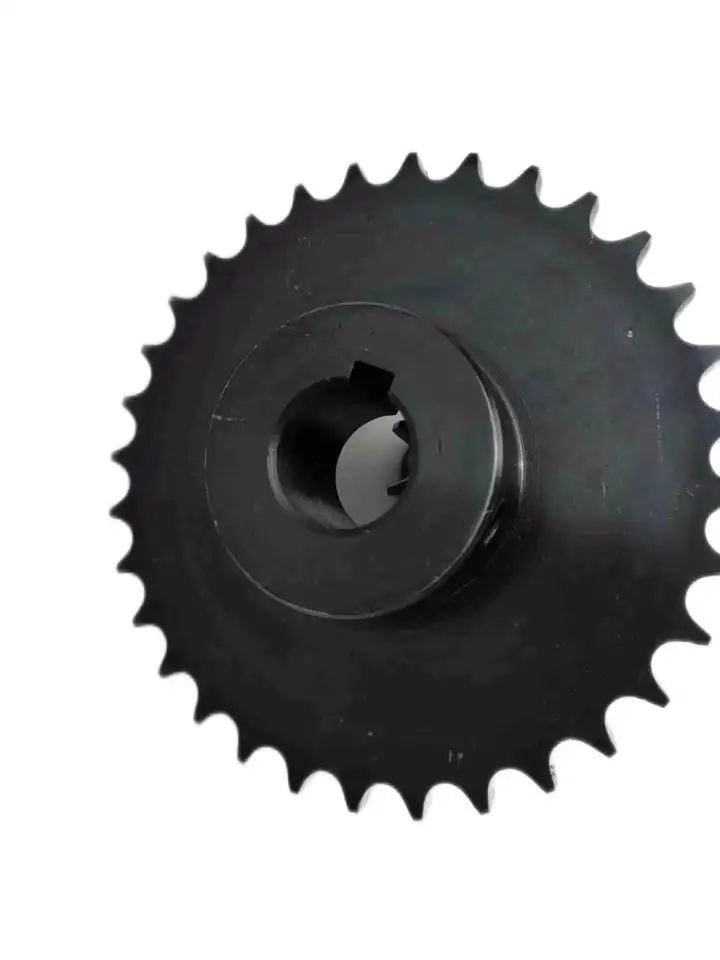
ホイールスプロケットアセンブリのトルク要件の計算
ホイールスプロケットアセンブリのトルク要件を計算するには、トルク負荷に影響を与えるさまざまな要因を考慮する必要があります。トルク要件は、システムを効果的に駆動するための適切なモーターまたは電源を選択する上で非常に重要です。以下に、手順を追って説明します。
- 1. 負荷トルクを決定する: システム内の抵抗または負荷を克服するために必要なトルクを特定します。これには、負荷を移動させるために必要なトルク、摩擦を克服するために必要なトルク、および該当する場合は負荷を加速させるために必要なトルクが含まれます。
- 2. スプロケットの半径を特定する: スプロケットの半径(スプロケットの中心からチェーンまたはベルトとの接触点までの距離)を測定します。
- 3. チェーンまたはベルトの張力を計算する: チェーン駆動またはベルト駆動を使用する場合は、チェーンまたはベルトの張力を計算してください。張力は動力伝達に必要なトルクに影響します。
- 4. 効率損失を考慮する: システムの効率性を考慮してください。摩擦やその他の損失により、入力電力のすべてが出力電力に変換されるわけではありません。計算にはこの効率性を考慮してください。
- 5. トルク方程式を使用する: トルク(T)は、以下の式を用いて計算できます。
T = (負荷トルク × スプロケット半径) ÷ (効率 × 張力)
方程式内のすべての値には、一貫した測定単位(例えば、ニュートンメートルやフィートポンド)を使用することが不可欠です。
実際の状況は異なる場合があることを念頭に置き、システムが予期せぬピーク負荷や運転条件の変動に対応できるよう、計算したトルク要件に安全率を加えることをお勧めします。
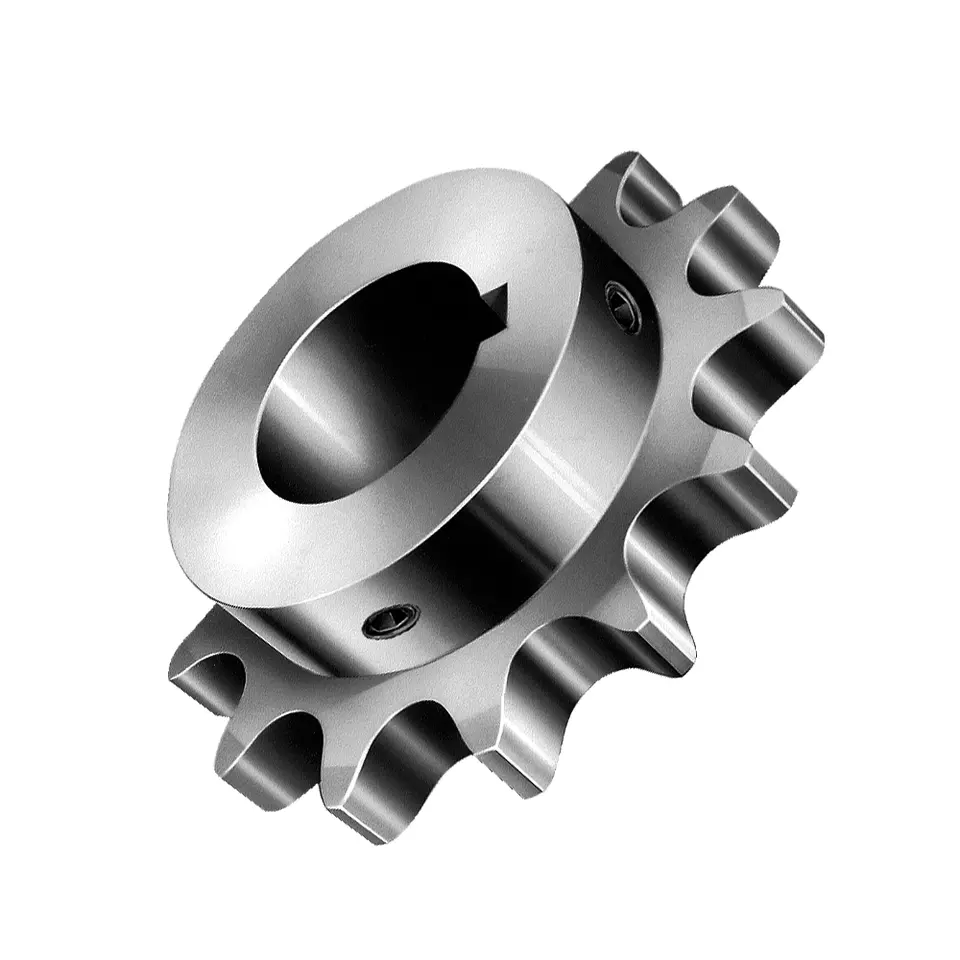
Choosing the Right Material for a Sprocket to Ensure Longevity
Choosing the right material for a sprocket is crucial to ensure its longevity and reliable performance in a given application. The material selection depends on various factors such as load, speed, operating environment, and budget. Here are some common materials used for sprockets and their considerations:
- 鋼鉄: Steel sprockets are widely used in a wide range of applications due to their excellent strength, durability, and wear resistance. They are suitable for heavy-duty and high-speed operations. Different grades of steel, such as carbon steel or alloy steel, offer varying levels of hardness and strength.
- ステンレス鋼: Stainless steel sprockets are preferred when corrosion resistance is essential, making them suitable for applications where the sprocket is exposed to moisture, chemicals, or outdoor elements. They are commonly used in food processing, pharmaceutical, and marine industries.
- Cast Iron: Cast iron sprockets offer good wear resistance and are often used in low to medium-speed applications. They are cost-effective and provide excellent performance in less demanding conditions.
- プラスチック: Plastic sprockets are lightweight and corrosion-resistant. They are commonly used in applications where low noise, self-lubrication, and resistance to chemicals or moisture are required. However, they have limited load-carrying capacity and may not be suitable for heavy-duty applications.
- アルミニウム: Aluminum sprockets are lightweight and commonly used in applications where weight reduction is critical, such as aerospace and certain machinery. However, they are not as durable as steel sprockets and are not suitable for high loads or harsh environments.
When choosing the right material for a sprocket, consider the following:
- Load Capacity: Select a material that can handle the expected loads in the application without deforming or wearing excessively.
- Speed: Higher speeds may require materials with better heat dissipation and wear resistance.
- Environment: Consider factors such as moisture, chemicals, temperature, and outdoor exposure. Choose a material with suitable corrosion resistance and resilience to environmental conditions.
- Maintenance: Some materials may require more frequent maintenance or lubrication to ensure longevity.
- Cost: Balance the material’s performance with the budget constraints of the project.
It’s essential to consult with sprocket manufacturers or material experts to determine the most appropriate material for your specific application. They can provide valuable insights and recommendations based on your requirements, helping to ensure the longevity and optimal performance of the sprocket in your machinery or equipment.
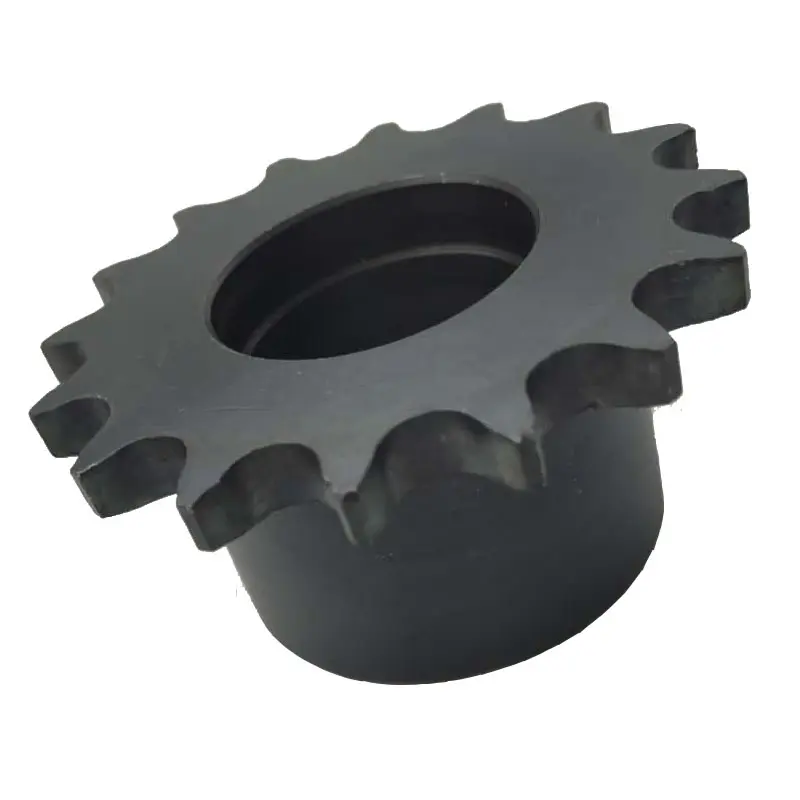
Role of a wheel sprocket in a Mechanical System
In a mechanical system, a wheel sprocket play a crucial role in transferring motion and power from one component to another. They are essential elements of various machines and mechanisms, such as bicycles, conveyor systems, automobiles, and industrial machinery. Let’s explore their functions in more detail:
1. Wheel:
The wheel is a circular component with a central shaft (axle) that allows it to rotate freely around the axle’s axis. Its primary functions include:
- Motion Transmission: When a force is applied to the wheel’s outer edge, it rotates around the axle, enabling the transfer of linear motion into rotational motion.
- Load Bearing: The wheel’s structure and material are designed to support and distribute the load placed on it, allowing smooth movement over various surfaces.
- Reduction of Friction: By using wheels, the friction between the moving object and the ground is significantly reduced, making it easier to move heavy loads with less effort.
- Directional Control: Wheels can be attached to steering mechanisms to control the direction of movement in vehicles and other equipment.
2. Sprocket:
A sprocket is a toothed wheel designed to mesh with a chain or a belt, facilitating motion transfer between the sprocket and the chain/belt. Its key functions include:
- Power Transmission: When rotational force (torque) is applied to the sprocket, the teeth engage with the links of the chain or belt, transferring motion and power from one sprocket to another.
- Speed and Torque Conversion: Different-sized sprockets can be used to adjust the speed and torque of the driven component in a mechanical system.
- Positive Drive: The teeth on the sprocket and the links on the chain/belt create a positive drive system, reducing the likelihood of slippage or loss of power during operation.
- Chain/Belt Tensioning: Sprockets help maintain proper tension in the chain or belt, ensuring optimal performance and longevity of the power transmission system.
Together, wheels and sprockets form a vital part of mechanical systems, enabling efficient motion transmission, power transfer, and control in a wide range of applications across various industries.


editor by CX 2023-10-17