Produktbeschreibung
The High Quality Made to Order Roller Chain Sprocket Supply (Standard America, KANA, Europen, ANSI Standard or made to drawing)
Produktbeschreibung
1. Produce strictly in accordance with standard dimension
2. Material: 1045 Steel / Alloy Steel / Stainless Steel 304 & 316
3. Standard: ANSI, DIN, JINS, ISO, KANA,Standard America or customer’s drawing
4. Pilot bore, finished bore, taper bore and special bore.
5. Bright surface / high precision / Blacking /Electrophoretic-Coated
6. Advanced heat treatment and surface treatment craft
7. Best quality and competitive price.
8. Welcome OEM / ODM
9. Processing Equipment: Hobbing machine, Slotting machine, CNC lathes and other equipment.
10. Sprocket Models: Contains special sprocket according to customer’s drawings, standard sprocket (American standard and metric).
Detaillierte Fotos
View more products,please click here…
Unternehmensprofil
| Standard Or Nonstandard: | Standard |
|---|---|
| Anwendung: | Machinery, Agricultural Machinery, Industry |
| Hardness: | Härte |
| 60: | 3/4" |
| 80: | 1" |
| 50: | 5/8" |
| Proben: |
US$ 0/Piece
1 Stück (Mindestbestellmenge) | |
|---|
| Anpassung: |
Verfügbar
| Kundenspezifische Anfrage |
|---|
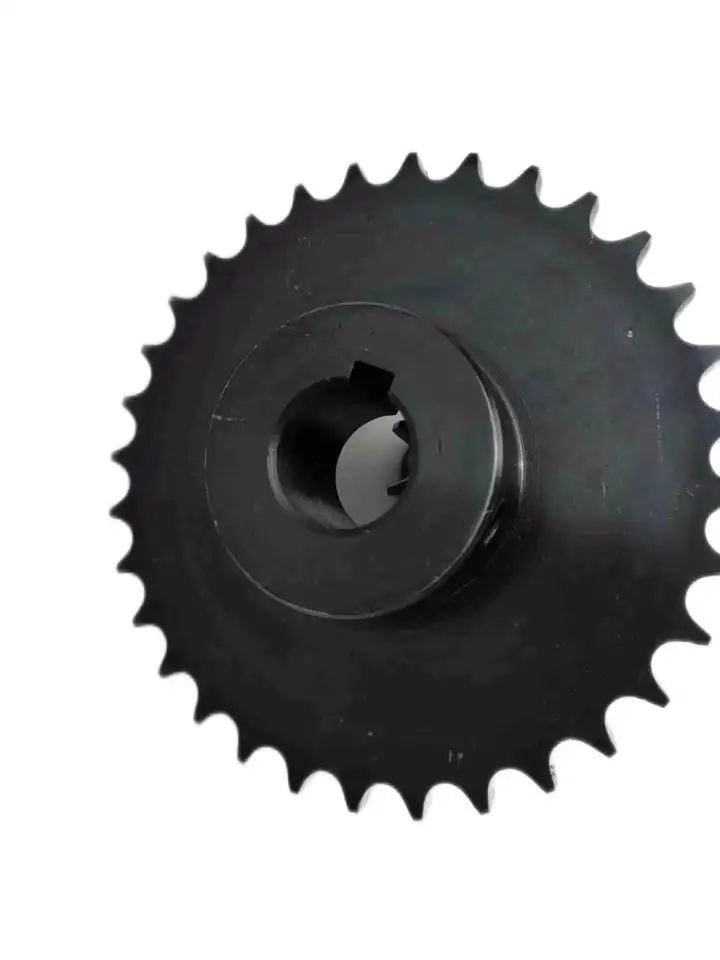
Berechnung der Drehmomentanforderungen für eine Radkettenradbaugruppe
Die Berechnung des Drehmomentbedarfs für eine Rad-Kettenrad-Baugruppe erfordert die Berücksichtigung verschiedener Faktoren, die zur Drehmomentbelastung beitragen. Der Drehmomentbedarf ist entscheidend für die Auswahl des geeigneten Motors oder der geeigneten Energiequelle für den effektiven Antrieb des Systems. Hier ist eine Schritt-für-Schritt-Anleitung:
- 1. Bestimmen Sie das Lastmoment: Ermitteln Sie das Drehmoment, das erforderlich ist, um den Widerstand oder die Last im System zu überwinden. Dies umfasst das Drehmoment, das benötigt wird, um die Last zu bewegen, die Reibung zu überwinden und gegebenenfalls die Last zu beschleunigen.
- 2. Den Kettenradradius bestimmen: Messen Sie den Radius des Kettenrads (Abstand von der Mitte des Kettenrads bis zum Berührungspunkt mit der Kette oder dem Riemen).
- 3. Berechnen Sie die Spannung in der Kette oder im Riemen: Bei Verwendung eines Ketten- oder Riemenantriebs muss die Ketten- bzw. Riemenspannung berechnet werden. Die Spannung beeinflusst das für die Kraftübertragung erforderliche Drehmoment.
- 4. Effizienzverluste berücksichtigen: Berücksichtigen Sie den Wirkungsgrad des Systems. Aufgrund von Reibung und anderen Verlusten wird nicht die gesamte Eingangsleistung in Ausgangsleistung umgewandelt. Beziehen Sie diesen Wirkungsgrad in Ihre Berechnungen mit ein.
- 5. Drehmomentgleichung anwenden: Das Drehmoment (T) kann mit folgender Gleichung berechnet werden:
T = (Lastmoment × Kettenradradius) ÷ (Wirkungsgrad × Spannung)
Es ist unerlässlich, für alle Werte in der Gleichung einheitliche Maßeinheiten zu verwenden (z. B. Newtonmeter oder Fußpfund).
Bedenken Sie, dass die realen Bedingungen variieren können, und es ist ratsam, den berechneten Drehmomentanforderungen einen Sicherheitsfaktor hinzuzufügen, um sicherzustellen, dass das System unerwartete Lastspitzen oder Schwankungen der Betriebsbedingungen bewältigen kann.
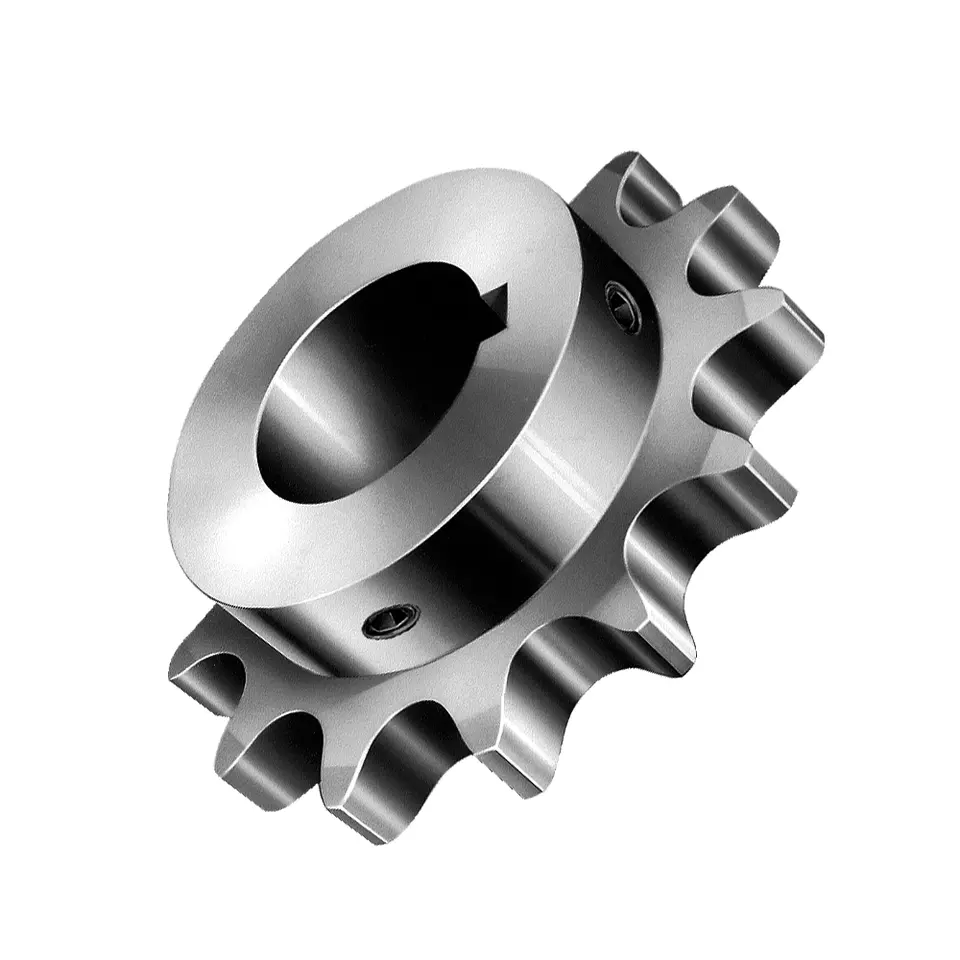
Choosing the Right Material for a Sprocket to Ensure Longevity
Choosing the right material for a sprocket is crucial to ensure its longevity and reliable performance in a given application. The material selection depends on various factors such as load, speed, operating environment, and budget. Here are some common materials used for sprockets and their considerations:
- Stahl: Steel sprockets are widely used in a wide range of applications due to their excellent strength, durability, and wear resistance. They are suitable for heavy-duty and high-speed operations. Different grades of steel, such as carbon steel or alloy steel, offer varying levels of hardness and strength.
- Edelstahl: Stainless steel sprockets are preferred when corrosion resistance is essential, making them suitable for applications where the sprocket is exposed to moisture, chemicals, or outdoor elements. They are commonly used in food processing, pharmaceutical, and marine industries.
- Cast Iron: Cast iron sprockets offer good wear resistance and are often used in low to medium-speed applications. They are cost-effective and provide excellent performance in less demanding conditions.
- Kunststoffe: Plastic sprockets are lightweight and corrosion-resistant. They are commonly used in applications where low noise, self-lubrication, and resistance to chemicals or moisture are required. However, they have limited load-carrying capacity and may not be suitable for heavy-duty applications.
- Aluminium: Aluminum sprockets are lightweight and commonly used in applications where weight reduction is critical, such as aerospace and certain machinery. However, they are not as durable as steel sprockets and are not suitable for high loads or harsh environments.
When choosing the right material for a sprocket, consider the following:
- Load Capacity: Select a material that can handle the expected loads in the application without deforming or wearing excessively.
- Speed: Higher speeds may require materials with better heat dissipation and wear resistance.
- Environment: Consider factors such as moisture, chemicals, temperature, and outdoor exposure. Choose a material with suitable corrosion resistance and resilience to environmental conditions.
- Maintenance: Some materials may require more frequent maintenance or lubrication to ensure longevity.
- Cost: Balance the material’s performance with the budget constraints of the project.
It’s essential to consult with sprocket manufacturers or material experts to determine the most appropriate material for your specific application. They can provide valuable insights and recommendations based on your requirements, helping to ensure the longevity and optimal performance of the sprocket in your machinery or equipment.
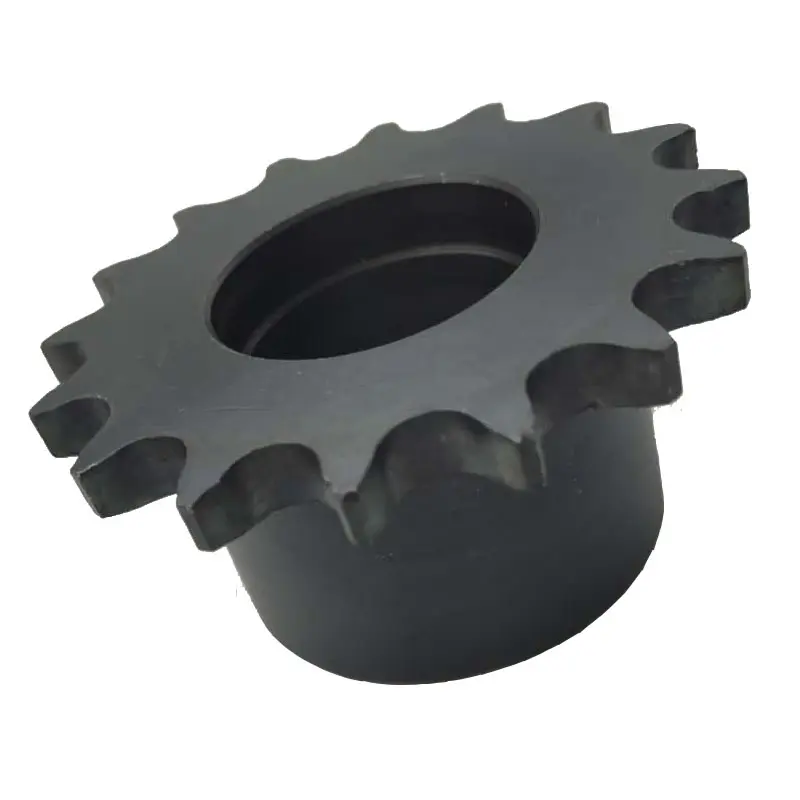
Role of a wheel sprocket in a Mechanical System
In a mechanical system, a wheel sprocket play a crucial role in transferring motion and power from one component to another. They are essential elements of various machines and mechanisms, such as bicycles, conveyor systems, automobiles, and industrial machinery. Let’s explore their functions in more detail:
1. Wheel:
The wheel is a circular component with a central shaft (axle) that allows it to rotate freely around the axle’s axis. Its primary functions include:
- Motion Transmission: When a force is applied to the wheel’s outer edge, it rotates around the axle, enabling the transfer of linear motion into rotational motion.
- Load Bearing: The wheel’s structure and material are designed to support and distribute the load placed on it, allowing smooth movement over various surfaces.
- Reduction of Friction: By using wheels, the friction between the moving object and the ground is significantly reduced, making it easier to move heavy loads with less effort.
- Directional Control: Wheels can be attached to steering mechanisms to control the direction of movement in vehicles and other equipment.
2. Sprocket:
A sprocket is a toothed wheel designed to mesh with a chain or a belt, facilitating motion transfer between the sprocket and the chain/belt. Its key functions include:
- Power Transmission: When rotational force (torque) is applied to the sprocket, the teeth engage with the links of the chain or belt, transferring motion and power from one sprocket to another.
- Speed and Torque Conversion: Different-sized sprockets can be used to adjust the speed and torque of the driven component in a mechanical system.
- Positive Drive: The teeth on the sprocket and the links on the chain/belt create a positive drive system, reducing the likelihood of slippage or loss of power during operation.
- Chain/Belt Tensioning: Sprockets help maintain proper tension in the chain or belt, ensuring optimal performance and longevity of the power transmission system.
Together, wheels and sprockets form a vital part of mechanical systems, enabling efficient motion transmission, power transfer, and control in a wide range of applications across various industries.


editor by CX 2023-10-17