产品描述
The High Quality Made to Order Roller Chain Sprocket Supply (Standard America, KANA, Europen, ANSI Standard or made to drawing)
产品描述
1. Produce strictly in accordance with standard dimension
2. Material: 1045 Steel / Alloy Steel / Stainless Steel 304 & 316
3. Standard: ANSI, DIN, JINS, ISO, KANA,Standard America or customer’s drawing
4. Pilot bore, finished bore, taper bore and special bore.
5. Bright surface / high precision / Blacking /Electrophoretic-Coated
6. Advanced heat treatment and surface treatment craft
7. Best quality and competitive price.
8. Welcome OEM / ODM
9. Processing Equipment: Hobbing machine, Slotting machine, CNC lathes and other equipment.
10. Sprocket Models: Contains special sprocket according to customer’s drawings, standard sprocket (American standard and metric).
详细照片
View more products,please click here…
公司简介
| Standard Or Nonstandard: | 标准 |
|---|---|
| 应用: | Machinery, Agricultural Machinery, Industry |
| Hardness: | 硬度 |
| 60: | 3/4" |
| 80: | 1" |
| 50: | 5/8" |
| 示例: |
US$ 0/Piece
1 件(最低订购量) | |
|---|
| 定制化: |
可用的
| 定制请求 |
|---|
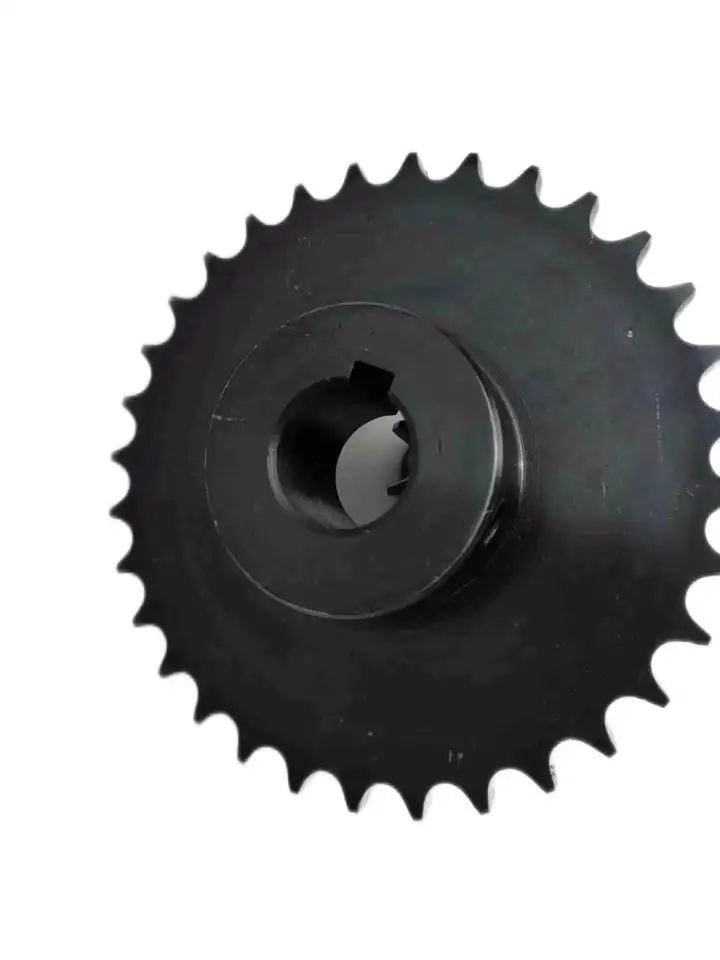
计算车轮链轮组件的扭矩需求
计算轮毂组件的扭矩需求需要考虑影响扭矩负载的各种因素。扭矩需求对于选择合适的电机或动力源以有效驱动系统至关重要。以下是分步指南:
- 1. 确定负载扭矩: 确定克服系统阻力或负载所需的扭矩。这包括移动负载、克服摩擦力以及(如适用)加速负载所需的扭矩。
- 2. 确定链轮半径: 测量链轮半径(从链轮中心到与链条或皮带接触点的距离)。
- 3. 计算链条或皮带的张力: 如果使用链条或皮带传动,请计算链条或皮带的张力。张力会影响动力传输所需的扭矩。
- 4. 考虑效率损失: 考虑系统的效率。由于摩擦和其他损耗,并非所有输入功率都能转化为输出功率。在计算中考虑这种效率损失。
- 5. 使用扭矩方程: 扭矩(T)可使用以下公式计算:
T = (负载扭矩 × 链轮半径) ÷ (效率 × 张力)
方程中的所有值都必须使用一致的计量单位(例如,牛顿米或英尺磅)。
请记住,实际情况可能会有所不同,建议在计算扭矩需求时增加安全系数,以确保系统能够应对意外的峰值负载或运行条件的变化。
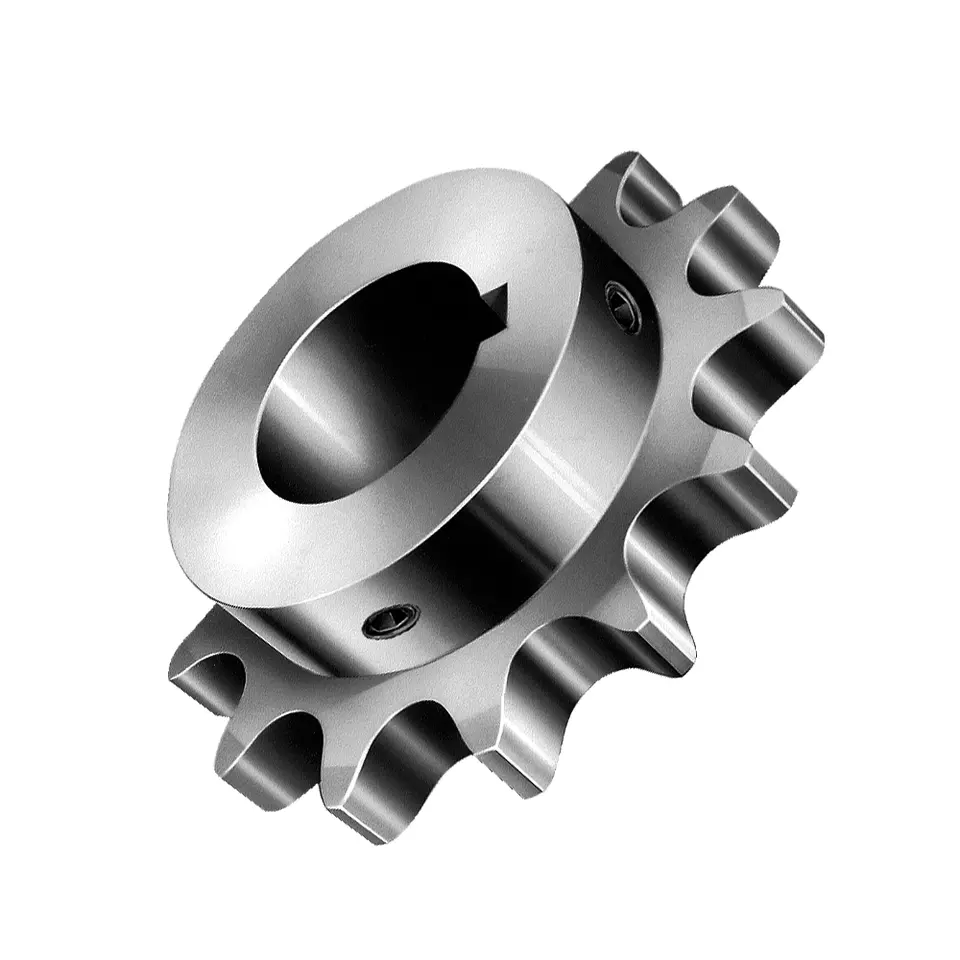
Choosing the Right Material for a Sprocket to Ensure Longevity
Choosing the right material for a sprocket is crucial to ensure its longevity and reliable performance in a given application. The material selection depends on various factors such as load, speed, operating environment, and budget. Here are some common materials used for sprockets and their considerations:
- 钢: Steel sprockets are widely used in a wide range of applications due to their excellent strength, durability, and wear resistance. They are suitable for heavy-duty and high-speed operations. Different grades of steel, such as carbon steel or alloy steel, offer varying levels of hardness and strength.
- 不锈钢: Stainless steel sprockets are preferred when corrosion resistance is essential, making them suitable for applications where the sprocket is exposed to moisture, chemicals, or outdoor elements. They are commonly used in food processing, pharmaceutical, and marine industries.
- Cast Iron: Cast iron sprockets offer good wear resistance and are often used in low to medium-speed applications. They are cost-effective and provide excellent performance in less demanding conditions.
- 塑料: Plastic sprockets are lightweight and corrosion-resistant. They are commonly used in applications where low noise, self-lubrication, and resistance to chemicals or moisture are required. However, they have limited load-carrying capacity and may not be suitable for heavy-duty applications.
- 铝: Aluminum sprockets are lightweight and commonly used in applications where weight reduction is critical, such as aerospace and certain machinery. However, they are not as durable as steel sprockets and are not suitable for high loads or harsh environments.
When choosing the right material for a sprocket, consider the following:
- Load Capacity: Select a material that can handle the expected loads in the application without deforming or wearing excessively.
- Speed: Higher speeds may require materials with better heat dissipation and wear resistance.
- Environment: Consider factors such as moisture, chemicals, temperature, and outdoor exposure. Choose a material with suitable corrosion resistance and resilience to environmental conditions.
- Maintenance: Some materials may require more frequent maintenance or lubrication to ensure longevity.
- Cost: Balance the material’s performance with the budget constraints of the project.
It’s essential to consult with sprocket manufacturers or material experts to determine the most appropriate material for your specific application. They can provide valuable insights and recommendations based on your requirements, helping to ensure the longevity and optimal performance of the sprocket in your machinery or equipment.
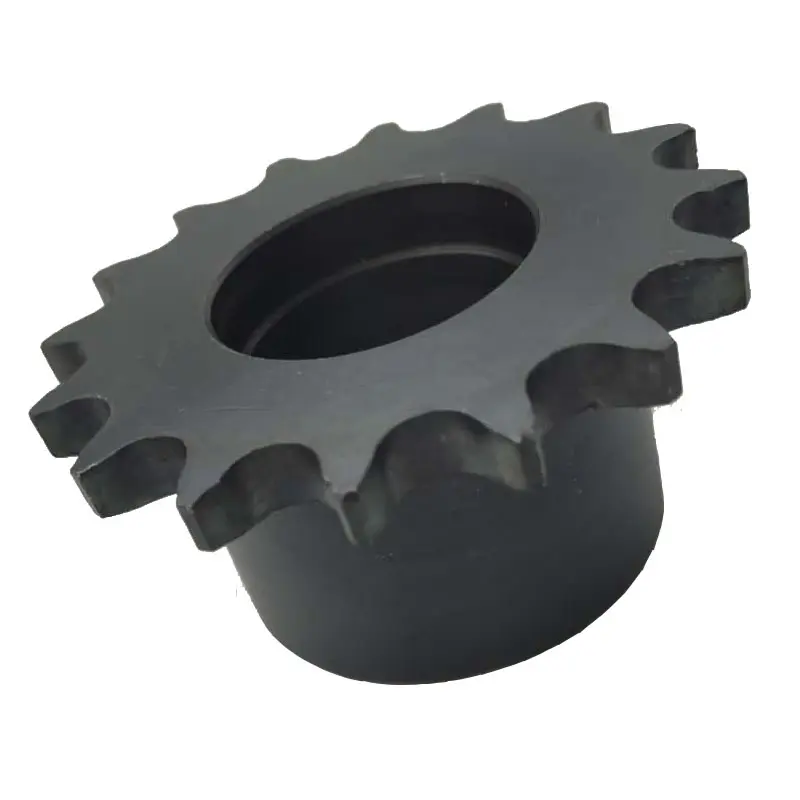
车轮链轮在机械系统中的作用
在机械系统中,轮毂在将运动和动力从一个部件传递到另一个部件的过程中起着至关重要的作用。它们是各种机器和机构的基本组成部分,例如自行车、传送系统、汽车和工业机械。让我们更详细地了解一下它们的功能:
1. 轮子:
车轮是一个圆形部件,其中心轴(轮轴)使其能够绕轮轴轴线自由旋转。其主要功能包括:
- 运动传输: 当对车轮外缘施加力时,车轮会绕轴旋转,从而将线性运动转化为旋转运动。
- 承重能力: 车轮的结构和材料经过精心设计,能够支撑和分散施加在其上的载荷,从而在各种表面上平稳移动。
- 减少摩擦: 使用轮子可以显著减少移动物体与地面之间的摩擦力,从而更容易、更轻松地移动重物。
- 方向控制: 车轮可以安装在转向机构上,以控制车辆和其他设备的移动方向。
2. 链轮:
链轮是一种带齿的轮子,设计用于与链条或皮带啮合,从而实现链轮与链条/皮带之间的动力传递。其主要功能包括:
- 动力传输: 当旋转力(扭矩)施加到链轮上时,链轮的齿会与链条或皮带的链节啮合,将运动和动力从一个链轮传递到另一个链轮。
- 速度和扭矩转换: 在机械系统中,可以使用不同尺寸的链轮来调节被驱动部件的速度和扭矩。
- 积极驱动力: 链轮上的齿和链条/皮带上的链节形成正向驱动系统,降低了运行过程中打滑或动力损失的可能性。
- 链条/皮带张紧: 链轮有助于保持链条或皮带的适当张力,从而确保动力传输系统的最佳性能和使用寿命。
车轮和链轮共同构成机械系统的重要组成部分,能够在各个行业的各种应用中实现高效的运动传输、动力传递和控制。


editor by CX 2023-10-17