Mô tả sản phẩm
The High Quality Made to Order Roller Chain Sprocket Supply (Standard America, KANA, Europen, ANSI Standard or made to drawing)
Mô tả sản phẩm
1. Produce strictly in accordance with standard dimension
2. Material: 1045 Steel / Alloy Steel / Stainless Steel 304 & 316
3. Standard: ANSI, DIN, JINS, ISO, KANA,Standard America or customer’s drawing
4. Pilot bore, finished bore, taper bore and special bore.
5. Bright surface / high precision / Blacking /Electrophoretic-Coated
6. Advanced heat treatment and surface treatment craft
7. Best quality and competitive price.
8. Welcome OEM / ODM
9. Processing Equipment: Hobbing machine, Slotting machine, CNC lathes and other equipment.
10. Sprocket Models: Contains special sprocket according to customer’s drawings, standard sprocket (American standard and metric).
Ảnh chi tiết
View more products,please click here…
Company Profile
| Tiêu chuẩn hay không tiêu chuẩn: | Tiêu chuẩn |
|---|---|
| Ứng dụng: | Machinery, Agricultural Machinery, Industry |
| Độ cứng: | Độ cứng |
| 60: | 3/4" |
| 80: | 1" |
| 50: | 5/8" |
| Mẫu: |
US$ 0/Piece
1 chiếc (Số lượng đặt tối thiểu) | |
|---|
| Tùy chỉnh: |
Có sẵn
| Yêu cầu tùy chỉnh |
|---|
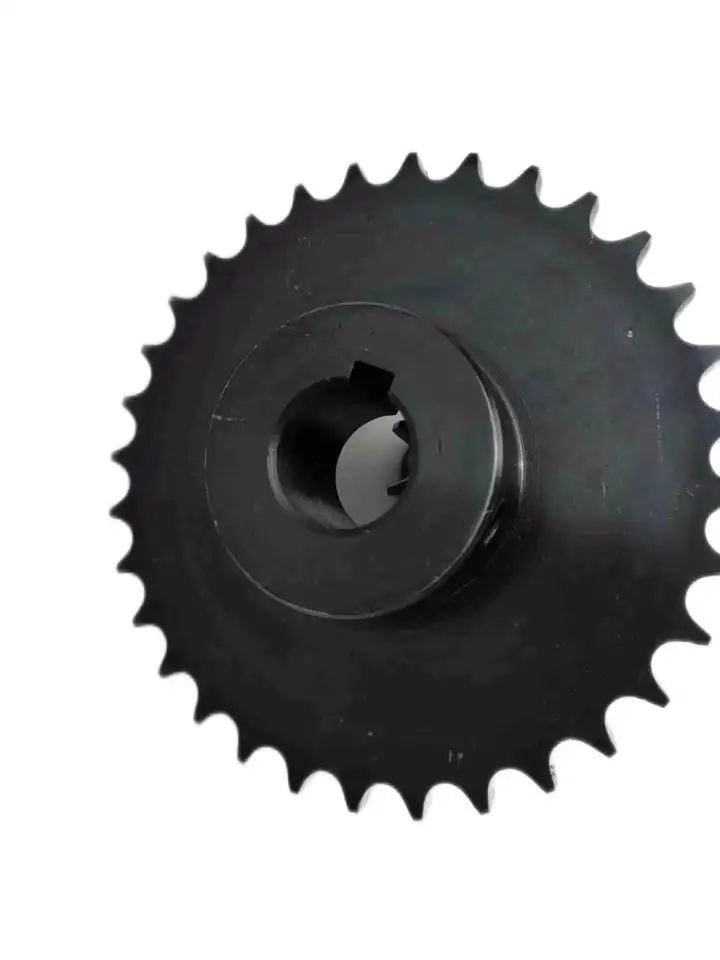
Tính toán mô-men xoắn cần thiết cho cụm nhông bánh răng
Việc tính toán mô-men xoắn cần thiết cho cụm nhông xích bánh răng liên quan đến việc xem xét nhiều yếu tố góp phần tạo nên tải trọng mô-men xoắn. Mô-men xoắn cần thiết rất quan trọng để lựa chọn động cơ hoặc nguồn điện phù hợp nhằm vận hành hệ thống một cách hiệu quả. Dưới đây là hướng dẫn từng bước:
- 1. Xác định mô-men xoắn tải: Xác định mômen xoắn cần thiết để khắc phục lực cản hoặc tải trọng trong hệ thống. Điều này bao gồm mômen xoắn cần thiết để di chuyển tải trọng, khắc phục ma sát và gia tốc tải trọng (nếu có).
- 2. Xác định bán kính đĩa xích: Đo bán kính của đĩa xích (khoảng cách từ tâm đĩa xích đến điểm tiếp xúc với xích hoặc dây đai).
- 3. Tính toán lực căng trong dây xích hoặc dây đai: Nếu sử dụng hệ truyền động bằng xích hoặc dây đai, hãy tính toán lực căng của xích hoặc dây đai. Lực căng ảnh hưởng đến mô-men xoắn cần thiết để truyền lực.
- 4. Tính đến các tổn thất hiệu quả: Hãy xem xét hiệu suất của hệ thống. Không phải toàn bộ công suất đầu vào sẽ được chuyển đổi thành công suất đầu ra do ma sát và các tổn thất khác. Hãy tính đến hiệu suất này trong các phép tính của bạn.
- 5. Sử dụng phương trình mômen xoắn: Mômen xoắn (T) có thể được tính bằng phương trình sau:
T = (Mô-men xoắn tải × Bán kính đĩa xích) ÷ (Hiệu suất × Lực căng)
Điều cần thiết là phải sử dụng các đơn vị đo lường nhất quán (ví dụ: Newton mét hoặc foot-pound) cho tất cả các giá trị trong phương trình.
Hãy nhớ rằng điều kiện thực tế có thể khác nhau, và tốt nhất là nên thêm hệ số an toàn vào yêu cầu mô-men xoắn đã tính toán để đảm bảo hệ thống có thể xử lý các tải trọng đỉnh bất ngờ hoặc sự thay đổi trong điều kiện hoạt động.
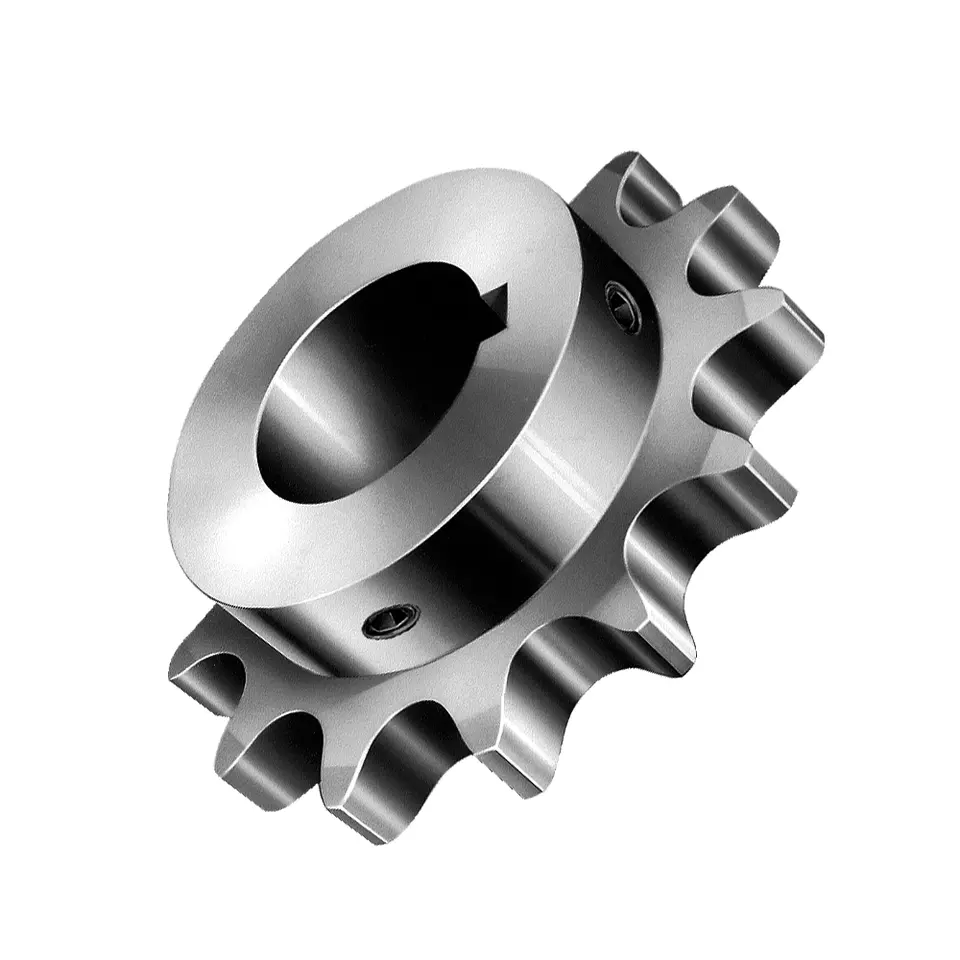
Choosing the Right Material for a Sprocket to Ensure Longevity
Choosing the right material for a sprocket is crucial to ensure its longevity and reliable performance in a given application. The material selection depends on various factors such as load, speed, operating environment, and budget. Here are some common materials used for sprockets and their considerations:
- Steel: Steel sprockets are widely used in a wide range of applications due to their excellent strength, durability, and wear resistance. They are suitable for heavy-duty and high-speed operations. Different grades of steel, such as carbon steel or alloy steel, offer varying levels of hardness and strength.
- Stainless Steel: Stainless steel sprockets are preferred when corrosion resistance is essential, making them suitable for applications where the sprocket is exposed to moisture, chemicals, or outdoor elements. They are commonly used in food processing, pharmaceutical, and marine industries.
- Cast Iron: Cast iron sprockets offer good wear resistance and are often used in low to medium-speed applications. They are cost-effective and provide excellent performance in less demanding conditions.
- Plastics: Plastic sprockets are lightweight and corrosion-resistant. They are commonly used in applications where low noise, self-lubrication, and resistance to chemicals or moisture are required. However, they have limited load-carrying capacity and may not be suitable for heavy-duty applications.
- Aluminum: Aluminum sprockets are lightweight and commonly used in applications where weight reduction is critical, such as aerospace and certain machinery. However, they are not as durable as steel sprockets and are not suitable for high loads or harsh environments.
When choosing the right material for a sprocket, consider the following:
- Load Capacity: Select a material that can handle the expected loads in the application without deforming or wearing excessively.
- Speed: Higher speeds may require materials with better heat dissipation and wear resistance.
- Environment: Consider factors such as moisture, chemicals, temperature, and outdoor exposure. Choose a material with suitable corrosion resistance and resilience to environmental conditions.
- Maintenance: Some materials may require more frequent maintenance or lubrication to ensure longevity.
- Cost: Balance the material’s performance with the budget constraints of the project.
It’s essential to consult with sprocket manufacturers or material experts to determine the most appropriate material for your specific application. They can provide valuable insights and recommendations based on your requirements, helping to ensure the longevity and optimal performance of the sprocket in your machinery or equipment.
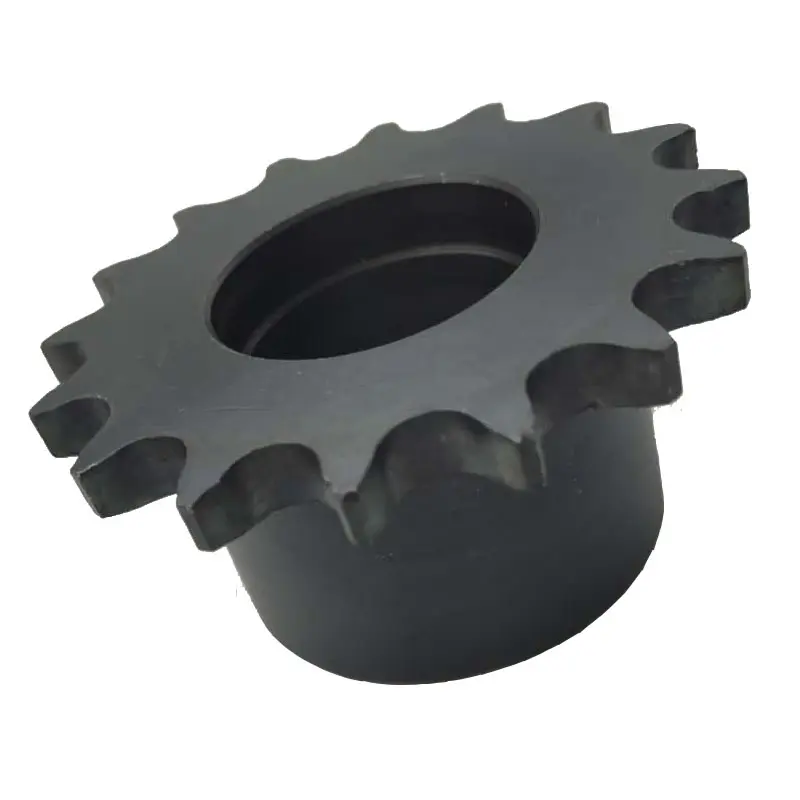
Role of a wheel sprocket in a Mechanical System
In a mechanical system, a wheel sprocket play a crucial role in transferring motion and power from one component to another. They are essential elements of various machines and mechanisms, such as bicycles, conveyor systems, automobiles, and industrial machinery. Let’s explore their functions in more detail:
1. Wheel:
The wheel is a circular component with a central shaft (axle) that allows it to rotate freely around the axle’s axis. Its primary functions include:
- Motion Transmission: When a force is applied to the wheel’s outer edge, it rotates around the axle, enabling the transfer of linear motion into rotational motion.
- Load Bearing: The wheel’s structure and material are designed to support and distribute the load placed on it, allowing smooth movement over various surfaces.
- Reduction of Friction: By using wheels, the friction between the moving object and the ground is significantly reduced, making it easier to move heavy loads with less effort.
- Directional Control: Wheels can be attached to steering mechanisms to control the direction of movement in vehicles and other equipment.
2. Sprocket:
A sprocket is a toothed wheel designed to mesh with a chain or a belt, facilitating motion transfer between the sprocket and the chain/belt. Its key functions include:
- Power Transmission: When rotational force (torque) is applied to the sprocket, the teeth engage with the links of the chain or belt, transferring motion and power from one sprocket to another.
- Speed and Torque Conversion: Different-sized sprockets can be used to adjust the speed and torque of the driven component in a mechanical system.
- Positive Drive: The teeth on the sprocket and the links on the chain/belt create a positive drive system, reducing the likelihood of slippage or loss of power during operation.
- Chain/Belt Tensioning: Sprockets help maintain proper tension in the chain or belt, ensuring optimal performance and longevity of the power transmission system.
Together, wheels and sprockets form a vital part of mechanical systems, enabling efficient motion transmission, power transfer, and control in a wide range of applications across various industries.


editor by CX 2023-10-17