Penerangan Produk
America, Kana, Europe, ANSI Standard or Made to Order Sprockets for Roller Chain and Conveyor Chain
Penerangan Produk
1. Produce strictly in accordance with standard dimension
2. Material: 1045 Steel / Alloy Steel / Stainless Steel 304 & 316
3. Standard: ANSI, DIN, JINS, ISO, KANA,Standard America or customer’s drawing
4. Pilot bore, finished bore, taper bore and special bore.
5. Bright surface / high precision / Blacking /Electrophoretic-Coated
6. Advanced heat treatment and surface treatment craft
7. Best quality and competitive price.
8. Welcome OEM / ODM
9. Processing Equipment: Hobbing machine, Slotting machine, CNC lathes and other equipment.
10. Sprocket Models: Contains special sprocket according to customer’s drawings, standard sprocket (American standard and metric).
Detailed Photos
View more products,please click here…
Company Profile
| Standard Or Nonstandard: | Piawai |
|---|---|
| Application: | Machinery, Agricultural Machinery, Industry |
| Kekerasan: | Kekerasan |
| 60: | 3/4" |
| 80: | 1" |
| 50: | 5/8" |
| Sampel: |
US$ 0/Piece
1 Keping (Pesanan Minimum) | |
|---|
| Penyesuaian: |
Tersedia
| Permintaan Tersuai |
|---|
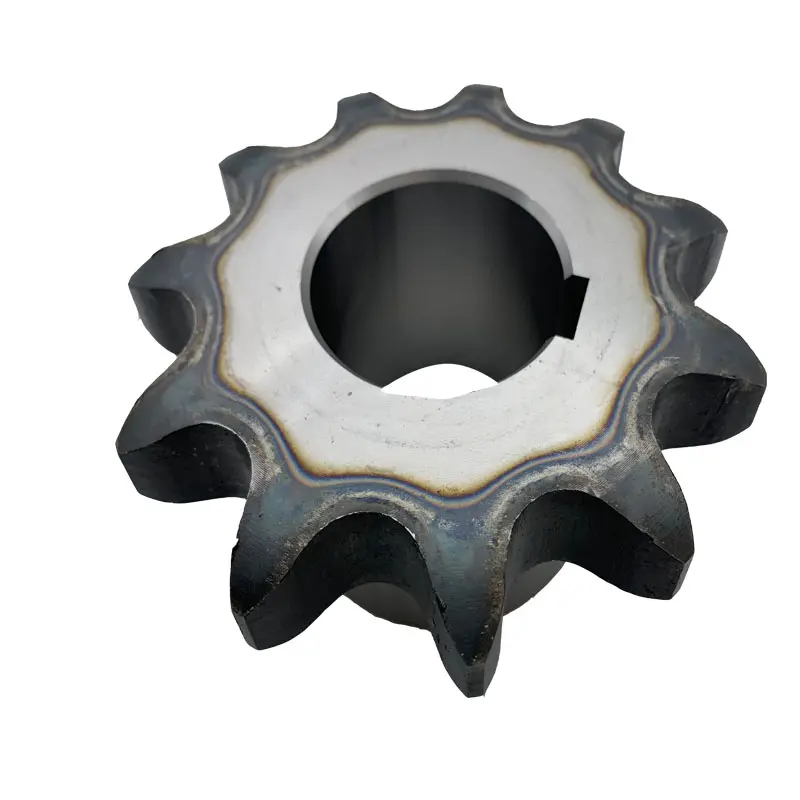
Alternatives to Chain Sprockets in wheel sprocket Configuration
While chain sprockets are commonly used in wheel sprocket configurations, there are alternative methods for power transmission in various applications:
- Gear and Gear Rack: Gears are toothed wheels that mesh with each other to transmit power. Instead of using a chain and sprocket, gears can directly engage with each other, offering a smooth and efficient power transfer. Gear racks, which are linear gears, can be used in place of wheels for linear motion applications.
- Belt and Pulley: Belts and pulleys offer a flexible and quiet means of power transmission. They work similarly to chain and sprocket systems but use belts instead of chains. Pulleys have grooves that grip the belt, allowing power to be transferred between the pulleys.
- Gear Train: A gear train consists of multiple gears meshed together to achieve specific speed and torque ratios. Gear trains are often used in complex machinery and mechanical systems where precise power transmission is required.
- Direct Drive: In some applications, direct drive mechanisms can be used, where the motor or power source is directly connected to the wheel or load without any intermediate components like sprockets or gears.
- Friction Drive: Friction drive systems use the friction between two surfaces to transfer power. One surface, such as a rubber wheel, is pressed against another surface to achieve power transmission.
The choice of alternative power transmission methods depends on various factors, including the application requirements, available space, speed, torque, and efficiency considerations. Each alternative method has its advantages and limitations, and the selection should be based on the specific needs of the mechanical system.
When considering alternatives to chain sprockets, it is essential to analyze the requirements of your application and consult with engineering experts or manufacturers to determine the most suitable method of power transmission for optimal performance and longevity.
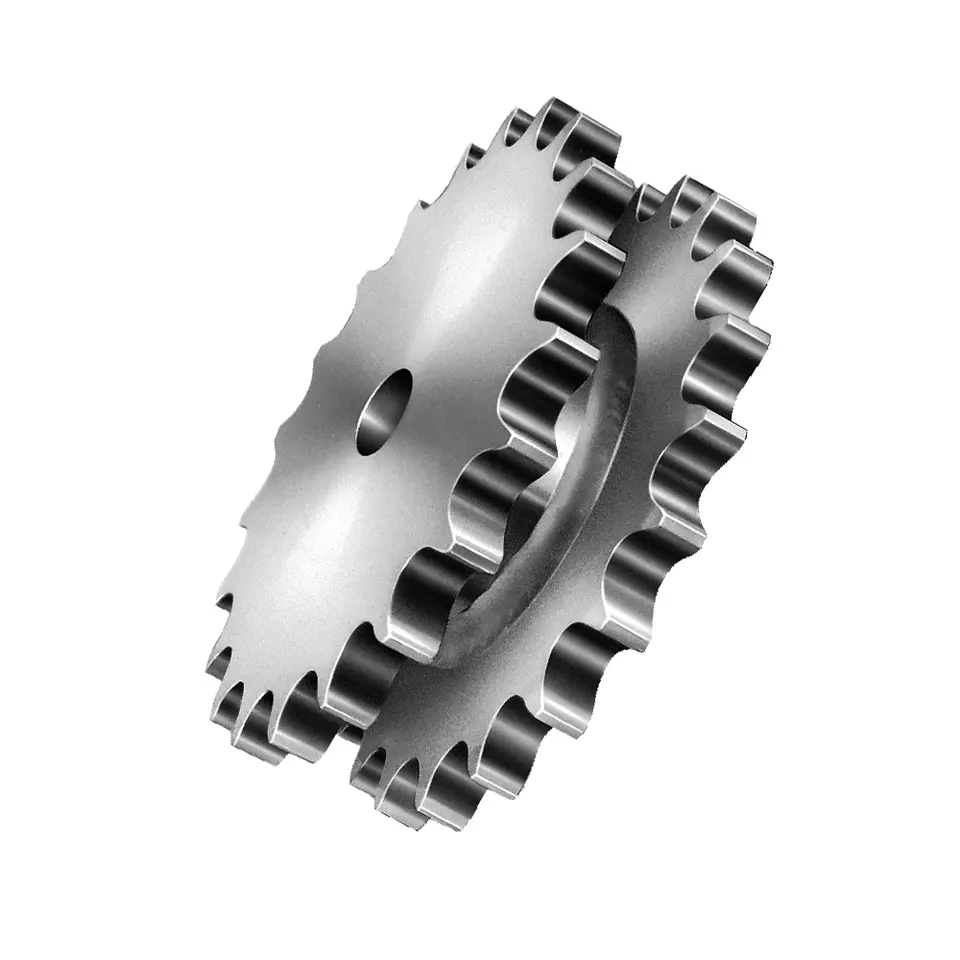
Had Suhu untuk Operasi Sistem Sproket Roda
Had suhu untuk operasi sistem gegancu roda bergantung pada bahan yang digunakan dalam pembinaan komponen. Bahan yang berbeza mempunyai toleransi suhu yang berbeza-beza, dan melebihi had ini boleh menyebabkan prestasi yang berkurangan, haus pramatang dan juga kegagalan sistem.
Berikut adalah beberapa bahan biasa yang digunakan dalam sistem gegancu roda dan had suhu amnya:
- Keluli: Sproket dan roda keluli, yang digunakan secara meluas dalam banyak aplikasi, biasanya mempunyai had suhu antara -40°C hingga 500°C (-40°F hingga 932°F). Walau bagaimanapun, julat suhu tertentu mungkin berbeza-beza berdasarkan gred keluli dan sebarang salutan atau rawatan yang digunakan.
- Keluli Tahan Karat: Sproket dan roda keluli tahan karat menawarkan ketahanan kakisan yang lebih baik dan boleh menahan suhu yang lebih tinggi daripada keluli biasa. Had suhunya biasanya antara -100°C hingga 600°C (-148°F hingga 1112°F).
- Plastik: Sproket dan roda plastik biasanya digunakan dalam aplikasi beban rendah dan kelajuan rendah. Had suhu untuk komponen plastik berbeza-beza bergantung pada jenis plastik yang digunakan. Secara amnya, ia boleh berkisar dari -40°C hingga 150°C (-40°F hingga 302°F).
- Aluminium: Sproket dan roda aluminium mempunyai had suhu kira-kira -40°C hingga 250°C (-40°F hingga 482°F). Ia sering digunakan dalam aplikasi di mana pengurangan berat adalah kritikal.
Adalah penting untuk merujuk spesifikasi pengilang dan helaian data bahan untuk komponen khusus yang digunakan dalam sistem gegancu roda bagi menentukan had suhunya dengan tepat. Faktor seperti beban, kelajuan dan keadaan persekitaran juga boleh mempengaruhi toleransi suhu sebenar sistem.
Apabila mengendalikan sistem gegancu roda berhampiran had suhunya, pemantauan dan penyelenggaraan yang kerap adalah perlu untuk memastikan integriti komponen dan prestasi keseluruhan sistem. Jika aplikasi melibatkan suhu yang melampau melebihi had biasa bahan, bahan suhu tinggi khusus atau langkah penyejukan mungkin diperlukan untuk mengekalkan operasi yang boleh dipercayai.
How Does a wheel sprocket Assembly Transmit Power?
In a mechanical system, a wheel sprocket assembly is a common method of power transmission, especially when dealing with rotary motion. The process of power transmission through a wheel sprocket assembly involves the following steps:
1. Input Source:
The power transmission process begins with an input source, such as an electric motor, engine, or human effort. This input source provides the necessary rotational force (torque) to drive the system.
2. Wheel Rotation:
When the input source applies rotational force to the wheel, it starts to rotate around its central axis (axle). The wheel’s design and material properties are essential to withstand the applied load and facilitate smooth rotation.
3. Sprocket Engagement:
Connected to the wheel is a sprocket, which is a toothed wheel designed to mesh with a chain. When the wheel rotates, the sprocket’s teeth engage with the links of the chain, creating a positive drive system.
4. Chain Rotation:
As the sprocket engages with the chain, the rotational force is transferred to the chain. The chain’s links transmit this rotational motion along its length.
5. Driven Component:
The other end of the chain is connected to a driven sprocket, which is attached to the component that needs to be powered or driven. This driven component could be another wheel, a conveyor belt, or any other machine part requiring motion.
6. Power Transmission:
As the chain rotates due to the engagement with the sprocket, the driven sprocket also starts to rotate, transferring the rotational force to the driven component. The driven component now receives the power and motion from the input source via the wheel, sprocket, and chain assembly.
7. Output and Operation:
The driven component performs its intended function based on the received power and motion. For example, in a bicycle, the chain and sprocket assembly transmit power from the rider’s pedaling to the rear wheel, propelling the bicycle forward.
Overall, a wheel sprocket assembly is an efficient and reliable method of power transmission, commonly used in various applications, including bicycles, motorcycles, industrial machinery, and conveyor systems.


editor by CX 2023-10-25