Produktbeschreibung
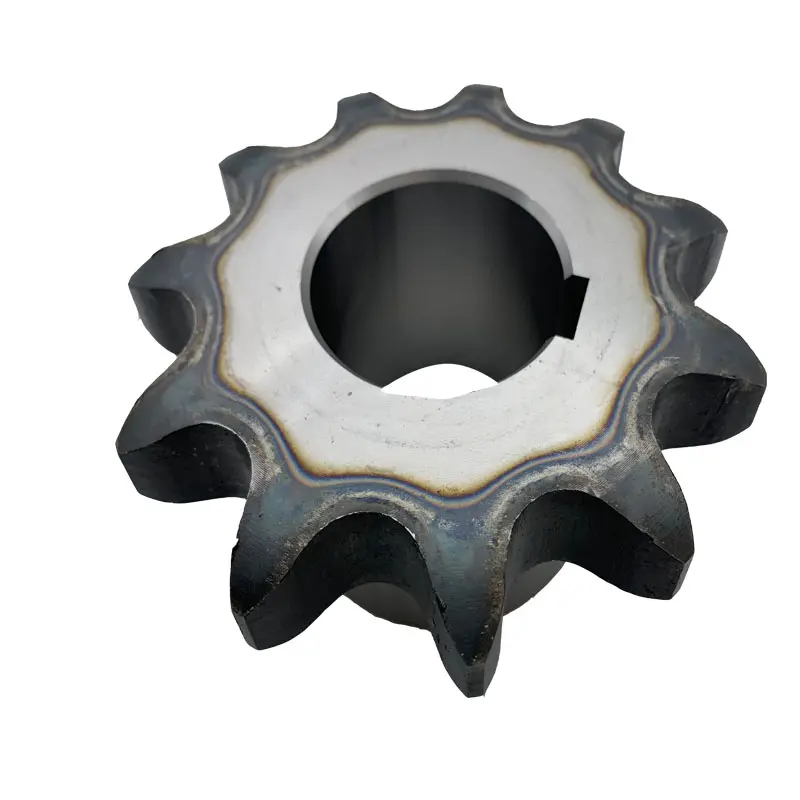
America, Kana, Europe, ANSI Standard or Made to Order Sprockets for Roller Chain and Conveyor Chain
Produktbeschreibung
1. Produce strictly in accordance with standard dimension
2. Material: 1045 Steel / Alloy Steel / Stainless Steel 304 & 316
3. Standard: ANSI, DIN, JINS, ISO, KANA,Standard America or customer’s drawing
4. Pilot bore, finished bore, taper bore and special bore.
5. Bright surface / high precision / Blacking /Electrophoretic-Coated
6. Advanced heat treatment and surface treatment craft
7. Best quality and competitive price.
8. Welcome OEM / ODM
9. Processing Equipment: Hobbing machine, Slotting machine, CNC lathes and other equipment.
10. Sprocket Models: Contains special sprocket according to customer’s drawings, standard sprocket (American standard and metric).
Detaillierte Fotos
View more products,please click here…
Unternehmensprofil
| Standard Or Nonstandard: | Standard |
|---|---|
| Anwendung: | Machinery, Agricultural Machinery, Industry |
| Hardness: | Härte |
| 60: | 3/4" |
| 80: | 1" |
| 50: | 5/8" |
| Proben: |
US$ 0/Piece
1 Stück (Mindestbestellmenge) | |
|---|
| Anpassung: |
Verfügbar
| Kundenspezifische Anfrage |
|---|
Alternatives to Chain Sprockets in wheel sprocket Configuration
While chain sprockets are commonly used in wheel sprocket configurations, there are alternative methods for power transmission in various applications:
- Gear and Gear Rack: Gears are toothed wheels that mesh with each other to transmit power. Instead of using a chain and sprocket, gears can directly engage with each other, offering a smooth and efficient power transfer. Gear racks, which are linear gears, can be used in place of wheels for linear motion applications.
- Belt and Pulley: Belts and pulleys offer a flexible and quiet means of power transmission. They work similarly to chain and sprocket systems but use belts instead of chains. Pulleys have grooves that grip the belt, allowing power to be transferred between the pulleys.
- Gear Train: A gear train consists of multiple gears meshed together to achieve specific speed and torque ratios. Gear trains are often used in complex machinery and mechanical systems where precise power transmission is required.
- Direct Drive: In some applications, direct drive mechanisms can be used, where the motor or power source is directly connected to the wheel or load without any intermediate components like sprockets or gears.
- Friction Drive: Friction drive systems use the friction between two surfaces to transfer power. One surface, such as a rubber wheel, is pressed against another surface to achieve power transmission.
The choice of alternative power transmission methods depends on various factors, including the application requirements, available space, speed, torque, and efficiency considerations. Each alternative method has its advantages and limitations, and the selection should be based on the specific needs of the mechanical system.
When considering alternatives to chain sprockets, it is essential to analyze the requirements of your application and consult with engineering experts or manufacturers to determine the most suitable method of power transmission for optimal performance and longevity.
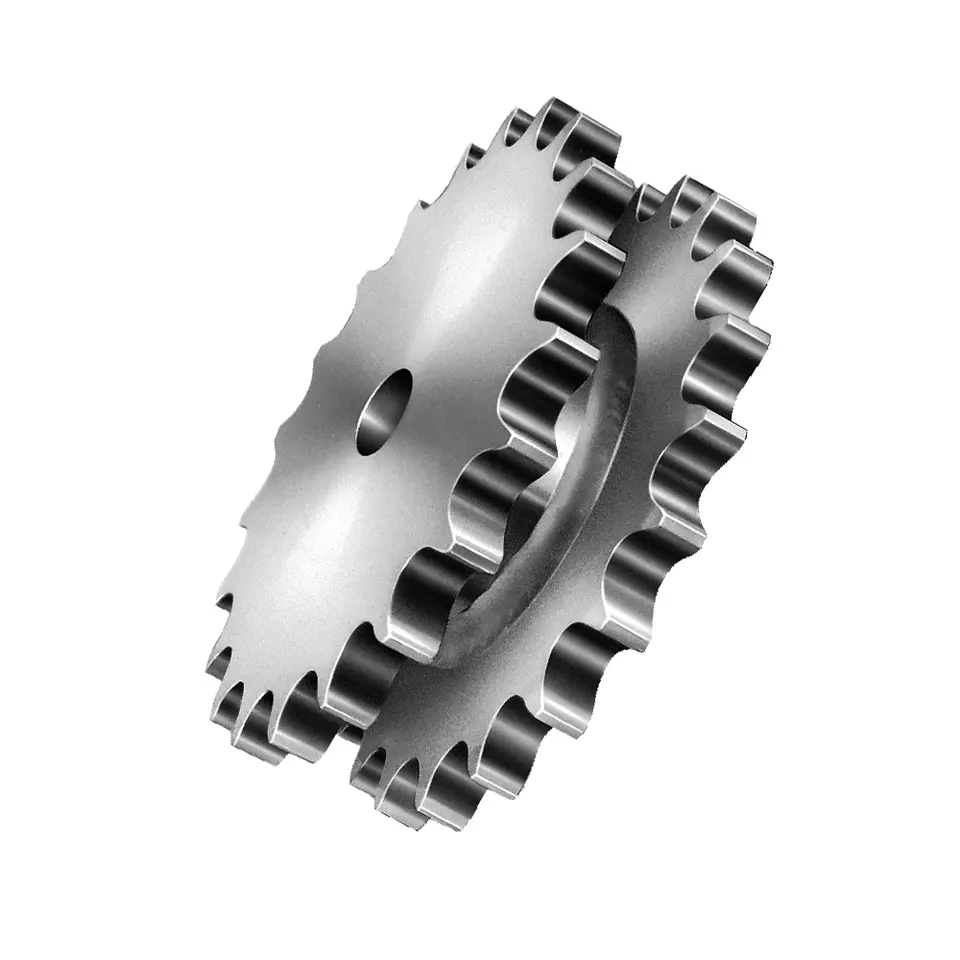
Temperaturgrenzen für den Betrieb des Radkettenradsystems
Die Betriebstemperaturgrenzen eines Rad-Kettenrad-Systems hängen von den verwendeten Werkstoffen ab. Unterschiedliche Werkstoffe weisen unterschiedliche Temperaturtoleranzen auf, und eine Überschreitung dieser Grenzen kann zu Leistungseinbußen, vorzeitigem Verschleiß und sogar zum Systemausfall führen.
Hier sind einige gängige Werkstoffe, die in Radkettensystemen verwendet werden, und ihre allgemeinen Temperaturgrenzen aufgeführt:
- Stahl: Stahlkettenräder und -räder, die in vielen Anwendungen weit verbreitet sind, weisen typischerweise einen Temperaturbereich von -40 °C bis 500 °C auf. Der genaue Temperaturbereich kann jedoch je nach Stahlsorte und aufgebrachten Beschichtungen oder Behandlungen variieren.
- Edelstahl: Kettenräder und Räder aus Edelstahl bieten eine verbesserte Korrosionsbeständigkeit und halten höheren Temperaturen stand als herkömmlicher Stahl. Ihr Temperaturbereich liegt typischerweise zwischen -100 °C und 600 °C.
- Kunststoffe: Kettenräder und Räder aus Kunststoff werden häufig bei geringen Lasten und niedrigen Drehzahlen eingesetzt. Die Temperaturgrenze für Kunststoffbauteile variiert stark je nach verwendetem Kunststoff. Im Allgemeinen liegt sie zwischen -40 °C und 150 °C.
- Aluminium: Aluminium-Kettenräder und -Räder haben einen Temperaturbereich von etwa -40 °C bis 250 °C (-40 °F bis 482 °F). Sie werden häufig in Anwendungen eingesetzt, bei denen eine Gewichtsreduzierung entscheidend ist.
Um die Temperaturgrenzen der einzelnen Komponenten des Radkettensystems genau zu bestimmen, ist es unerlässlich, die Herstellerspezifikationen und Materialdatenblätter zu konsultieren. Faktoren wie Last, Drehzahl und Umgebungsbedingungen können die tatsächliche Temperaturtoleranz des Systems ebenfalls beeinflussen.
Beim Betrieb eines Kettenradsystems nahe seiner Temperaturgrenzen sind regelmäßige Überwachung und Wartung erforderlich, um die Integrität der Komponenten und die Gesamtleistung des Systems zu gewährleisten. Bei Anwendungen mit extremen Temperaturen, die die typischen Grenzwerte der Materialien überschreiten, können spezielle Hochtemperaturwerkstoffe oder Kühlmaßnahmen erforderlich sein, um einen zuverlässigen Betrieb sicherzustellen.
How Does a wheel sprocket Assembly Transmit Power?
In a mechanical system, a wheel sprocket assembly is a common method of power transmission, especially when dealing with rotary motion. The process of power transmission through a wheel sprocket assembly involves the following steps:
1. Input Source:
The power transmission process begins with an input source, such as an electric motor, engine, or human effort. This input source provides the necessary rotational force (torque) to drive the system.
2. Wheel Rotation:
When the input source applies rotational force to the wheel, it starts to rotate around its central axis (axle). The wheel’s design and material properties are essential to withstand the applied load and facilitate smooth rotation.
3. Sprocket Engagement:
Connected to the wheel is a sprocket, which is a toothed wheel designed to mesh with a chain. When the wheel rotates, the sprocket’s teeth engage with the links of the chain, creating a positive drive system.
4. Chain Rotation:
As the sprocket engages with the chain, the rotational force is transferred to the chain. The chain’s links transmit this rotational motion along its length.
5. Driven Component:
The other end of the chain is connected to a driven sprocket, which is attached to the component that needs to be powered or driven. This driven component could be another wheel, a conveyor belt, or any other machine part requiring motion.
6. Power Transmission:
As the chain rotates due to the engagement with the sprocket, the driven sprocket also starts to rotate, transferring the rotational force to the driven component. The driven component now receives the power and motion from the input source via the wheel, sprocket, and chain assembly.
7. Output and Operation:
The driven component performs its intended function based on the received power and motion. For example, in a bicycle, the chain and sprocket assembly transmit power from the rider’s pedaling to the rear wheel, propelling the bicycle forward.
Overall, a wheel sprocket assembly is an efficient and reliable method of power transmission, commonly used in various applications, including bicycles, motorcycles, industrial machinery, and conveyor systems.


editor by CX 2023-10-25