Descripción del Producto
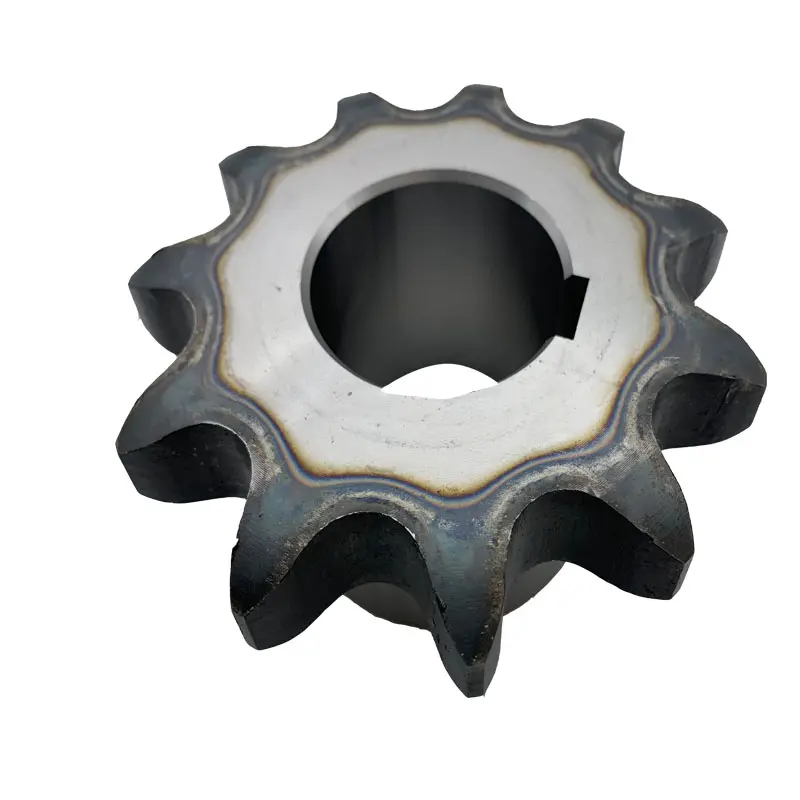
America, Kana, Europe, ANSI Standard or Made to Order Sprockets for Roller Chain and Conveyor Chain
Descripción del Producto
1. Produce strictly in accordance with standard dimension
2. Material: 1045 Steel / Alloy Steel / Stainless Steel 304 & 316
3. Standard: ANSI, DIN, JINS, ISO, KANA,Standard America or customer’s drawing
4. Pilot bore, finished bore, taper bore and special bore.
5. Bright surface / high precision / Blacking /Electrophoretic-Coated
6. Advanced heat treatment and surface treatment craft
7. Best quality and competitive price.
8. Welcome OEM / ODM
9. Processing Equipment: Hobbing machine, Slotting machine, CNC lathes and other equipment.
10. Sprocket Models: Contains special sprocket according to customer’s drawings, standard sprocket (American standard and metric).
Fotos detalladas
View more products,please click here…
Company Profile
| Estándar o no estándar: | Estándar |
|---|---|
| Solicitud: | Machinery, Agricultural Machinery, Industry |
| Dureza: | Dureza |
| 60: | 3/4" |
| 80: | 1" |
| 50: | 5/8" |
| Muestras: |
US$ 0/Piece
1 unidad (pedido mínimo) | |
|---|
| Personalización: |
Disponible
| Solicitud personalizada |
|---|
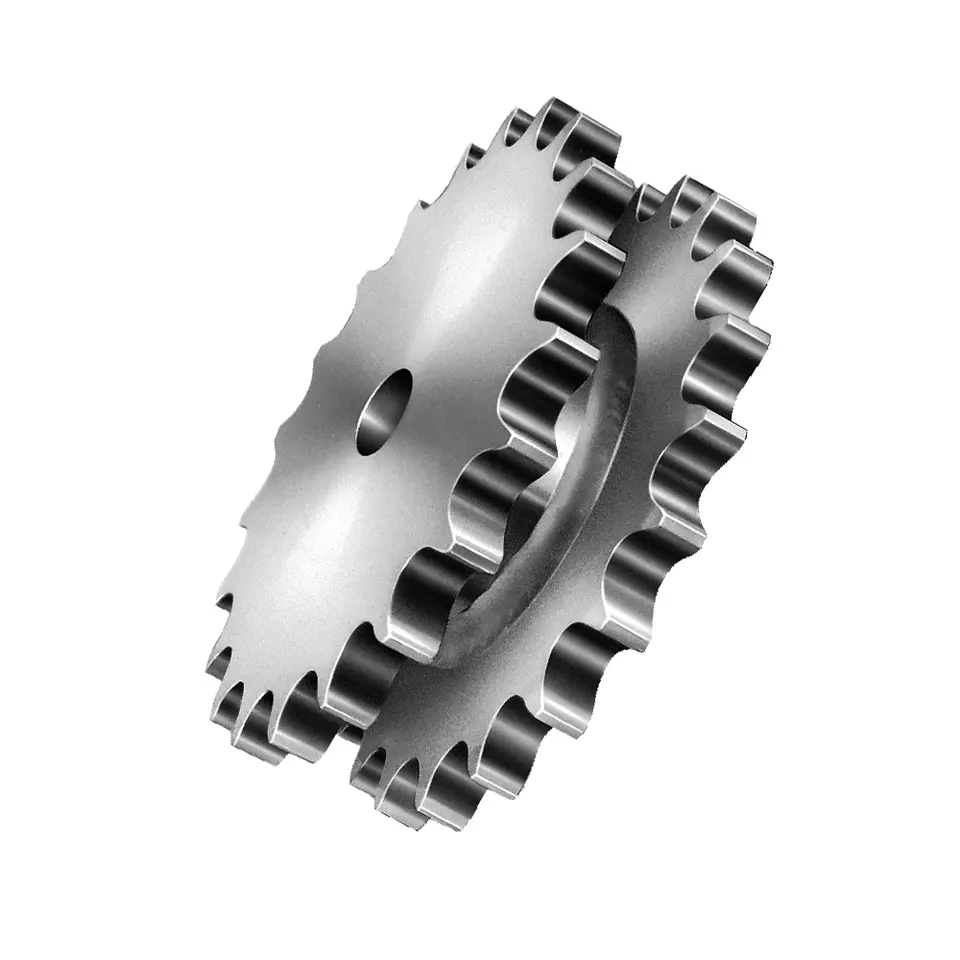
Alternatives to Chain Sprockets in wheel sprocket Configuration
While chain sprockets are commonly used in wheel sprocket configurations, there are alternative methods for power transmission in various applications:
- Gear and Gear Rack: Gears are toothed wheels that mesh with each other to transmit power. Instead of using a chain and sprocket, gears can directly engage with each other, offering a smooth and efficient power transfer. Gear racks, which are linear gears, can be used in place of wheels for linear motion applications.
- Belt and Pulley: Belts and pulleys offer a flexible and quiet means of power transmission. They work similarly to chain and sprocket systems but use belts instead of chains. Pulleys have grooves that grip the belt, allowing power to be transferred between the pulleys.
- Gear Train: A gear train consists of multiple gears meshed together to achieve specific speed and torque ratios. Gear trains are often used in complex machinery and mechanical systems where precise power transmission is required.
- Direct Drive: In some applications, direct drive mechanisms can be used, where the motor or power source is directly connected to the wheel or load without any intermediate components like sprockets or gears.
- Friction Drive: Friction drive systems use the friction between two surfaces to transfer power. One surface, such as a rubber wheel, is pressed against another surface to achieve power transmission.
The choice of alternative power transmission methods depends on various factors, including the application requirements, available space, speed, torque, and efficiency considerations. Each alternative method has its advantages and limitations, and the selection should be based on the specific needs of the mechanical system.
When considering alternatives to chain sprockets, it is essential to analyze the requirements of your application and consult with engineering experts or manufacturers to determine the most suitable method of power transmission for optimal performance and longevity.
Temperature Limits for wheel sprocket System’s Operation
The temperature limits for a wheel sprocket system’s operation depend on the materials used in the construction of the components. Different materials have varying temperature tolerances, and exceeding these limits can lead to reduced performance, premature wear, and even system failure.
Here are some common materials used in wheel sprocket systems and their general temperature limits:
- Steel: Steel sprockets and wheels, which are widely used in many applications, typically have a temperature limit ranging from -40°C to 500°C (-40°F to 932°F). However, the specific temperature range may vary based on the grade of steel and any coatings or treatments applied.
- Stainless Steel: Stainless steel sprockets and wheels offer improved corrosion resistance and can withstand higher temperatures than regular steel. Their temperature limit is typically between -100°C to 600°C (-148°F to 1112°F).
- Plastics: Plastic sprockets and wheels are commonly used in low-load and low-speed applications. The temperature limit for plastic components varies widely depending on the type of plastic used. In general, it can range from -40°C to 150°C (-40°F to 302°F).
- Aluminum: Aluminum sprockets and wheels have a temperature limit of approximately -40°C to 250°C (-40°F to 482°F). They are often used in applications where weight reduction is critical.
It’s essential to consult the manufacturer’s specifications and material data sheets for the specific components used in the wheel sprocket system to determine their temperature limits accurately. Factors such as load, speed, and environmental conditions can also influence the actual temperature tolerance of the system.
When operating a wheel sprocket system near its temperature limits, regular monitoring and maintenance are necessary to ensure the components’ integrity and overall system performance. If the application involves extreme temperatures beyond the typical limits of the materials, specialized high-temperature materials or cooling measures may be required to maintain reliable operation.
¿Cómo transmite potencia un conjunto de piñón de rueda?
En un sistema mecánico, un conjunto de rueda y piñón es un método común de transmisión de potencia, especialmente cuando se trata de movimiento rotatorio. El proceso de transmisión de potencia a través de un conjunto de rueda y piñón comprende los siguientes pasos:
1. Fuente de entrada:
El proceso de transmisión de potencia comienza con una fuente de entrada, como un motor eléctrico, un motor de combustión o la fuerza humana. Esta fuente de entrada proporciona la fuerza de rotación (par motor) necesaria para impulsar el sistema.
2. Rotación de la rueda:
Cuando la fuente de entrada aplica una fuerza de rotación a la rueda, esta comienza a girar alrededor de su eje central. El diseño y las propiedades del material de la rueda son esenciales para soportar la carga aplicada y facilitar una rotación suave.
3. Acoplamiento de la rueda dentada:
Conectada a la rueda se encuentra una rueda dentada, que está diseñada para engranar con una cadena. Cuando la rueda gira, los dientes de la rueda dentada se acoplan con los eslabones de la cadena, creando un sistema de transmisión positiva.
4. Rotación de la cadena:
Cuando la rueda dentada engrana con la cadena, la fuerza de rotación se transfiere a esta última. Los eslabones de la cadena transmiten este movimiento de rotación a lo largo de su longitud.
5. Componente impulsado:
El otro extremo de la cadena está conectado a una rueda dentada motriz, la cual está unida al componente que necesita ser accionado. Este componente motriz podría ser otra rueda, una cinta transportadora o cualquier otra pieza de una máquina que requiera movimiento.
6. Transmisión de potencia:
Al girar la cadena debido al acoplamiento con la rueda dentada, esta última también comienza a girar, transfiriendo la fuerza de rotación al componente accionado. El componente accionado recibe ahora la potencia y el movimiento de la fuente de entrada a través del conjunto formado por la rueda, la rueda dentada y la cadena.
7. Salida y funcionamiento:
El componente accionado realiza su función prevista en función de la potencia y el movimiento recibidos. Por ejemplo, en una bicicleta, el conjunto de cadena y piñón transmite la potencia del pedaleo del ciclista a la rueda trasera, impulsando la bicicleta hacia adelante.
En general, un conjunto de piñón y rueda es un método eficiente y fiable de transmisión de potencia, comúnmente utilizado en diversas aplicaciones, como bicicletas, motocicletas, maquinaria industrial y sistemas de transporte.


editor by CX 2023-10-25