Ürün Açıklaması
ZHangZhoug CZPT Machinery Co., Ltd
(DIN/ANSI/JIS Standard or made to drawing)
Product Description:
ZHangZhoug CZPT Machinery Co., Ltd. Is the vice chairman of chain Transmission Branch of China Machinery General parts Industry Association and a member of China chain Transmission Standardization Technical Committee.
Founded in 1954, mainly engaged in sprocket, gear, timing belt pulley, coupling production and sales, It is a large sprocket manufacturing enterprise in China, and it is also 1 of the largest standard sprocket manufacturers in the world at present. The product structure of the company has been developed from the single pattern of standard sprocket to non-standard transmission parts. Products are mainly sold in North America, South America, Europe, Africa and Japan, South Korea, the Middle East, Russia and Southeast Asia and other countries and regions, sales network all over the world.
The company has passed ISO 9002 quality assurance system certification for the first time in 1999, ISO9001: 2000 quality management system certification in 2003, ISO/TS16949 quality management system certification for the first time in 2009, ISO14001: 2004 environmental management system certification for the first time in 2571, ISO14001: 2015 environmental management system certification for 2017, and ISO9001: 2015 and IATF16949: 2016 quality management system certification for 2018. It lays a CZPT foundation for perfecting the internal management of the enterprise and opening up the external market.
The company adheres to the business philosophy of “Quality is life, technology is physique, delivery is moral, quantity is credit, service is kindred, cost is lifetime”, implementing “innovation-driven, twinning integration” upgrading strategy, promoting chain transmission products to excellence, and making every effort to create “harmonious cenfit, good quality cenfit, hundred years of cenfit”
| Standart mı, Standart Dışı mı? | Standart |
|---|---|
| Başvuru: | Motor, Machinery, Agricultural Machinery, Car |
| Sertlik: | Soft Tooth Surface |
| Üretim Yöntemi: | Rolling Gear |
| Dişli Kısım Şekli: | Spur Gear |
| Malzeme: | C45 |
| Özelleştirme: |
Mevcut
| Özelleştirilmiş Talep |
|---|
How to Identify and Troubleshoot Common Issues with Wheels and Sprockets
Identifying and troubleshooting common issues with wheels and sprockets can help you maintain their proper functioning and prevent potential problems. Here are some steps to follow:
- Abnormal Noise: If you notice unusual noise during operation, it could indicate misalignment, worn sprockets, or a loose chain. Check for any loose bolts or fasteners and ensure proper alignment of the sprockets.
- Chain Slippage: Chain slippage can occur due to insufficient tension or worn-out sprocket teeth. Check the chain tension and adjust it to the recommended level. Inspect the sprocket teeth for signs of wear and replace them if necessary.
- Uneven Wear: Uneven wear on the sprocket teeth can be a result of misalignment or a worn-out chain. Check the alignment of the sprockets and adjust as needed. If the chain is stretched or has damaged links, replace it with a new one.
- Excessive Vibration: Excessive vibration may be caused by imbalanced wheels or misaligned sprockets. Check for any bent or damaged wheels and ensure proper alignment of the sprockets.
- Chain Skipping: If the chain skips over the sprocket teeth during operation, it could be due to worn sprocket teeth or a loose chain. Inspect the sprocket teeth for signs of wear and replace them if necessary. Adjust the chain tension to the proper level.
- Chain Jamming: Chain jamming can occur if there is debris or dirt between the chain and sprockets. Clean the chain and sprockets thoroughly to remove any obstructions.
- Excessive Chain Wear: Regularly inspect the chain for signs of wear, such as elongation, damaged links, or rust. Replace the chain if it is significantly worn to avoid damage to the sprockets.
- Overheating: Overheating can be caused by high friction between the chain and sprockets or improper lubrication. Ensure proper lubrication and check for any misalignment or tight spots in the system.
By identifying these common issues and performing regular inspections, you can troubleshoot problems early on and take appropriate corrective measures, ensuring the smooth operation and longevity of the wheel sprocket assembly.
Inspecting a wheel sprocket for Wear and Tear
Regular inspection of the wheel sprocket is essential to ensure their proper functioning and to identify any signs of wear and tear. Here are the steps to inspect a wheel sprocket:
- Visual Inspection: Start by visually examining the wheel sprocket for any visible signs of wear, damage, or deformation. Look for cracks, chips, dents, or any irregularities on the surface of both components.
- Check for Misalignment: Verify that the wheel sprocket are properly aligned with each other. Misalignment can lead to accelerated wear and affect the overall performance of the system.
- Measure Wear: Use calipers or a wear gauge to measure the sprocket’s tooth profile and the wheel’s rolling surface. Compare these measurements with the original specifications to determine if significant wear has occurred.
- Inspect Teeth and Chain Engagement: If the wheel sprocket are part of a chain drive system, closely examine the sprocket teeth and chain engagement. Worn or elongated teeth can cause poor chain engagement and lead to premature failure.
- Yağlama: Check the lubrication of the wheel sprocket. Insufficient or excessive lubrication can cause increased friction, leading to wear and reduced efficiency.
- Bearing Condition: If the wheel is mounted on a shaft with bearings, inspect the bearings for any signs of wear, noise, or rough movement. Properly functioning bearings are crucial for the smooth operation of the system.
- Inspect Mounting Hardware: Ensure that all nuts, bolts, and other mounting hardware are securely tightened. Loose fasteners can cause vibration and misalignment issues.
- Check for Contaminants: Remove any debris, dirt, or foreign particles that may have accumulated on the wheel or sprocket. Contaminants can accelerate wear and damage the components.
- Replacement or Maintenance: Based on the inspection results, determine if any parts need replacement or if maintenance is required. Address any issues promptly to prevent further damage and maintain the system’s performance.
Regularly scheduled inspections and maintenance can help prolong the lifespan of the wheel sprocket assembly, optimize performance, and ensure the safety of the mechanical system.
Tekerleklerde Kullanılan Dişli Çeşitleri
Mekanik sistemlerde, dişli çarklar, dönme hareketini ve gücü iletmek için zincir veya kayışla kenetlenen dişli tekerleklerdir. Tekerleklerle birlikte kullanılan çeşitli dişli çark türleri vardır ve her biri belirli uygulamalar için tasarlanmıştır:
1. Makaralı Zincir Dişlileri:
Bunlar tekerleklerde kullanılan en yaygın dişli türüdür ve makaralı zincirlerle çalışmak üzere tasarlanmıştır. Makaralı zincir dişlilerinin dişleri, zincirin makaralarının profiline uyarak düzgün bir kavrama sağlar ve hem dişli hem de zincir üzerindeki aşınmayı azaltır. Bisikletlerde, motosikletlerde ve endüstriyel makinelerde yaygın olarak kullanılırlar.
2. Sessiz Zincir Dişlileri:
Ters dişli zincir dişlileri olarak da bilinen bu dişliler, sessiz zincirlerle çalışmak üzere tasarlanmıştır. Sessiz zincirler, sessiz ve sorunsuz çalışan dişli zincirlerdir ve bu da onları motorlardaki ve otomotiv sistemlerindeki zamanlama tahrikleri gibi gürültü azaltmanın şart olduğu uygulamalar için ideal hale getirir.
3. Zamanlama Kayışı Dişlileri:
Zamanlama kayışı dişlileri, içten yanmalı motorlarda krank mili ve eksantrik mili arasında hassas senkronizasyonu sağlamak için zamanlama kayışlarıyla birlikte kullanılır. Zamanlama kayışının profiline uyacak şekilde özel olarak tasarlanmış dişlere sahiptirler, bu da doğru zamanlama ve düzgün hareket sağlar.
4. Avara Dişliler:
Avara dişliler, bir sistemdeki zincirleri veya kayışları yönlendirmek ve germek için kullanılır. Kendileri güç iletmezler, ancak verimli güç aktarımı için ve zincir veya kayış gevşemesini önlemek için gerekli olan doğru gerginliği ve hizalamayı korumada çok önemli bir rol oynarlar.
5. Kaynakla Monte Edilen Dişliler:
Kaynakla monte edilen dişli çarklar, tekerlek göbeğine veya miline doğrudan kaynaklanacak şekilde tasarlanmıştır ve güvenli ve kalıcı bir bağlantı sağlar. Genellikle endüstriyel makinelerde ve ekipmanlarda kullanılırlar.
6. Çift-Tek Dişli Çarklar:
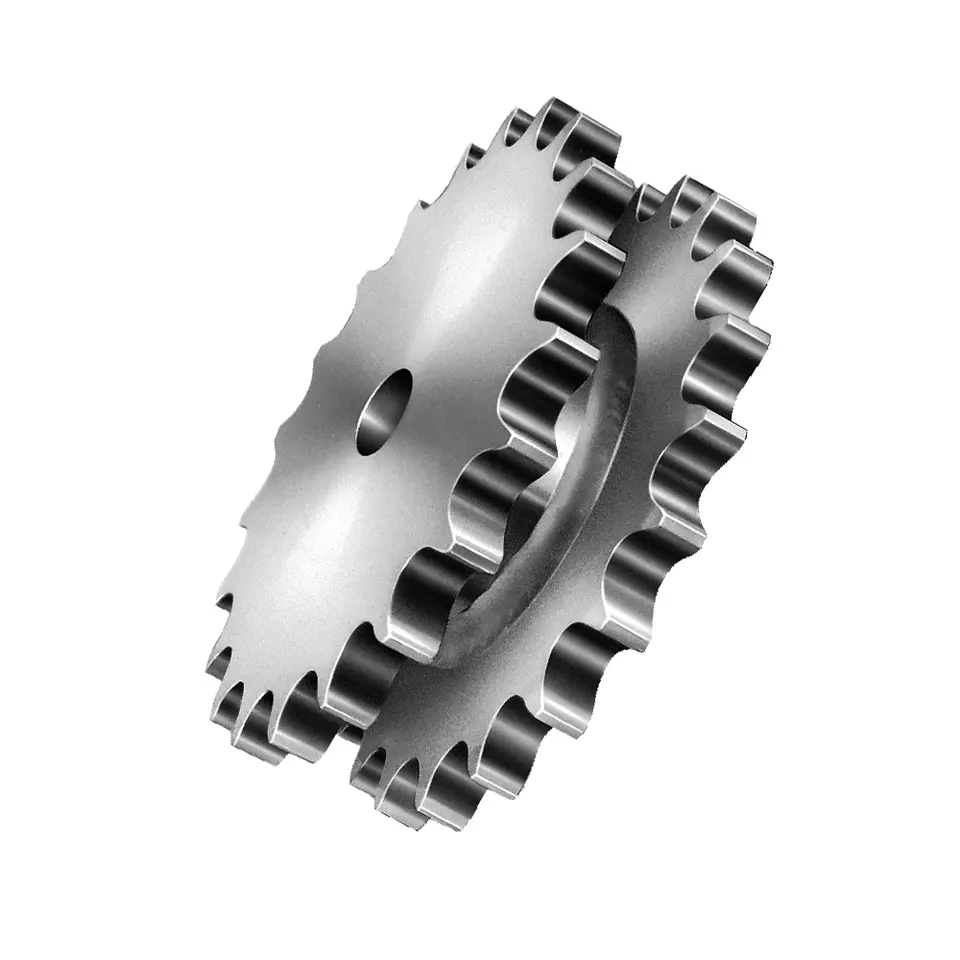
Çift dişli çarklar, diğer adıyla dupleks dişli çarklar, tek bir dişli çark gövdesinde iki diş takımına sahiptir. İki ayrı zincirin aynı hızda ve aynı dişli oranıyla tahrik edilmesi gerektiğinde kullanılırlar; genellikle ağır hizmet uygulamalarında ve konveyör sistemlerinde bulunurlar.
7. Konik Kilitli Dişli Çarklar:
Konik kilitli dişli çarklar, şafta güvenli ve kolay bir bağlantı sağlamak için konik ve kama yuvalı olarak tasarlanmıştır. Dişli çarkın konumlandırılması ve çıkarılmasının sık olduğu güç aktarım sistemlerinde yaygın olarak kullanılırlar.
Her bir dişli tipi, belirli uygulamanın gereksinimlerine, zincir veya kayış tipine ve istenen performans özelliklerine göre seçilir. Dişlilerin doğru seçimi ve bakımı, verimli güç aktarımını sağlamak ve tüm sistemin ömrünü uzatmak için çok önemlidir.


editor by CX 2023-09-05