Produktbeschreibung
ZHangZhoug CZPT Machinery Co., Ltd
(DIN/ANSI/JIS Standard or made to drawing)
Product Description:
ZHangZhoug CZPT Machinery Co., Ltd. Is the vice chairman of chain Transmission Branch of China Machinery General parts Industry Association and a member of China chain Transmission Standardization Technical Committee.
Founded in 1954, mainly engaged in sprocket, gear, timing belt pulley, coupling production and sales, It is a large sprocket manufacturing enterprise in China, and it is also 1 of the largest standard sprocket manufacturers in the world at present. The product structure of the company has been developed from the single pattern of standard sprocket to non-standard transmission parts. Products are mainly sold in North America, South America, Europe, Africa and Japan, South Korea, the Middle East, Russia and Southeast Asia and other countries and regions, sales network all over the world.
The company has passed ISO 9002 quality assurance system certification for the first time in 1999, ISO9001: 2000 quality management system certification in 2003, ISO/TS16949 quality management system certification for the first time in 2009, ISO14001: 2004 environmental management system certification for the first time in 2571, ISO14001: 2015 environmental management system certification for 2017, and ISO9001: 2015 and IATF16949: 2016 quality management system certification for 2018. It lays a CZPT foundation for perfecting the internal management of the enterprise and opening up the external market.
The company adheres to the business philosophy of “Quality is life, technology is physique, delivery is moral, quantity is credit, service is kindred, cost is lifetime”, implementing “innovation-driven, twinning integration” upgrading strategy, promoting chain transmission products to excellence, and making every effort to create “harmonious cenfit, good quality cenfit, hundred years of cenfit”
| Standard Or Nonstandard: | Standard |
|---|---|
| Anwendung: | Motor, Machinery, Agricultural Machinery, Car |
| Hardness: | Soft Tooth Surface |
| Manufacturing Method: | Rolling Gear |
| Toothed Portion Shape: | Spur Gear |
| Material: | C45 |
| Anpassung: |
Verfügbar
| Kundenspezifische Anfrage |
|---|
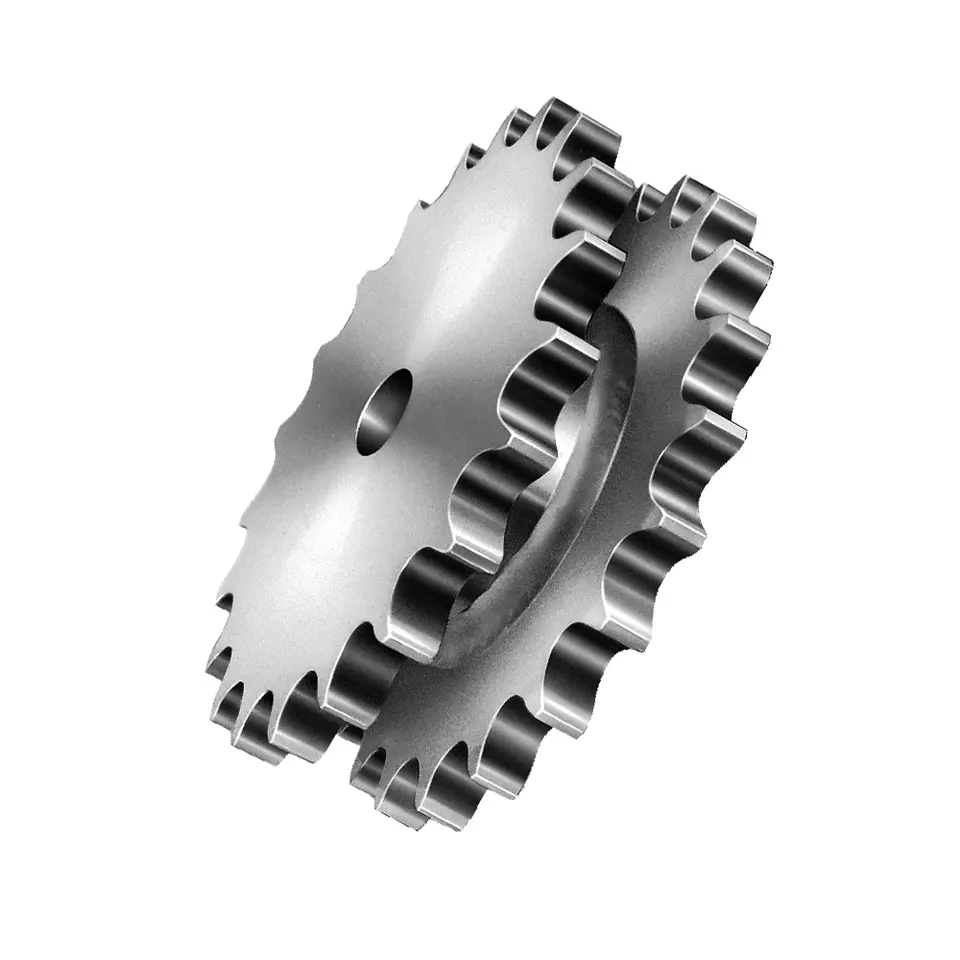
How to Identify and Troubleshoot Common Issues with Wheels and Sprockets
Identifying and troubleshooting common issues with wheels and sprockets can help you maintain their proper functioning and prevent potential problems. Here are some steps to follow:
- Abnormal Noise: If you notice unusual noise during operation, it could indicate misalignment, worn sprockets, or a loose chain. Check for any loose bolts or fasteners and ensure proper alignment of the sprockets.
- Chain Slippage: Chain slippage can occur due to insufficient tension or worn-out sprocket teeth. Check the chain tension and adjust it to the recommended level. Inspect the sprocket teeth for signs of wear and replace them if necessary.
- Uneven Wear: Uneven wear on the sprocket teeth can be a result of misalignment or a worn-out chain. Check the alignment of the sprockets and adjust as needed. If the chain is stretched or has damaged links, replace it with a new one.
- Excessive Vibration: Excessive vibration may be caused by imbalanced wheels or misaligned sprockets. Check for any bent or damaged wheels and ensure proper alignment of the sprockets.
- Chain Skipping: If the chain skips over the sprocket teeth during operation, it could be due to worn sprocket teeth or a loose chain. Inspect the sprocket teeth for signs of wear and replace them if necessary. Adjust the chain tension to the proper level.
- Chain Jamming: Chain jamming can occur if there is debris or dirt between the chain and sprockets. Clean the chain and sprockets thoroughly to remove any obstructions.
- Excessive Chain Wear: Regularly inspect the chain for signs of wear, such as elongation, damaged links, or rust. Replace the chain if it is significantly worn to avoid damage to the sprockets.
- Overheating: Overheating can be caused by high friction between the chain and sprockets or improper lubrication. Ensure proper lubrication and check for any misalignment or tight spots in the system.
By identifying these common issues and performing regular inspections, you can troubleshoot problems early on and take appropriate corrective measures, ensuring the smooth operation and longevity of the wheel sprocket assembly.
Inspecting a wheel sprocket for Wear and Tear
Regular inspection of the wheel sprocket is essential to ensure their proper functioning and to identify any signs of wear and tear. Here are the steps to inspect a wheel sprocket:
- Visual Inspection: Start by visually examining the wheel sprocket for any visible signs of wear, damage, or deformation. Look for cracks, chips, dents, or any irregularities on the surface of both components.
- Check for Misalignment: Verify that the wheel sprocket are properly aligned with each other. Misalignment can lead to accelerated wear and affect the overall performance of the system.
- Measure Wear: Use calipers or a wear gauge to measure the sprocket’s tooth profile and the wheel’s rolling surface. Compare these measurements with the original specifications to determine if significant wear has occurred.
- Inspect Teeth and Chain Engagement: If the wheel sprocket are part of a chain drive system, closely examine the sprocket teeth and chain engagement. Worn or elongated teeth can cause poor chain engagement and lead to premature failure.
- Schmierung: Check the lubrication of the wheel sprocket. Insufficient or excessive lubrication can cause increased friction, leading to wear and reduced efficiency.
- Bearing Condition: If the wheel is mounted on a shaft with bearings, inspect the bearings for any signs of wear, noise, or rough movement. Properly functioning bearings are crucial for the smooth operation of the system.
- Inspect Mounting Hardware: Ensure that all nuts, bolts, and other mounting hardware are securely tightened. Loose fasteners can cause vibration and misalignment issues.
- Check for Contaminants: Remove any debris, dirt, or foreign particles that may have accumulated on the wheel or sprocket. Contaminants can accelerate wear and damage the components.
- Replacement or Maintenance: Based on the inspection results, determine if any parts need replacement or if maintenance is required. Address any issues promptly to prevent further damage and maintain the system’s performance.
Regularly scheduled inspections and maintenance can help prolong the lifespan of the wheel sprocket assembly, optimize performance, and ensure the safety of the mechanical system.
Arten von Kettenrädern, die mit Rädern verwendet werden
In mechanischen Systemen sind Kettenräder gezahnte Räder, die mit einer Kette oder einem Riemen ineinandergreifen, um Drehbewegung und Kraft zu übertragen. Es gibt verschiedene Arten von Kettenrädern, die jeweils für spezifische Anwendungen entwickelt wurden:
1. Rollenkettenräder:
Dies sind die gebräuchlichsten Kettenräder für Räder und speziell für Rollenketten entwickelt. Die Zähne von Rollenkettenrädern sind auf das Profil der Kettenrollen abgestimmt, was einen reibungslosen Eingriff gewährleistet und den Verschleiß an Kettenrad und Kette reduziert. Sie finden breite Anwendung bei Fahrrädern, Motorrädern und Industriemaschinen.
2. Geräuschlose Kettenräder:
Diese auch als Kettenräder mit umgekehrter Verzahnung bekannten Kettenräder sind für den Einsatz mit geräuscharmen Ketten konzipiert. Geräuscharme Ketten sind Zahnketten, die leise und gleichmäßig laufen und sich daher ideal für Anwendungen eignen, bei denen eine geringe Geräuschentwicklung unerlässlich ist, wie beispielsweise Steuerkettenantriebe in Motoren und Fahrzeugsystemen.
3. Zahnriemenräder:
Zahnriemenräder werden zusammen mit Zahnriemen verwendet, um die präzise Synchronisation von Kurbelwelle und Nockenwelle in Verbrennungsmotoren zu gewährleisten. Sie verfügen über speziell geformte Zähne, die dem Profil des Zahnriemens entsprechen und so eine genaue Steuerung und einen reibungslosen Lauf ermöglichen.
4. Umlenkräder:
Umlenkrollen dienen der Führung und Spannung von Ketten oder Riemen in einem System. Sie übertragen selbst keine Kraft, spielen aber eine entscheidende Rolle bei der Aufrechterhaltung der richtigen Spannung und Ausrichtung, was für eine effiziente Kraftübertragung unerlässlich ist und ein Durchhängen der Kette oder des Riemens verhindert.
5. Anschweißbare Kettenräder:
Anschweißkettenräder sind so konstruiert, dass sie direkt auf eine Radnabe oder Welle geschweißt werden und eine sichere und dauerhafte Verbindung gewährleisten. Sie werden häufig in Industriemaschinen und -anlagen eingesetzt.
6. Doppel-Einzel-Kettenräder:
Doppel-Einzel-Kettenräder, auch Duplex-Kettenräder genannt, besitzen zwei Zahnsätze auf einem Kettenradkörper. Sie kommen zum Einsatz, wenn zwei separate Ketten mit der gleichen Geschwindigkeit und dem gleichen Übersetzungsverhältnis angetrieben werden müssen, was häufig bei Schwerlastanwendungen und Fördersystemen vorkommt.
7. Kegelverriegelungs-Kettenräder:
Kegelverriegelungs-Kettenräder sind mit einer Kegelform und einer Keilnut ausgestattet, um eine sichere und einfach zu montierende Verbindung mit der Welle zu gewährleisten. Sie finden breite Anwendung in Kraftübertragungssystemen, wo Kettenräder häufig positioniert und demontiert werden müssen.
Die Auswahl des jeweiligen Kettenradtyps richtet sich nach den spezifischen Anwendungsanforderungen, dem Ketten- oder Riementyp und den gewünschten Leistungseigenschaften. Die korrekte Auswahl und Wartung der Kettenräder ist entscheidend für eine effiziente Kraftübertragung und die Verlängerung der Lebensdauer des gesamten Systems.


editor by CX 2023-09-05