Productbeschrijving
Nonstandard Industry MADE-TO-ORDER Or PLW Plywood Case Chain Sprocket Motorcycle Parts
Productbeschrijving
1. Produce strictly in accordance with ANSI or DIN standard dimension
2. Material: 1045 steel / Stainless Steel 304 & 316
3. Standard: ANSI, DIN, JINS, ISO, Standard America or customer drawing
4. Pilot bore, finished bore, taper bore and special bore
5. Bright surface and high precision
6. Advanced heat treatment and surface treatment craft
7. Best quality and competitive price
8. Welcome OEM / ODM
9. Processing equipment: Hobbing machine, Slotting machine, CNC lathes and other equipment.
10. Sprocket models: Contains special sprocket according to customer’s drawings, standard sprocket (American standard and metric).
| Product name | Zinc-Plated Driving Sprocket From China (05B16T-1) |
| Materials Available | 1. Stainless Steel: SS304, SS316, etc |
| 2. Alloy Steel: C45, 45Mn, 42CrMo, 20CrMo, etc | |
| 3. OEM according to your request | |
| Oppervlaktebehandeling | Heat treatment, Quenching treatment, High frequency normalizing treatment, Polishing, Electrophoresis paint processing, Anodic oxidation treatment, etc |
| Characteristic | Fire resistant, Oil resistant, Heat resistant, CZPT resistance, Oxidative resistance, Corrosion resistance, etc |
| Design criterion | ISO DIN ANSI & Customer’s Drawing |
| Size | Customer’s Drawing & ISO standard |
| Sollicitatie | Industrial transmission equipment |
| Package | Wooden Case / Container and pallet, or made-to-order |
| Certificate | ISO9001: 2008 |
| Advantage | Quality first, Service first, Competitive price, Fast delivery |
| Delivery Time | 20 days for samples. 45 days for official order. |
View more products,please click here…
Gedetailleerde foto's
Bedrijfsprofiel
| Standard Or Nonstandard: | Nonstandard |
|---|---|
| Application: | Motorcycle, Machinery, Marine, Agricultural Machinery, Car, Industry |
| Hardness: | Hardened Tooth Surface |
| Materiaal: | Alloy Steel/Stainless Steel |
| Type: | Sprocket |
| Sample: | for Free |
| Voorbeelden: |
US$ 0/Piece
1 stuk (minimale bestelling) | |
|---|
| Aanpassing: |
Beschikbaar
| Aanvraag op maat |
|---|
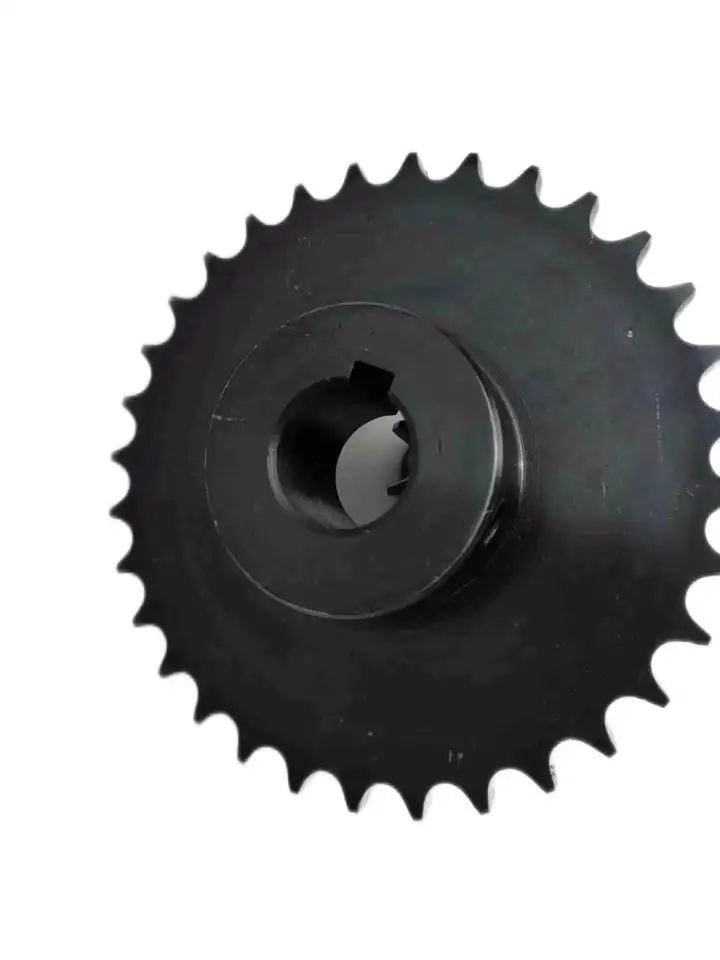
Calculating Torque Requirements for a wheel sprocket Assembly
Calculating the torque requirements for a wheel sprocket assembly involves considering various factors that contribute to the torque load. The torque requirement is crucial for selecting the appropriate motor or power source to drive the system effectively. Here’s a step-by-step guide:
- 1. Determine the Load Torque: Identify the torque required to overcome the resistance or load in the system. This includes the torque needed to move the load, overcome friction, and accelerate the load if applicable.
- 2. Identify the Sprocket Radius: Measure the radius of the sprocket (distance from the center of the sprocket to the point of contact with the chain or belt).
- 3. Calculate the Tension in the Chain or Belt: If using a chain or belt drive, calculate the tension in the chain or belt. Tension affects the torque required for power transmission.
- 4. Account for Efficiency Losses: Consider the efficiency of the system. Not all the input power will be converted into output power due to friction and other losses. Account for this efficiency in your calculations.
- 5. Use the Torque Equation: The torque (T) can be calculated using the following equation:
T = (Load Torque × Sprocket Radius) ÷ (Efficiency × Tension)
It’s essential to use consistent units of measurement (e.g., Newton meters or foot-pounds) for all values in the equation.
Remember that real-world conditions may vary, and it’s advisable to add a safety factor to your calculated torque requirements to ensure the system can handle unexpected peak loads or variations in operating conditions.
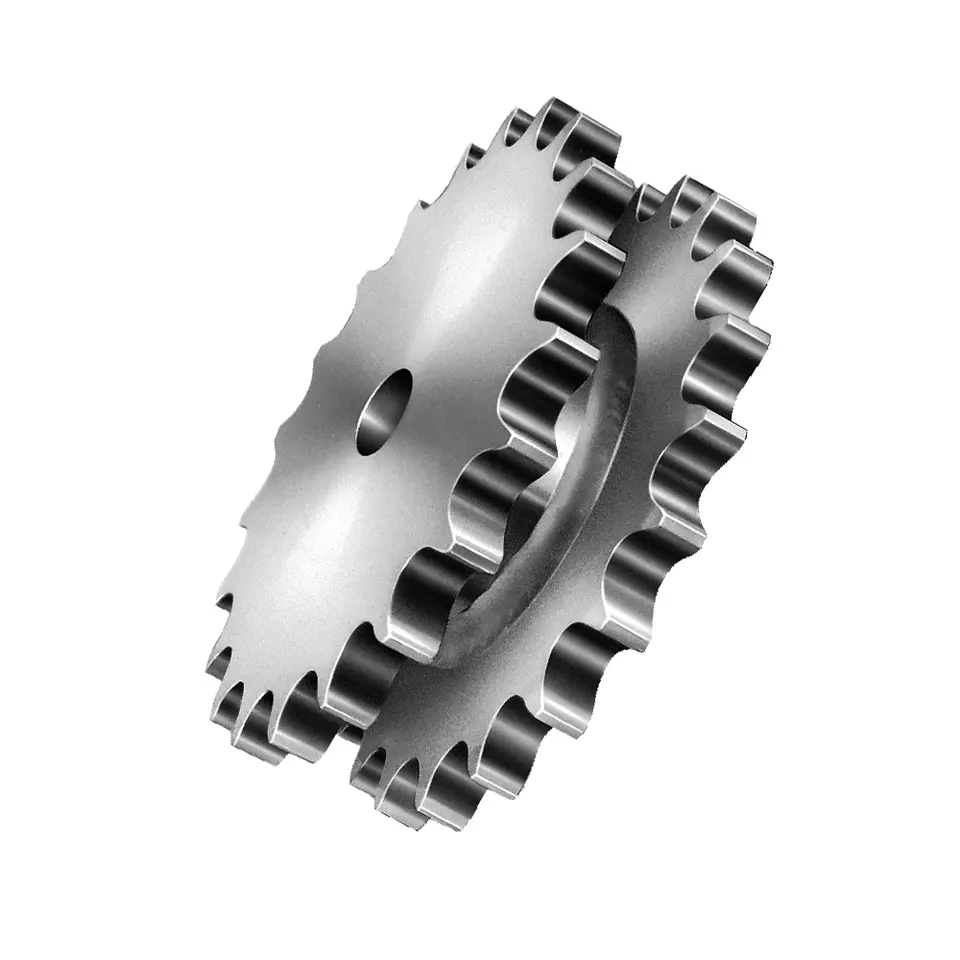
Temperatuurlimieten voor de werking van het wieltandwielsysteem
De temperatuurlimieten voor de werking van een tandwielsysteem zijn afhankelijk van de materialen die gebruikt zijn bij de constructie van de componenten. Verschillende materialen hebben verschillende temperatuurtoleranties en het overschrijden van deze limieten kan leiden tot verminderde prestaties, voortijdige slijtage en zelfs systeemuitval.
Hieronder vindt u een aantal veelgebruikte materialen voor tandwielsystemen en hun algemene temperatuurlimieten:
- Staal: Stalen tandwielen en wielen, die veelvuldig worden gebruikt in diverse toepassingen, hebben doorgaans een temperatuurlimiet van -40 °C tot 500 °C (-40 °F tot 932 °F). Het specifieke temperatuurbereik kan echter variëren afhankelijk van de staalsoort en eventuele coatings of behandelingen.
- Roestvrij staal: Tandwielen en tandwielen van roestvrij staal bieden een verbeterde corrosiebestendigheid en zijn bestand tegen hogere temperaturen dan gewoon staal. Hun temperatuurlimiet ligt doorgaans tussen -100 °C en 600 °C (-148 °F en 1112 °F).
- Kunststoffen: Tandwielen en tandwielen van kunststof worden veel gebruikt in toepassingen met lage belasting en lage snelheid. De temperatuurlimiet voor kunststof onderdelen varieert sterk, afhankelijk van het type kunststof. Over het algemeen ligt deze tussen -40 °C en 150 °C (-40 °F en 302 °F).
- Aluminium: Tandwielen en tandwielen van aluminium hebben een temperatuurlimiet van ongeveer -40°C tot 250°C (-40°F tot 482°F). Ze worden vaak gebruikt in toepassingen waar gewichtsbesparing cruciaal is.
Het is essentieel om de specificaties en materiaalinformatiebladen van de fabrikant te raadplegen voor de specifieke componenten die in het tandwielsysteem worden gebruikt, om hun temperatuurlimieten nauwkeurig te bepalen. Factoren zoals belasting, snelheid en omgevingsomstandigheden kunnen ook van invloed zijn op de werkelijke temperatuurtolerantie van het systeem.
Bij gebruik van een tandwielsysteem nabij de temperatuurlimieten zijn regelmatige controle en onderhoud noodzakelijk om de integriteit van de componenten en de algehele systeemprestaties te waarborgen. Indien de toepassing extreme temperaturen met zich meebrengt die de typische limieten van de materialen overschrijden, kunnen speciale hittebestendige materialen of koelmaatregelen nodig zijn om een betrouwbare werking te garanderen.
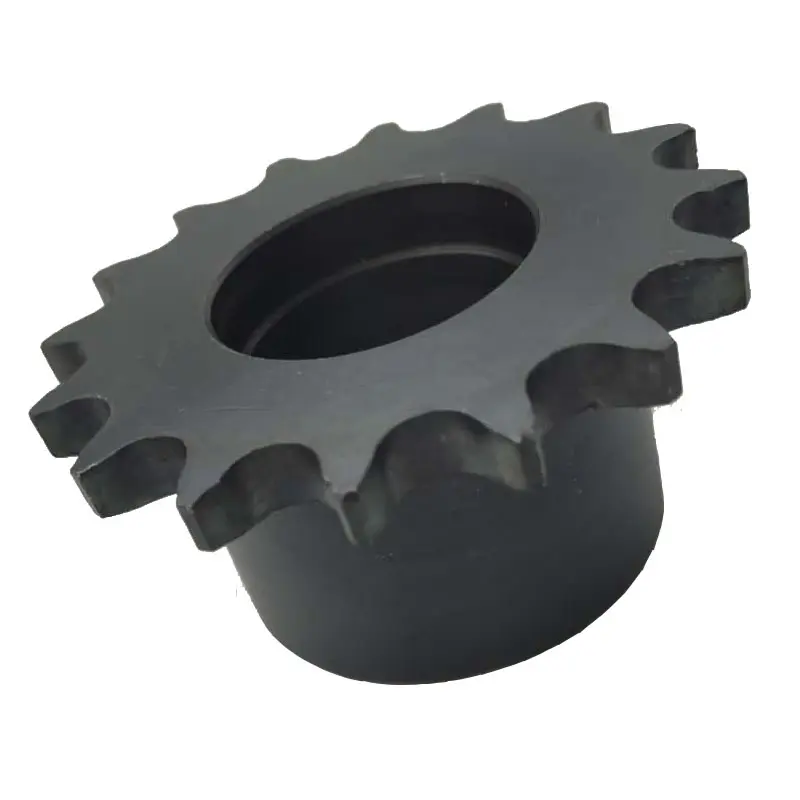
Role of a wheel sprocket in a Mechanical System
In a mechanical system, a wheel sprocket play a crucial role in transferring motion and power from one component to another. They are essential elements of various machines and mechanisms, such as bicycles, conveyor systems, automobiles, and industrial machinery. Let’s explore their functions in more detail:
1. Wheel:
The wheel is a circular component with a central shaft (axle) that allows it to rotate freely around the axle’s axis. Its primary functions include:
- Motion Transmission: When a force is applied to the wheel’s outer edge, it rotates around the axle, enabling the transfer of linear motion into rotational motion.
- Load Bearing: The wheel’s structure and material are designed to support and distribute the load placed on it, allowing smooth movement over various surfaces.
- Reduction of Friction: By using wheels, the friction between the moving object and the ground is significantly reduced, making it easier to move heavy loads with less effort.
- Directional Control: Wheels can be attached to steering mechanisms to control the direction of movement in vehicles and other equipment.
2. Sprocket:
A sprocket is a toothed wheel designed to mesh with a chain or a belt, facilitating motion transfer between the sprocket and the chain/belt. Its key functions include:
- Power Transmission: When rotational force (torque) is applied to the sprocket, the teeth engage with the links of the chain or belt, transferring motion and power from one sprocket to another.
- Speed and Torque Conversion: Different-sized sprockets can be used to adjust the speed and torque of the driven component in a mechanical system.
- Positive Drive: The teeth on the sprocket and the links on the chain/belt create a positive drive system, reducing the likelihood of slippage or loss of power during operation.
- Chain/Belt Tensioning: Sprockets help maintain proper tension in the chain or belt, ensuring optimal performance and longevity of the power transmission system.
Together, wheels and sprockets form a vital part of mechanical systems, enabling efficient motion transmission, power transfer, and control in a wide range of applications across various industries.


editor by CX 2023-10-08