Penerangan Produk
Nonstandard Industry MADE-TO-ORDER Or PLW Plywood Case Chain Sprocket Motorcycle Parts
Penerangan Produk
1. Produce strictly in accordance with ANSI or DIN standard dimension
2. Material: 1045 steel / Stainless Steel 304 & 316
3. Standard: ANSI, DIN, JINS, ISO, Standard America or customer drawing
4. Pilot bore, finished bore, taper bore and special bore
5. Bright surface and high precision
6. Advanced heat treatment and surface treatment craft
7. Best quality and competitive price
8. Welcome OEM / ODM
9. Processing equipment: Hobbing machine, Slotting machine, CNC lathes and other equipment.
10. Sprocket models: Contains special sprocket according to customer’s drawings, standard sprocket (American standard and metric).
| Product name | Zinc-Plated Driving Sprocket From China (05B16T-1) |
| Materials Available | 1. Stainless Steel: SS304, SS316, etc |
| 2. Alloy Steel: C45, 45Mn, 42CrMo, 20CrMo, etc | |
| 3. OEM according to your request | |
| Rawatan Permukaan | Heat treatment, Quenching treatment, High frequency normalizing treatment, Polishing, Electrophoresis paint processing, Anodic oxidation treatment, etc |
| Characteristic | Fire resistant, Oil resistant, Heat resistant, CZPT resistance, Oxidative resistance, Corrosion resistance, etc |
| Design criterion | ISO DIN ANSI & Customer’s Drawing |
| Size | Customer’s Drawing & ISO standard |
| Permohonan | Industrial transmission equipment |
| Package | Wooden Case / Container and pallet, or made-to-order |
| Certificate | ISO9001: 2008 |
| Advantage | Quality first, Service first, Competitive price, Fast delivery |
| Delivery Time | 20 days for samples. 45 days for official order. |
View more products,please click here…
Detailed Photos
Company Profile
| Standard Or Nonstandard: | Nonstandard |
|---|---|
| Application: | Motorcycle, Machinery, Marine, Agricultural Machinery, Car, Industry |
| Kekerasan: | Hardened Tooth Surface |
| Bahan: | Alloy Steel/Stainless Steel |
| Jenis: | Sproket |
| Sample: | for Free |
| Sampel: |
US$ 0/Piece
1 Keping (Pesanan Minimum) | |
|---|
| Penyesuaian: |
Tersedia
| Permintaan Tersuai |
|---|
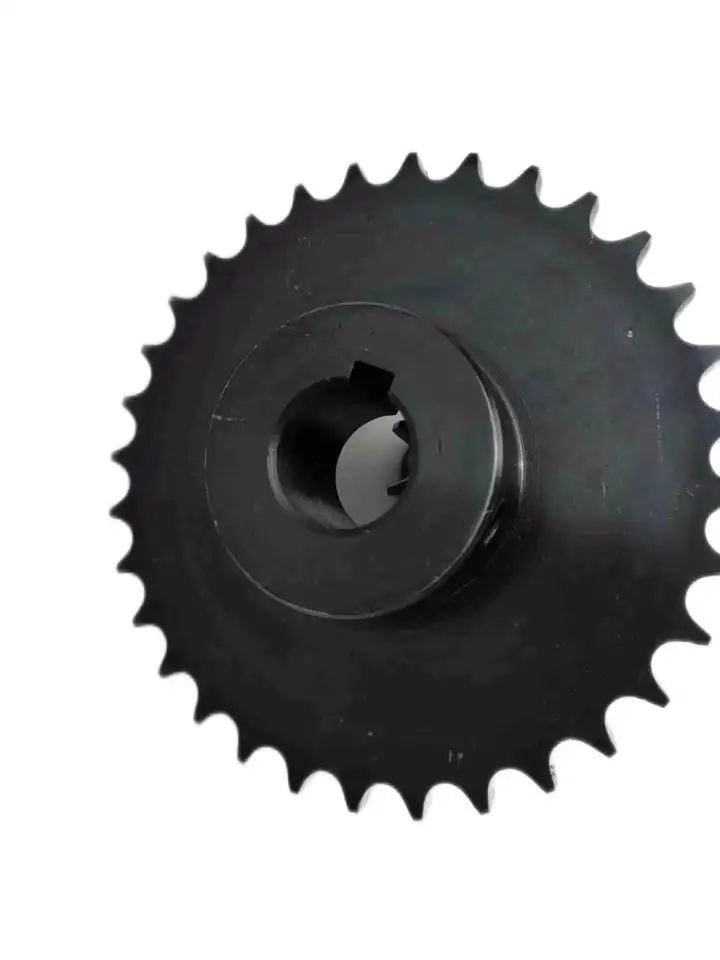
Calculating Torque Requirements for a wheel sprocket Assembly
Calculating the torque requirements for a wheel sprocket assembly involves considering various factors that contribute to the torque load. The torque requirement is crucial for selecting the appropriate motor or power source to drive the system effectively. Here’s a step-by-step guide:
- 1. Determine the Load Torque: Identify the torque required to overcome the resistance or load in the system. This includes the torque needed to move the load, overcome friction, and accelerate the load if applicable.
- 2. Identify the Sprocket Radius: Measure the radius of the sprocket (distance from the center of the sprocket to the point of contact with the chain or belt).
- 3. Calculate the Tension in the Chain or Belt: If using a chain or belt drive, calculate the tension in the chain or belt. Tension affects the torque required for power transmission.
- 4. Account for Efficiency Losses: Consider the efficiency of the system. Not all the input power will be converted into output power due to friction and other losses. Account for this efficiency in your calculations.
- 5. Use the Torque Equation: The torque (T) can be calculated using the following equation:
T = (Load Torque × Sprocket Radius) ÷ (Efficiency × Tension)
It’s essential to use consistent units of measurement (e.g., Newton meters or foot-pounds) for all values in the equation.
Remember that real-world conditions may vary, and it’s advisable to add a safety factor to your calculated torque requirements to ensure the system can handle unexpected peak loads or variations in operating conditions.
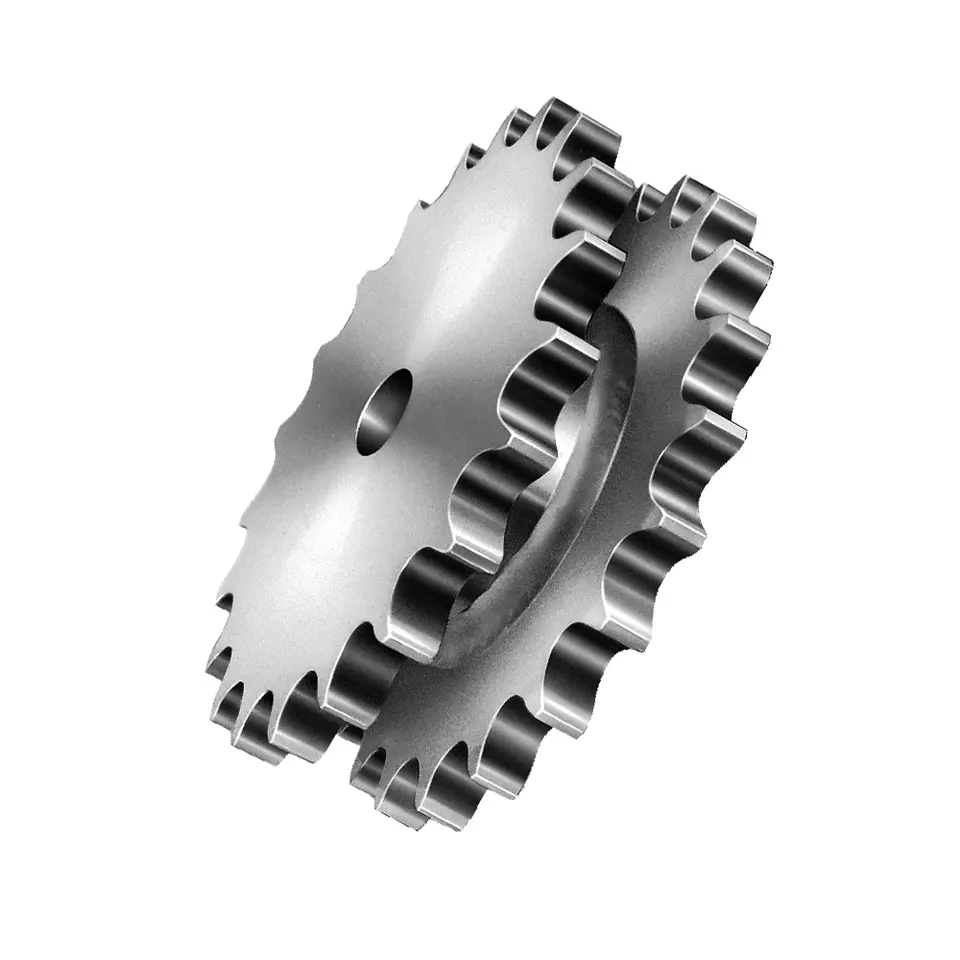
Had Suhu untuk Operasi Sistem Sproket Roda
Had suhu untuk operasi sistem gegancu roda bergantung pada bahan yang digunakan dalam pembinaan komponen. Bahan yang berbeza mempunyai toleransi suhu yang berbeza-beza, dan melebihi had ini boleh menyebabkan prestasi yang berkurangan, haus pramatang dan juga kegagalan sistem.
Berikut adalah beberapa bahan biasa yang digunakan dalam sistem gegancu roda dan had suhu amnya:
- Keluli: Sproket dan roda keluli, yang digunakan secara meluas dalam banyak aplikasi, biasanya mempunyai had suhu antara -40°C hingga 500°C (-40°F hingga 932°F). Walau bagaimanapun, julat suhu tertentu mungkin berbeza-beza berdasarkan gred keluli dan sebarang salutan atau rawatan yang digunakan.
- Keluli Tahan Karat: Sproket dan roda keluli tahan karat menawarkan ketahanan kakisan yang lebih baik dan boleh menahan suhu yang lebih tinggi daripada keluli biasa. Had suhunya biasanya antara -100°C hingga 600°C (-148°F hingga 1112°F).
- Plastik: Sproket dan roda plastik biasanya digunakan dalam aplikasi beban rendah dan kelajuan rendah. Had suhu untuk komponen plastik berbeza-beza bergantung pada jenis plastik yang digunakan. Secara amnya, ia boleh berkisar dari -40°C hingga 150°C (-40°F hingga 302°F).
- Aluminium: Sproket dan roda aluminium mempunyai had suhu kira-kira -40°C hingga 250°C (-40°F hingga 482°F). Ia sering digunakan dalam aplikasi di mana pengurangan berat adalah kritikal.
Adalah penting untuk merujuk spesifikasi pengilang dan helaian data bahan untuk komponen khusus yang digunakan dalam sistem gegancu roda bagi menentukan had suhunya dengan tepat. Faktor seperti beban, kelajuan dan keadaan persekitaran juga boleh mempengaruhi toleransi suhu sebenar sistem.
Apabila mengendalikan sistem gegancu roda berhampiran had suhunya, pemantauan dan penyelenggaraan yang kerap adalah perlu untuk memastikan integriti komponen dan prestasi keseluruhan sistem. Jika aplikasi melibatkan suhu yang melampau melebihi had biasa bahan, bahan suhu tinggi khusus atau langkah penyejukan mungkin diperlukan untuk mengekalkan operasi yang boleh dipercayai.
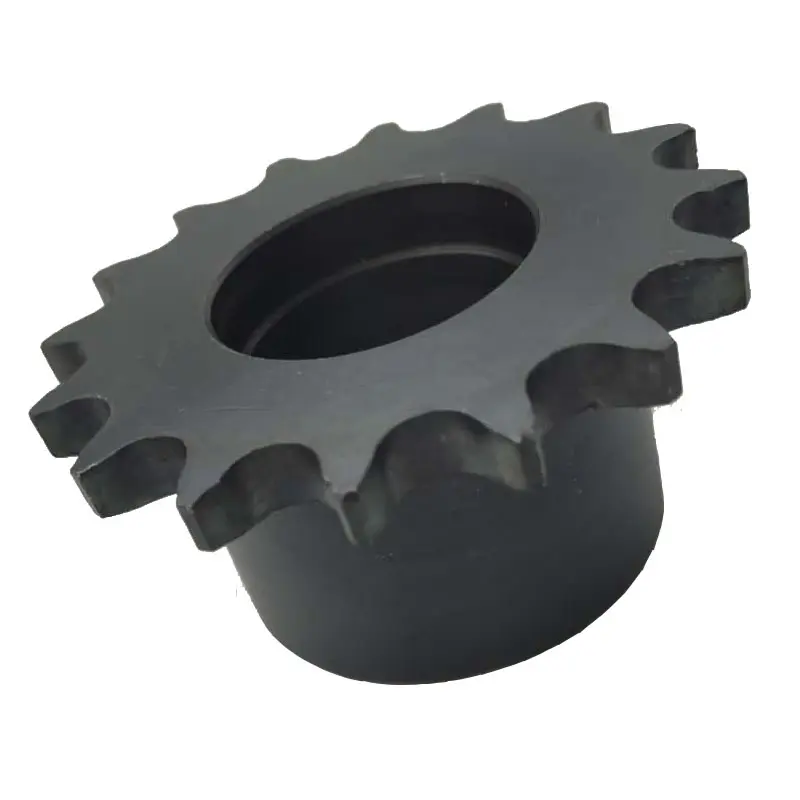
Role of a wheel sprocket in a Mechanical System
In a mechanical system, a wheel sprocket play a crucial role in transferring motion and power from one component to another. They are essential elements of various machines and mechanisms, such as bicycles, conveyor systems, automobiles, and industrial machinery. Let’s explore their functions in more detail:
1. Wheel:
The wheel is a circular component with a central shaft (axle) that allows it to rotate freely around the axle’s axis. Its primary functions include:
- Motion Transmission: When a force is applied to the wheel’s outer edge, it rotates around the axle, enabling the transfer of linear motion into rotational motion.
- Load Bearing: The wheel’s structure and material are designed to support and distribute the load placed on it, allowing smooth movement over various surfaces.
- Reduction of Friction: By using wheels, the friction between the moving object and the ground is significantly reduced, making it easier to move heavy loads with less effort.
- Directional Control: Wheels can be attached to steering mechanisms to control the direction of movement in vehicles and other equipment.
2. Sprocket:
A sprocket is a toothed wheel designed to mesh with a chain or a belt, facilitating motion transfer between the sprocket and the chain/belt. Its key functions include:
- Power Transmission: When rotational force (torque) is applied to the sprocket, the teeth engage with the links of the chain or belt, transferring motion and power from one sprocket to another.
- Speed and Torque Conversion: Different-sized sprockets can be used to adjust the speed and torque of the driven component in a mechanical system.
- Positive Drive: The teeth on the sprocket and the links on the chain/belt create a positive drive system, reducing the likelihood of slippage or loss of power during operation.
- Chain/Belt Tensioning: Sprockets help maintain proper tension in the chain or belt, ensuring optimal performance and longevity of the power transmission system.
Together, wheels and sprockets form a vital part of mechanical systems, enabling efficient motion transmission, power transfer, and control in a wide range of applications across various industries.


editor by CX 2023-10-08