Descrizione del prodotto
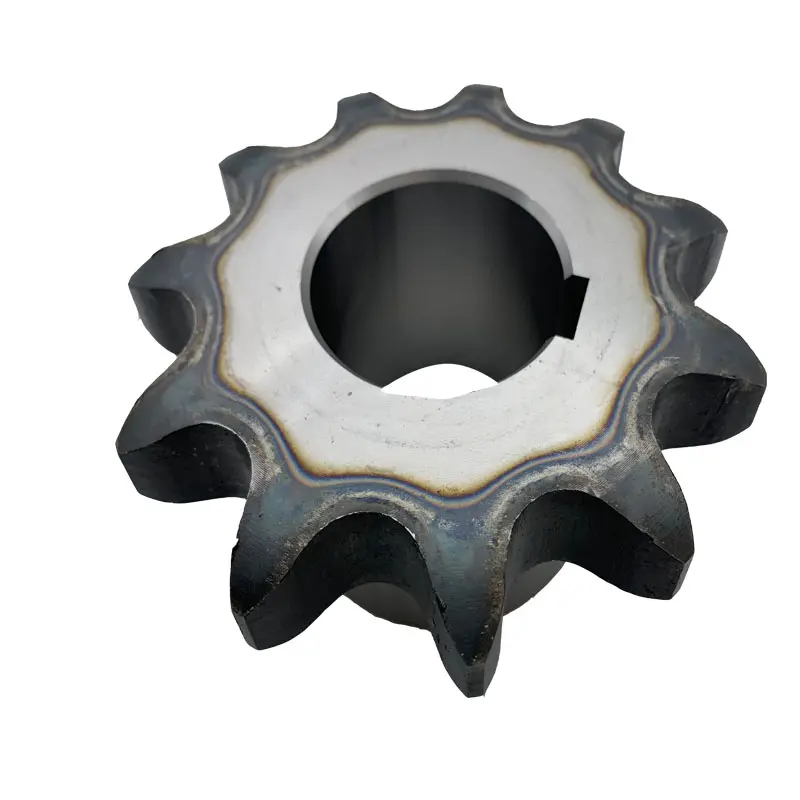
High Quality Chain Wheel Sprocket Carbon Steel and Stainless Steel Roller Chain Sprocket
We are main suppliers of all kind of Special chain wheel, standard and special chain wheel sprocket, industry sprocket, industrial chains sprocket, chain sprockets, wheel, sprockets wheel, sprocket, motorcycle wheel, special sprockets, agricultural sprocket, auto sprocket, car sprocket, agricultural sprocket, truck sprockets, stainless steel sprocket, crank wheel, double sprockets and so on. OEM customer welcomed!
Our sprocket is produced by CNC machine and quality well controlled
Each kind of standard sprocket products
1. Rang of product
03/04/05B/06B/08B/10B/12B/16B/20B/24B/28B/32B
25/35/40/41/50/60/80/100/120/140/160/180/200/240
2. Max. Processing diameter: ø =1450mm
The series of finished-bore sprockets
1. Rang of products
06B/08B/10B/12B/16B/20B/
35/40/41//50/60/80/100/120/140/160
2. Max. Processing diameter: ø =1450mm
Taper bore sprocket of BTL series
1. Rang of product
06B/08B/10B/12B/16B/20B
35/40/41//50/60/80/100/120/140/160
2. Max. Processing diameter: ø =1450mm.
Max. Coordinated taper bush: 8065
Taper bore sprocket of QTL serie
1. Rang of products
35/40/41//50/60/80/100/120/140/160/200
2. Max. Processing diameter: ø =1450mm.
Max. Coordinated QD cover: N
STL taper bore sprockets
1. Rang of products
35/40/41//50/60/80/100/120/140/160/200
2. Max. Processing diameter: ø =1450mm.
Max. Coordinated Browning cover: U2
Molten sprocket wheel
1. Rang of products
06B/08B/10B/12B/16B/20B/24B(technological-bore & BTL taper bore)
We feel honoured to offer made to order product.
2. Max. Processing diameter: ø =1450mm. Max. Coordinated taper
Bush: 5050
3. Max. Weight of the casting 2000kg.
Coarse pitch conveyor sprocket
1. Rang of product
P50/P75/P100/P50.8
BTL taper bore sprocket of standard series
1. Rang of product
06B/08B/10B/12B/16B/20B
35/40/50/60/80/100/120/140/160
Flat-top conveyor sprockets
1. Rang of product
P 1/2″
Idle gear
1. Rang of products
06B/08B/10B/12B/16B
35/40/41/50/60/80
Worm wheels &Worms
1. Rang of product( Module M1M3, Pressure angle20°
2. Rang of product( diametral pitch 4DP16PD,
Pressure angle14.5°
Cylindrical spur gear
1. Rang of product( Module M1M6, Pressure angle20° Pierce
2. Rang of product( diametral pitch 4DP16PD, Pressure angle20° /14.5° . CZPT taper bore
Straight bevel gear
1. Rang of product( Module M1.5M5, Pressure angle20° Pierce
2. Rang of product( diametral pitch 4DP16PD, Pressure angle20° /14.5° CZPT taper bore
| Materiale | C45, A3, 40Cr, 20CrMnTi, 42CrMo, copper, stainless steel and so on as per your request |
| process | Machined,Forged or casting |
| Heat treatment | High frequency quenching, heat treatment, hardened teeth |
| Surface treatment | Blacking, galvanization, chroming, electrophoresis, color painting, or customer requirement |
| Performance | High precision, high wear resistance, low noise, smooth and steady, high strength |
| Model number | Standard or nonstandard (single duplex and triple) 25B, 35B, 40B, 41B,50B, 60B, 80B, 100B, 120B, 140B, 160B,180B,200B,240B |
| Payment,minimum order and delivery | T/T ,LC, Delivery time is Negotiation |
| Confezione | Inner plastic bag and outer carton box or customer requirement. |
/* 22 gennaio 2571 19:08:37 */!function(){function s(e,r){var a,o={};try{e&&e.split(“,”).forEach(function(e,t){e&&(a=e.match(/(.*?):(.*)$/))&&1
| Standard Or Nonstandard: | Standard |
|---|---|
| Applicazione: | Machinery, Industry |
| Hardness: | Hardened |
| Manufacturing Method: | Cut Gear |
| Toothed Portion Shape: | Spur Gear |
| Materiale: | Alloy Steel |
| Esempi: |
US$ 60/Piece
1 pezzo (ordine minimo) | |
|---|
| Personalizzazione: |
Disponibile
| Richiesta personalizzata |
|---|

Factors Affecting the Efficiency of a wheel sprocket Setup
Several factors can influence the efficiency of a wheel sprocket system in power transmission and motion control applications. These factors should be carefully considered and optimized to ensure the system’s overall effectiveness and performance:
- 1. Friction: Friction between the wheel, sprocket, and the chain or belt can lead to energy losses. Using high-quality materials and lubrication can help reduce friction and improve efficiency.
- 2. Alignment: Proper alignment between the wheel and the sprocket is critical. Misalignment can cause increased wear, noise, and reduced efficiency. Regular maintenance and alignment checks are essential.
- 3. Tension: The correct tension in the chain or belt is crucial for efficient power transmission. Too loose or too tight tension can lead to performance issues and premature wear.
- 4. Material and Design: The choice of materials for the wheel sprocket, as well as their design, can impact efficiency. High-quality materials and well-engineered components reduce wear and improve overall system performance.
- 5. Load Distribution: Uneven load distribution across the wheel sprocket can lead to localized wear and decreased efficiency. Ensuring proper load distribution helps maintain uniform wear and power transmission.
- 6. Environmental Factors: Harsh environmental conditions, such as dust, moisture, and extreme temperatures, can affect the efficiency of the system. Choosing suitable materials and implementing protective measures can mitigate these effects.
- 7. Maintenance: Regular maintenance, including lubrication, inspection, and timely replacement of worn components, is vital for the long-term efficiency of the system.
- 8. Speed and Torque: The operating speed and torque requirements of the application should be considered when selecting the appropriate wheel sprocket size and specifications.
- 9. Chain or Belt Type: Different types of chains or belts, such as roller chains, silent chains, or toothed belts, have varying efficiencies. Choosing the right type for the specific application is crucial.
- 10. System Integration: The wheel sprocket system should be integrated correctly with other components in the machinery to ensure smooth operation and minimal energy losses.
By carefully considering and optimizing these factors, it is possible to improve the efficiency of the wheel sprocket system, leading to reduced energy consumption, less wear and tear, and overall better performance.
Load-Carrying Capacities of wheel sprocket Combinations
The load-carrying capacity of a wheel sprocket assembly depends on various factors, including the material, size, and design of both the wheel sprocket. Here are some common types of wheel sprocket combinations and their load-carrying capacities:
- Steel Wheel with Steel Sprocket: This combination offers high load-carrying capacity and is commonly used in heavy-duty applications. Steel wheels can handle substantial loads, and when paired with steel sprockets, the assembly can withstand even higher forces.
- Nylon Wheel with Steel Sprocket: Nylon wheels are known for their lightweight and durable nature. When combined with steel sprockets, they provide a good load-carrying capacity while reducing the overall weight of the assembly.
- Polyurethane Wheel with Steel Sprocket: Polyurethane wheels offer excellent wear resistance and are suitable for medium to heavy loads. When paired with steel sprockets, this combination can handle moderate to high load capacities.
- Rubber Wheel with Cast Iron Sprocket: Rubber wheels are known for their shock-absorbing properties and are often used in applications requiring vibration dampening. When used with cast iron sprockets, this combination can handle medium loads.
- Plastic Wheel with Plastic Sprocket: This combination is suitable for light-duty applications where lower loads are expected. Plastic wheels and sprockets are often used in applications that require low friction and quiet operation.
- Custom wheel sprocket Combinations: In some cases, custom wheel sprocket combinations are designed to meet specific load-carrying requirements. These combinations can be tailored to suit the application’s unique demands.
It’s important to note that load-carrying capacities also depend on other factors, such as the type of bearing used in the wheel, the shaft material, and the overall design of the mechanical system. Engineers should carefully consider the intended application, operating conditions, and safety factors when selecting the appropriate wheel sprocket combination to ensure optimal performance and longevity of the system.
Tipi di pignoni utilizzati con le ruote
Nei sistemi meccanici, le ruote dentate sono ingranaggi che si ingranano con una catena o una cinghia per trasmettere il movimento rotatorio e la potenza. Esistono diversi tipi di ruote dentate utilizzate con le ruote, ciascuna progettata per applicazioni specifiche:
1. Pignoni a catena a rulli:
Questi sono i tipi più comuni di pignoni utilizzati con le ruote e sono progettati per funzionare con catene a rulli. I pignoni per catene a rulli hanno denti che corrispondono al profilo dei rulli della catena, garantendo un innesto fluido e riducendo l'usura sia del pignone che della catena. Sono ampiamente utilizzati in biciclette, motociclette e macchinari industriali.
2. Pignoni a catena silenziosi:
Conosciute anche come ruote dentate a denti invertiti, queste ruote sono progettate per funzionare con catene silenziose. Le catene silenziose sono catene dentate che funzionano in modo silenzioso e fluido, risultando ideali per applicazioni in cui la riduzione del rumore è essenziale, come ad esempio nei sistemi di distribuzione di motori e automobili.
3. Pignoni della cinghia di distribuzione:
Le ruote dentate della cinghia di distribuzione vengono utilizzate con le cinghie di distribuzione per garantire una precisa sincronizzazione tra l'albero motore e l'albero a camme nei motori a combustione interna. Sono dotate di denti appositamente progettati per adattarsi al profilo della cinghia di distribuzione, consentendo una fasatura precisa e un movimento fluido.
4. Pignoni folli:
Le ruote folli vengono utilizzate per guidare e tendere catene o cinghie in un sistema. Non trasmettono direttamente potenza, ma svolgono un ruolo cruciale nel mantenere la corretta tensione e l'allineamento, elementi essenziali per una trasmissione efficiente della potenza e per evitare l'allentamento di catene o cinghie.
5. Pignoni da saldare:
Le ruote dentate da saldare sono progettate per essere saldate direttamente sul mozzo o sull'albero di una ruota, garantendo un fissaggio sicuro e permanente. Sono comunemente utilizzate in macchinari e attrezzature industriali.
6. Pignoni doppi-singoli:
Le ruote dentate doppie, note anche come ruote dentate duplex, presentano due serie di denti su un unico corpo. Vengono utilizzate quando è necessario azionare due catene separate alla stessa velocità e con lo stesso rapporto di trasmissione, come spesso accade nelle applicazioni gravose e nei sistemi di trasporto.
7. Pignoni conici:
Le ruote dentate coniche sono progettate con una conicità e una scanalatura per chiavetta che garantiscono un collegamento sicuro e facile da installare all'albero. Sono ampiamente utilizzate nei sistemi di trasmissione di potenza, dove il posizionamento e la rimozione delle ruote dentate sono frequenti.
Ogni tipo di pignone viene selezionato in base ai requisiti specifici dell'applicazione, al tipo di catena o cinghia e alle caratteristiche prestazionali desiderate. Una corretta selezione e manutenzione dei pignoni è essenziale per garantire un'efficiente trasmissione di potenza e prolungare la durata dell'intero sistema.


editor by CX 2024-03-26