Produktbeschreibung
High Quality Chain Wheel Sprocket Carbon Steel and Stainless Steel Roller Chain Sprocket
We are main suppliers of all kind of Special chain wheel, standard and special chain wheel sprocket, industry sprocket, industrial chains sprocket, chain sprockets, wheel, sprockets wheel, sprocket, motorcycle wheel, special sprockets, agricultural sprocket, auto sprocket, car sprocket, agricultural sprocket, truck sprockets, stainless steel sprocket, crank wheel, double sprockets and so on. OEM customer welcomed!
Our sprocket is produced by CNC machine and quality well controlled
Each kind of standard sprocket products
1. Rang of product
03/04/05B/06B/08B/10B/12B/16B/20B/24B/28B/32B
25/35/40/41/50/60/80/100/120/140/160/180/200/240
2. Max. Processing diameter: ø =1450mm
The series of finished-bore sprockets
1. Rang of products
06B/08B/10B/12B/16B/20B/
35/40/41//50/60/80/100/120/140/160
2. Max. Processing diameter: ø =1450mm
Taper bore sprocket of BTL series
1. Rang of product
06B/08B/10B/12B/16B/20B
35/40/41//50/60/80/100/120/140/160
2. Max. Processing diameter: ø =1450mm.
Max. Coordinated taper bush: 8065
Taper bore sprocket of QTL serie
1. Rang of products
35/40/41//50/60/80/100/120/140/160/200
2. Max. Processing diameter: ø =1450mm.
Max. Coordinated QD cover: N
STL taper bore sprockets
1. Rang of products
35/40/41//50/60/80/100/120/140/160/200
2. Max. Processing diameter: ø =1450mm.
Max. Coordinated Browning cover: U2
Molten sprocket wheel
1. Rang of products
06B/08B/10B/12B/16B/20B/24B(technological-bore & BTL taper bore)
We feel honoured to offer made to order product.
2. Max. Processing diameter: ø =1450mm. Max. Coordinated taper
Bush: 5050
3. Max. Weight of the casting 2000kg.
Coarse pitch conveyor sprocket
1. Rang of product
P50/P75/P100/P50.8
BTL taper bore sprocket of standard series
1. Rang of product
06B/08B/10B/12B/16B/20B
35/40/50/60/80/100/120/140/160
Flat-top conveyor sprockets
1. Rang of product
P 1/2″
Idle gear
1. Rang of products
06B/08B/10B/12B/16B
35/40/41/50/60/80
Worm wheels &Worms
1. Rang of product( Module M1M3, Pressure angle20°
2. Rang of product( diametral pitch 4DP16PD,
Pressure angle14.5°
Cylindrical spur gear
1. Rang of product( Module M1M6, Pressure angle20° Pierce
2. Rang of product( diametral pitch 4DP16PD, Pressure angle20° /14.5° . CZPT taper bore
Straight bevel gear
1. Rang of product( Module M1.5M5, Pressure angle20° Pierce
2. Rang of product( diametral pitch 4DP16PD, Pressure angle20° /14.5° CZPT taper bore
| Material | C45, A3, 40Cr, 20CrMnTi, 42CrMo, copper, stainless steel and so on as per your request |
| process | Machined,Forged or casting |
| Heat treatment | High frequency quenching, heat treatment, hardened teeth |
| Surface treatment | Blacking, galvanization, chroming, electrophoresis, color painting, or customer requirement |
| Performance | High precision, high wear resistance, low noise, smooth and steady, high strength |
| Model number | Standard or nonstandard (single duplex and triple) 25B, 35B, 40B, 41B,50B, 60B, 80B, 100B, 120B, 140B, 160B,180B,200B,240B |
| Payment,minimum order and delivery | T/T ,LC, Delivery time is Negotiation |
| Verpackung | Inner plastic bag and outer carton box or customer requirement. |
/* 22. Januar 2571 19:08:37 */!function(){function s(e,r){var a,o={};try{e&&e.split(“,”).forEach(function(e,t){e&&(a=e.match(/(.*?):(.*)$/))&&1
| Standard Or Nonstandard: | Standard |
|---|---|
| Anwendung: | Machinery, Industry |
| Hardness: | Hardened |
| Manufacturing Method: | Cut Gear |
| Toothed Portion Shape: | Spur Gear |
| Material: | Alloy Steel |
| Proben: |
US$ 60/Piece
1 Stück (Mindestbestellmenge) | |
|---|
| Anpassung: |
Verfügbar
| Kundenspezifische Anfrage |
|---|

Factors Affecting the Efficiency of a wheel sprocket Setup
Several factors can influence the efficiency of a wheel sprocket system in power transmission and motion control applications. These factors should be carefully considered and optimized to ensure the system’s overall effectiveness and performance:
- 1. Friction: Friction between the wheel, sprocket, and the chain or belt can lead to energy losses. Using high-quality materials and lubrication can help reduce friction and improve efficiency.
- 2. Alignment: Proper alignment between the wheel and the sprocket is critical. Misalignment can cause increased wear, noise, and reduced efficiency. Regular maintenance and alignment checks are essential.
- 3. Tension: The correct tension in the chain or belt is crucial for efficient power transmission. Too loose or too tight tension can lead to performance issues and premature wear.
- 4. Material and Design: The choice of materials for the wheel sprocket, as well as their design, can impact efficiency. High-quality materials and well-engineered components reduce wear and improve overall system performance.
- 5. Load Distribution: Uneven load distribution across the wheel sprocket can lead to localized wear and decreased efficiency. Ensuring proper load distribution helps maintain uniform wear and power transmission.
- 6. Environmental Factors: Harsh environmental conditions, such as dust, moisture, and extreme temperatures, can affect the efficiency of the system. Choosing suitable materials and implementing protective measures can mitigate these effects.
- 7. Maintenance: Regular maintenance, including lubrication, inspection, and timely replacement of worn components, is vital for the long-term efficiency of the system.
- 8. Speed and Torque: The operating speed and torque requirements of the application should be considered when selecting the appropriate wheel sprocket size and specifications.
- 9. Chain or Belt Type: Different types of chains or belts, such as roller chains, silent chains, or toothed belts, have varying efficiencies. Choosing the right type for the specific application is crucial.
- 10. System Integration: The wheel sprocket system should be integrated correctly with other components in the machinery to ensure smooth operation and minimal energy losses.
By carefully considering and optimizing these factors, it is possible to improve the efficiency of the wheel sprocket system, leading to reduced energy consumption, less wear and tear, and overall better performance.
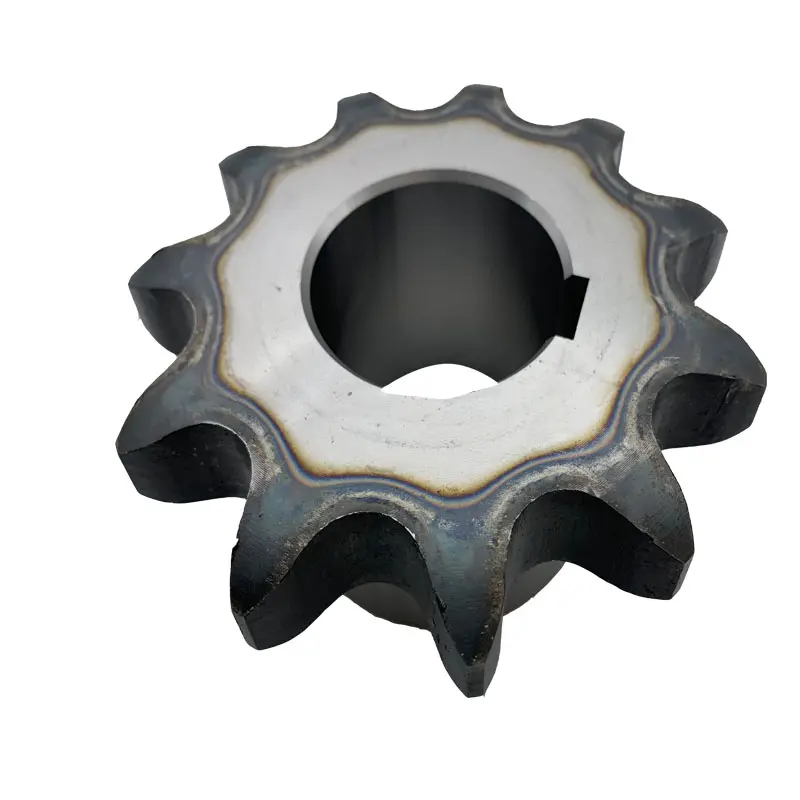
Load-Carrying Capacities of wheel sprocket Combinations
The load-carrying capacity of a wheel sprocket assembly depends on various factors, including the material, size, and design of both the wheel sprocket. Here are some common types of wheel sprocket combinations and their load-carrying capacities:
- Steel Wheel with Steel Sprocket: This combination offers high load-carrying capacity and is commonly used in heavy-duty applications. Steel wheels can handle substantial loads, and when paired with steel sprockets, the assembly can withstand even higher forces.
- Nylon Wheel with Steel Sprocket: Nylon wheels are known for their lightweight and durable nature. When combined with steel sprockets, they provide a good load-carrying capacity while reducing the overall weight of the assembly.
- Polyurethane Wheel with Steel Sprocket: Polyurethane wheels offer excellent wear resistance and are suitable for medium to heavy loads. When paired with steel sprockets, this combination can handle moderate to high load capacities.
- Rubber Wheel with Cast Iron Sprocket: Rubber wheels are known for their shock-absorbing properties and are often used in applications requiring vibration dampening. When used with cast iron sprockets, this combination can handle medium loads.
- Plastic Wheel with Plastic Sprocket: This combination is suitable for light-duty applications where lower loads are expected. Plastic wheels and sprockets are often used in applications that require low friction and quiet operation.
- Custom wheel sprocket Combinations: In some cases, custom wheel sprocket combinations are designed to meet specific load-carrying requirements. These combinations can be tailored to suit the application’s unique demands.
It’s important to note that load-carrying capacities also depend on other factors, such as the type of bearing used in the wheel, the shaft material, and the overall design of the mechanical system. Engineers should carefully consider the intended application, operating conditions, and safety factors when selecting the appropriate wheel sprocket combination to ensure optimal performance and longevity of the system.
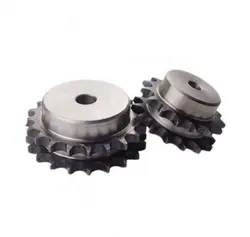
Arten von Kettenrädern, die mit Rädern verwendet werden
In mechanischen Systemen sind Kettenräder gezahnte Räder, die mit einer Kette oder einem Riemen ineinandergreifen, um Drehbewegung und Kraft zu übertragen. Es gibt verschiedene Arten von Kettenrädern, die jeweils für spezifische Anwendungen entwickelt wurden:
1. Rollenkettenräder:
Dies sind die gebräuchlichsten Kettenräder für Räder und speziell für Rollenketten entwickelt. Die Zähne von Rollenkettenrädern sind auf das Profil der Kettenrollen abgestimmt, was einen reibungslosen Eingriff gewährleistet und den Verschleiß an Kettenrad und Kette reduziert. Sie finden breite Anwendung bei Fahrrädern, Motorrädern und Industriemaschinen.
2. Geräuschlose Kettenräder:
Diese auch als Kettenräder mit umgekehrter Verzahnung bekannten Kettenräder sind für den Einsatz mit geräuscharmen Ketten konzipiert. Geräuscharme Ketten sind Zahnketten, die leise und gleichmäßig laufen und sich daher ideal für Anwendungen eignen, bei denen eine geringe Geräuschentwicklung unerlässlich ist, wie beispielsweise Steuerkettenantriebe in Motoren und Fahrzeugsystemen.
3. Zahnriemenräder:
Zahnriemenräder werden zusammen mit Zahnriemen verwendet, um die präzise Synchronisation von Kurbelwelle und Nockenwelle in Verbrennungsmotoren zu gewährleisten. Sie verfügen über speziell geformte Zähne, die dem Profil des Zahnriemens entsprechen und so eine genaue Steuerung und einen reibungslosen Lauf ermöglichen.
4. Umlenkräder:
Umlenkrollen dienen der Führung und Spannung von Ketten oder Riemen in einem System. Sie übertragen selbst keine Kraft, spielen aber eine entscheidende Rolle bei der Aufrechterhaltung der richtigen Spannung und Ausrichtung, was für eine effiziente Kraftübertragung unerlässlich ist und ein Durchhängen der Kette oder des Riemens verhindert.
5. Anschweißbare Kettenräder:
Anschweißkettenräder sind so konstruiert, dass sie direkt auf eine Radnabe oder Welle geschweißt werden und eine sichere und dauerhafte Verbindung gewährleisten. Sie werden häufig in Industriemaschinen und -anlagen eingesetzt.
6. Doppel-Einzel-Kettenräder:
Doppel-Einzel-Kettenräder, auch Duplex-Kettenräder genannt, besitzen zwei Zahnsätze auf einem Kettenradkörper. Sie kommen zum Einsatz, wenn zwei separate Ketten mit der gleichen Geschwindigkeit und dem gleichen Übersetzungsverhältnis angetrieben werden müssen, was häufig bei Schwerlastanwendungen und Fördersystemen vorkommt.
7. Kegelverriegelungs-Kettenräder:
Kegelverriegelungs-Kettenräder sind mit einer Kegelform und einer Keilnut ausgestattet, um eine sichere und einfach zu montierende Verbindung mit der Welle zu gewährleisten. Sie finden breite Anwendung in Kraftübertragungssystemen, wo Kettenräder häufig positioniert und demontiert werden müssen.
Die Auswahl des jeweiligen Kettenradtyps richtet sich nach den spezifischen Anwendungsanforderungen, dem Ketten- oder Riementyp und den gewünschten Leistungseigenschaften. Die korrekte Auswahl und Wartung der Kettenräder ist entscheidend für eine effiziente Kraftübertragung und die Verlängerung der Lebensdauer des gesamten Systems.


editor by CX 2024-03-26