Descrizione del prodotto
|
Model NO.
|
standard/unstandard |
|
Type |
Transmission Part |
|
Customization |
Disegno |
|
Shipping |
by Sea Freight/by Land Freight/by Air Freight |
|
Service |
OEM ODM |
|
Series |
DIN,ANSI and So on |
|
Supply Ability |
20000 PCS Per Month |
|
Certification |
ISO9001 |
|
Use |
Transmission Machine |
|
Product Name |
Steel Roller Chain Sprocket |
|
Size |
Customized Size or Standard |
|
Processing |
Hobbing |
|
Trattamento superficiale |
Black Oxide,Zinc Plated,Nickel Plated |
|
Delivery Time |
Usually 20-30 Days |
|
Transport Package |
Plastic Bag+Plywood Box |
|
Specifiche |
40B 35A C2040 idler sprocket and so on |
|
Origin |
China |
|
Production Capacity |
30000 PCS Per Month |
|
Costo di spedizione:
Costo stimato per unità. |
Da negoziare|
|
|---|
| Standard Or Nonstandard: | Standard |
|---|---|
| Applicazione: | Motor, Motorcycle, Machinery, Agricultural Machinery |
| Hardness: | Hardened Tooth Surface |
| Esempi: |
US$ 10/Piece
1 pezzo (ordine minimo) | Ordina un campione |
|---|
| Personalizzazione: |
Disponibile
| Richiesta personalizzata |
|---|
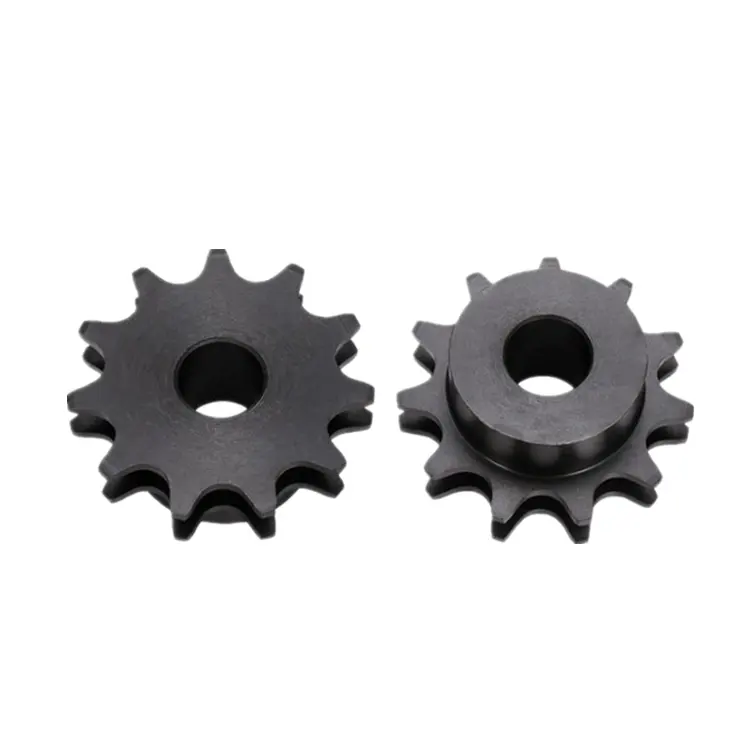
Sistema di pignoni per ruote in macchinari pesanti e attrezzature industriali
Sì, il sistema ruota-pignone è comunemente utilizzato nei macchinari pesanti e nelle attrezzature industriali per la trasmissione di potenza e il controllo del movimento. La configurazione ruota-pignone è un metodo versatile ed efficiente per trasmettere la forza di rotazione tra due alberi.
Nei macchinari pesanti e nelle attrezzature industriali, la ruota è tipicamente fissata a un albero, mentre la ruota dentata è montata su un altro albero. Una catena o una cinghia dentata è avvolta attorno alla ruota dentata, collegandoli. Quando la ruota ruota, la catena o la cinghia si innesta sulla ruota dentata, provocandone la rotazione e quella dell'albero a cui è collegata. Questo meccanismo consente il trasferimento di potenza da un albero all'altro, permettendo il funzionamento di vari componenti e parti del macchinario.
Le applicazioni più comuni del sistema ruota-pignone nei macchinari pesanti includono:
- Macchinari edili: Pale gommate, escavatori, gru e altre macchine edili utilizzano spesso sistemi di pignoni per una trasmissione efficiente della potenza nelle varie parti in movimento.
- Attrezzature per la movimentazione dei materiali: I carrelli elevatori, i sistemi di trasporto a nastro e altre attrezzature per la movimentazione dei materiali utilizzano configurazioni di ruote dentate per spostare merci e materiali in modo fluido e affidabile.
- Attrezzature minerarie: I macchinari minerari, come le perforatrici e i nastri trasportatori, spesso incorporano gruppi di ruote dentate per la trasmissione di potenza in ambienti difficili.
- Macchinari agricoli: Trattori, mietitrebbie e altre attrezzature agricole utilizzano sistemi di pignoni per azionare vari componenti come ruote e meccanismi di raccolta.
- Robotica industriale: Nei processi produttivi, robot e sistemi automatizzati utilizzano spesso sistemi di ruote dentate per un controllo preciso del movimento e una trasmissione efficiente della potenza.
Uno dei principali vantaggi del sistema ruota-pignone è la sua capacità di gestire carichi pesanti e trasmettere potenza su lunghe distanze. Si tratta di un metodo di trasmissione di potenza affidabile ed economico in diversi contesti industriali. Tuttavia, una corretta manutenzione e un allineamento adeguato sono fondamentali per garantire prestazioni ottimali e una lunga durata del sistema.
Nel complesso, il sistema ruota-pignone è una soluzione di trasmissione di potenza ampiamente utilizzata ed efficace nei macchinari pesanti e nelle attrezzature industriali, offrendo versatilità ed efficienza in una vasta gamma di applicazioni.
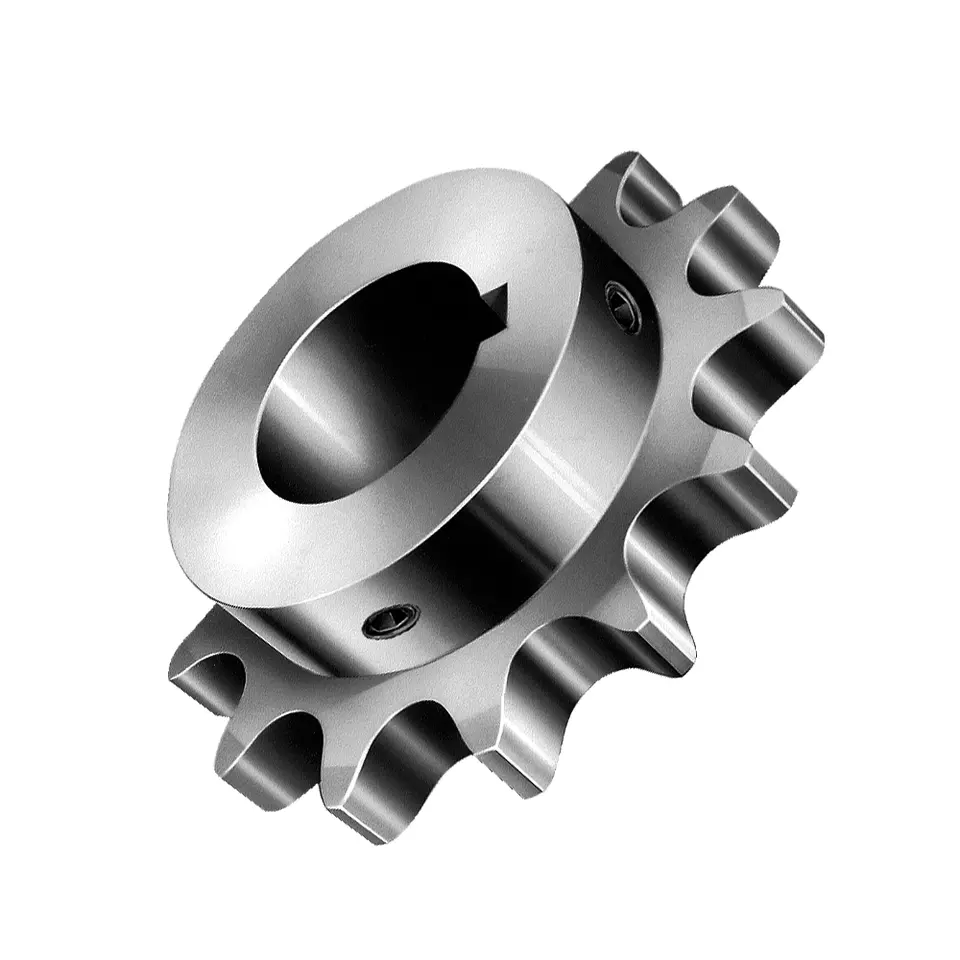
Choosing the Right Material for a Sprocket to Ensure Longevity
Choosing the right material for a sprocket is crucial to ensure its longevity and reliable performance in a given application. The material selection depends on various factors such as load, speed, operating environment, and budget. Here are some common materials used for sprockets and their considerations:
- Acciaio: Steel sprockets are widely used in a wide range of applications due to their excellent strength, durability, and wear resistance. They are suitable for heavy-duty and high-speed operations. Different grades of steel, such as carbon steel or alloy steel, offer varying levels of hardness and strength.
- Acciaio inossidabile: Stainless steel sprockets are preferred when corrosion resistance is essential, making them suitable for applications where the sprocket is exposed to moisture, chemicals, or outdoor elements. They are commonly used in food processing, pharmaceutical, and marine industries.
- Cast Iron: Cast iron sprockets offer good wear resistance and are often used in low to medium-speed applications. They are cost-effective and provide excellent performance in less demanding conditions.
- Plastica: Plastic sprockets are lightweight and corrosion-resistant. They are commonly used in applications where low noise, self-lubrication, and resistance to chemicals or moisture are required. However, they have limited load-carrying capacity and may not be suitable for heavy-duty applications.
- Alluminio: Aluminum sprockets are lightweight and commonly used in applications where weight reduction is critical, such as aerospace and certain machinery. However, they are not as durable as steel sprockets and are not suitable for high loads or harsh environments.
When choosing the right material for a sprocket, consider the following:
- Load Capacity: Select a material that can handle the expected loads in the application without deforming or wearing excessively.
- Speed: Higher speeds may require materials with better heat dissipation and wear resistance.
- Environment: Consider factors such as moisture, chemicals, temperature, and outdoor exposure. Choose a material with suitable corrosion resistance and resilience to environmental conditions.
- Maintenance: Some materials may require more frequent maintenance or lubrication to ensure longevity.
- Cost: Balance the material’s performance with the budget constraints of the project.
It’s essential to consult with sprocket manufacturers or material experts to determine the most appropriate material for your specific application. They can provide valuable insights and recommendations based on your requirements, helping to ensure the longevity and optimal performance of the sprocket in your machinery or equipment.
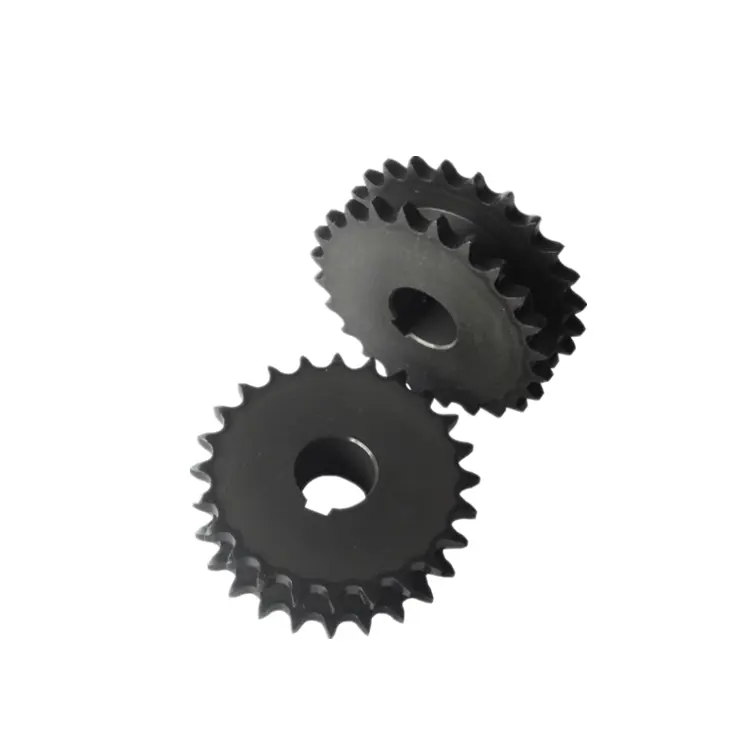
Eco-Friendly Materials for Manufacturing Wheels and Sprockets
Yes, there are eco-friendly materials used for manufacturing wheels and sprockets. As industries strive to reduce their environmental impact and promote sustainability, manufacturers are exploring alternative materials that are more environmentally friendly. Some of the eco-friendly materials used for manufacturing wheels and sprockets include:
1. Recycled Materials:
Using recycled materials, such as recycled plastic or metal, can significantly reduce the demand for virgin raw materials and lower the overall carbon footprint. These materials are obtained from post-consumer or post-industrial waste and processed to create new products, reducing the need for new resource extraction.
2. Biodegradable Materials:
Biodegradable plastics, such as PLA (polylactic acid) and PHA (polyhydroxyalkanoates), are derived from renewable plant sources and can break down naturally in the environment. These materials are gaining popularity for applications where disposal or end-of-life considerations are critical.
3. Sustainable Composites:
Manufacturers are developing sustainable composite materials that combine renewable fibers, such as bamboo, hemp, or flax, with biodegradable resins. These composites offer good strength and rigidity while being more environmentally friendly compared to traditional fiber-reinforced plastics.
4. Natural Materials:
In some cases, natural materials like wood or bamboo are used to create sprockets and wheels for specific applications. These materials are renewable and biodegradable, making them a more sustainable choice.
5. Low-Toxicity Materials:
Some eco-friendly materials focus on reducing the use of harmful chemicals during manufacturing. Low-toxicity materials are not only better for the environment but also for the health and safety of workers involved in the production process.
When selecting eco-friendly materials for wheels and sprockets, it’s essential to consider factors such as the specific application, load-bearing requirements, and the material’s end-of-life characteristics. Manufacturers and users can contribute to environmental sustainability by opting for these eco-friendly alternatives in their machinery and equipment.


editor by CX 2023-08-09