Opis produktu
Opis produktu
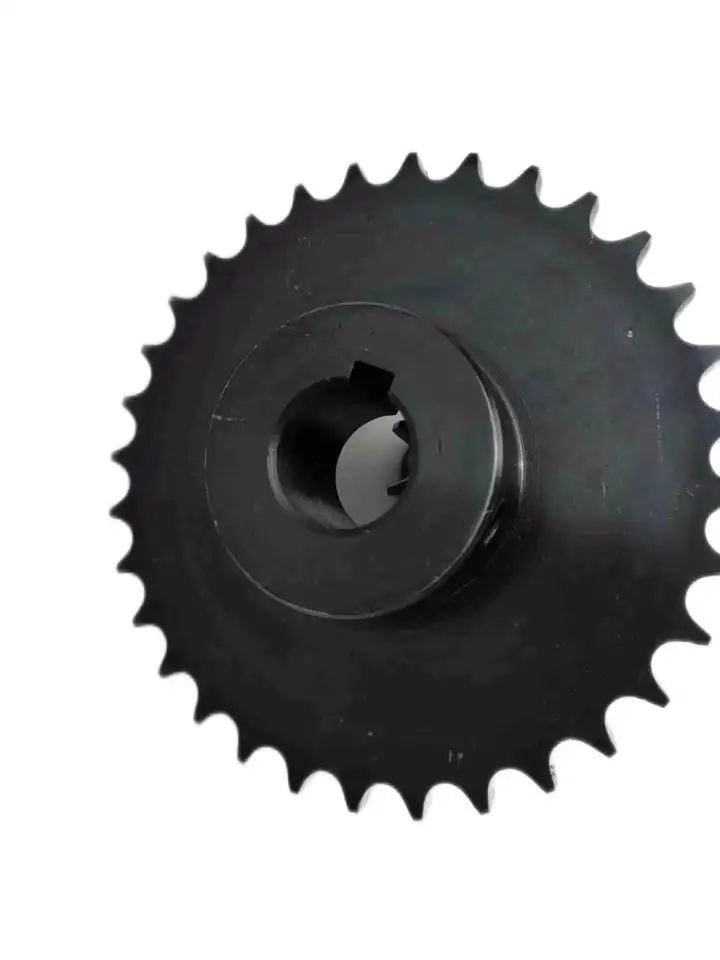
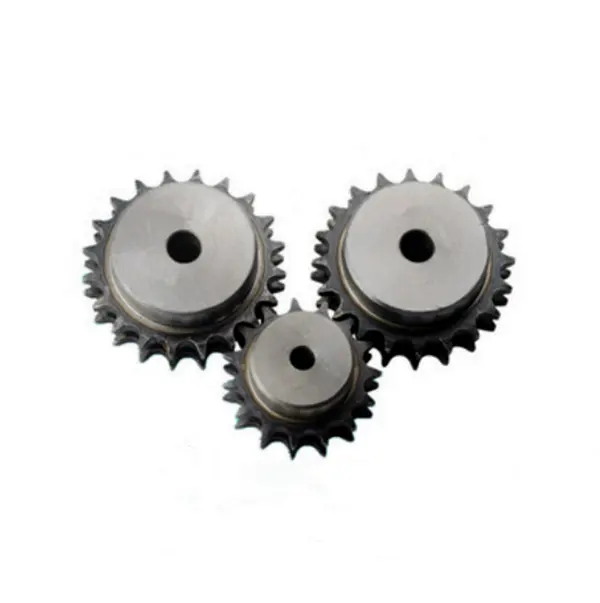
Standard China Factory Industrial 08A-1 Chain Sprocket Wheel
We provide different types of stock bore sprockets: Flat sprocket, single hub, both hubs, single dual.
And we also have finished bore sprocket, ASA sprocket, taper bore sprocket, double simplex sprocket, etc.
Please contact us for the details.
| Item | Sprocket |
| Standard | DIN, KANA, ANSI, ISO, etc |
| Tworzywo | C45, stainless steel, cast iron, etc |
| Obróbka powierzchni | Teeth hardened, black oxide, zinc plated, electrophoresis, etc |
| Mark | Based on customer’s requirement |
| Process | Forging, Cutting, Hobbing, lathe machining |
Product Parameters
Production Line
Installation Instructions
All items are checked and tested thoroughly during every working procedure and after the product is finally manufactured to ensure that best quality product goes out in the market.
Opakowanie i wysyłka
Standard export case (Details according to customer’s requirement)
The export of plywood case does not need fumigation, and has good structural strength and high stability.
It has the advantages of light material, high strength, good elasticity and toughness, shock resistance and vibration resistance, easy coating, insulation, etc.Recyclable, conducive to environmental protection.
Profil firmy
The company has featuring complete equipment, advanced technology and excellent quality control and testing system, excellent product quality, reasonable price.
Its main products are: Standard Sprockets, Taper Bore Sprockets, Special Sprockets, Couplings, Shafts, Gears, Timing Pulleys,V-belt Pulleys,Taper Lock Bush,Gear Racks and so on.
The factory also has the ability to make special items according to customer’s design.
Has its own export company named: HangZhou DELONG IMP.AND EXP.CO.,LTD.
Add:NO.211,ChuangXin Rd,ChengNan Industrail Zone,HuZhou,ZheJiang ,China 313000
| Standard Or Nonstandard: | Standard |
|---|---|
| Application: | Motor, Machinery, Agricultural Machinery, Transmission |
| Hardness: | Hardened Tooth Surface |
| Manufacturing Method: | Cast Gear |
| Toothed Portion Shape: | Spur Gear |
| Tworzywo: | Stal |
| Personalizacja: |
Dostępny
| Spersonalizowane żądanie |
|---|
Calculating Torque Requirements for a wheel sprocket Assembly
Calculating the torque requirements for a wheel sprocket assembly involves considering various factors that contribute to the torque load. The torque requirement is crucial for selecting the appropriate motor or power source to drive the system effectively. Here’s a step-by-step guide:
- 1. Determine the Load Torque: Identify the torque required to overcome the resistance or load in the system. This includes the torque needed to move the load, overcome friction, and accelerate the load if applicable.
- 2. Identify the Sprocket Radius: Measure the radius of the sprocket (distance from the center of the sprocket to the point of contact with the chain or belt).
- 3. Calculate the Tension in the Chain or Belt: If using a chain or belt drive, calculate the tension in the chain or belt. Tension affects the torque required for power transmission.
- 4. Account for Efficiency Losses: Consider the efficiency of the system. Not all the input power will be converted into output power due to friction and other losses. Account for this efficiency in your calculations.
- 5. Use the Torque Equation: The torque (T) can be calculated using the following equation:
T = (Load Torque × Sprocket Radius) ÷ (Efficiency × Tension)
It’s essential to use consistent units of measurement (e.g., Newton meters or foot-pounds) for all values in the equation.
Remember that real-world conditions may vary, and it’s advisable to add a safety factor to your calculated torque requirements to ensure the system can handle unexpected peak loads or variations in operating conditions.
Special Considerations for Using a wheel sprocket System in Off-Road Vehicles
Off-road vehicles operate in rugged and challenging environments, which can put additional stress on the wheel sprocket system. Here are some special considerations to keep in mind when using a wheel sprocket system in off-road vehicles:
- Material Selection: Choose high-quality materials for the wheel sprocket that can withstand rough terrains, impacts, and exposure to elements. Materials like hardened steel or alloys with good impact resistance are commonly used.
- Sealing and Protection: Ensure that the wheel bearings and sprocket teeth are adequately sealed to prevent dirt, mud, water, and other debris from entering. Proper sealing helps to maintain smooth operation and prolong the lifespan of components.
- Reinforcement: Consider reinforcing the wheel sprocket assembly if the vehicle will encounter heavy loads or extreme conditions. Reinforcements can add strength and durability to handle challenging off-road conditions.
- Smarowanie: Use a high-quality lubricant suitable for off-road conditions. Frequent lubrication is crucial to reduce friction, prevent corrosion, and protect components from wear and tear.
- Regular Inspection: Off-road vehicles experience higher vibrations and shocks, leading to accelerated wear. Perform regular inspections to detect any signs of damage, misalignment, or wear. Address issues promptly to avoid further problems.
- Shock Absorption: Consider incorporating shock-absorbing features or suspension systems to mitigate the impact on the wheel sprocket system during off-road driving. This helps to protect the components and improve overall vehicle performance.
- Environmental Considerations: Off-road environments often expose the wheel sprocket system to dirt, sand, water, and other harsh elements. Choose coatings or treatments that offer corrosion resistance to protect against environmental damage.
- Weight Consideration: Off-road vehicles may need to be lightweight to navigate difficult terrains effectively. Ensure the wheel sprocket components strike a balance between durability and weight to optimize vehicle performance.
- Service and Maintenance: Establish a regular maintenance schedule and perform necessary servicing after each off-road trip. Cleaning, inspection, and replacement of worn parts are vital to ensure the system’s reliability.
By taking these special considerations into account, the wheel sprocket system in off-road vehicles can withstand the demands of rough terrains and provide reliable performance in challenging environments.

Wybór odpowiedniego rozmiaru zębatki pasującej do koła
Wybór odpowiedniego rozmiaru zębatki do koła jest kluczowy dla zapewnienia efektywnego przenoszenia mocy i prawidłowego działania układu mechanicznego. Oto kroki, które pomogą Ci wybrać odpowiedni rozmiar zębatki:
1. Określ średnicę podziałową koła:
Zmierz średnicę koła od środka do punktu, w którym zęby zębatki zazębią się z kołem. Ten wymiar nazywany jest średnicą podziałową koła.
2. Określ pożądany współczynnik przełożenia:
Określ przełożenie, jakie chcesz osiągnąć dla swojego zastosowania. Przełożenie to stosunek liczby zębów koła zębatego do liczby zębów koła i określa prędkość oraz moment obrotowy.
3. Oblicz liczbę zębów na kole zębatym:
Mając już średnicę podziałową koła i pożądany współczynnik przełożenia, można obliczyć liczbę zębów koła zębatego, korzystając ze wzoru:
Liczba zębów na kole zębatym = (Pożądane przełożenie) * (Liczba zębów na kole)
4. Wybierz standardowy rozmiar zębatki:
Na podstawie obliczonej liczby zębów zębatki wybierz standardowy rozmiar zębatki, który jest najbliższy obliczonej wartości. Zębatki są dostępne w różnych ilościach zębów i może być konieczne wybranie rozmiaru najbardziej zbliżonego do dostępnego.
5. Weź pod uwagę kompatybilność łańcucha:
Jeśli używasz napędu łańcuchowego, upewnij się, że wybrana zębatka jest kompatybilna z łańcuchem, którego planujesz używać. Podziałka łańcucha (odległość między środkami sąsiednich sworzni rolkowych) powinna odpowiadać podziałce zębatki.
6. Sprawdź odległość między środkami:
Sprawdź, czy odległość między kołem a zębatką jest odpowiednia do Twojego zastosowania. Odległość między środkami koła a zębatką to odległość między środkami koła i zębatki, która powinna być ustawiona w celu uzyskania pożądanego napięcia i wyrównania łańcucha lub pasa.
7. Weź pod uwagę materiał i profil zęba:
Wybierz materiał zębatki odpowiedni do Twojego zastosowania, taki jak stal, stal nierdzewna lub tworzywo sztuczne, biorąc pod uwagę takie czynniki, jak obciążenie, środowisko i warunki pracy. Dodatkowo, weź pod uwagę profil zęba (standardowy lub niestandardowy), aby zapewnić płynne zazębienie z łańcuchem lub pasem.
Postępując zgodnie z poniższymi krokami i biorąc pod uwagę konkretne wymagania posiadanych maszyn i układów mechanicznych, można dobrać właściwy rozmiar zębatki pasujący do koła, co pozwoli uzyskać optymalną wydajność i trwałość układu.


editor by CX 2023-08-05