Descripción del Producto
Descripción del Producto
Standard China Factory Industrial 08A-1 Chain Sprocket Wheel
We provide different types of stock bore sprockets: Flat sprocket, single hub, both hubs, single dual.
And we also have finished bore sprocket, ASA sprocket, taper bore sprocket, double simplex sprocket, etc.
Please contact us for the details.
| Item | Rueda de espigas |
| Estándar | DIN, KANA, ANSI, ISO, etc |
| Material | C45, stainless steel, cast iron, etc |
| Tratamiento de superficies | Teeth hardened, black oxide, zinc plated, electrophoresis, etc |
| Mark | Based on customer’s requirement |
| Process | Forging, Cutting, Hobbing, lathe machining |
Product Parameters
Production Line
Installation Instructions
All items are checked and tested thoroughly during every working procedure and after the product is finally manufactured to ensure that best quality product goes out in the market.
Packaging & Shipping
Standard export case (Details according to customer’s requirement)
The export of plywood case does not need fumigation, and has good structural strength and high stability.
It has the advantages of light material, high strength, good elasticity and toughness, shock resistance and vibration resistance, easy coating, insulation, etc.Recyclable, conducive to environmental protection.
Company Profile
The company has featuring complete equipment, advanced technology and excellent quality control and testing system, excellent product quality, reasonable price.
Its main products are: Standard Sprockets, Taper Bore Sprockets, Special Sprockets, Couplings, Shafts, Gears, Timing Pulleys,V-belt Pulleys,Taper Lock Bush,Gear Racks and so on.
The factory also has the ability to make special items according to customer’s design.
Has its own export company named: HangZhou DELONG IMP.AND EXP.CO.,LTD.
Add:NO.211,ChuangXin Rd,ChengNan Industrail Zone,HuZhou,ZheJiang ,China 313000
| Estándar o no estándar: | Estándar |
|---|---|
| Solicitud: | Motor, Machinery, Agricultural Machinery, Transmission |
| Dureza: | Superficie del diente endurecida |
| Método de fabricación: | Cast Gear |
| Forma de la porción dentada: | Engranaje recto |
| Material: | Acero |
| Personalización: |
Disponible
| Solicitud personalizada |
|---|
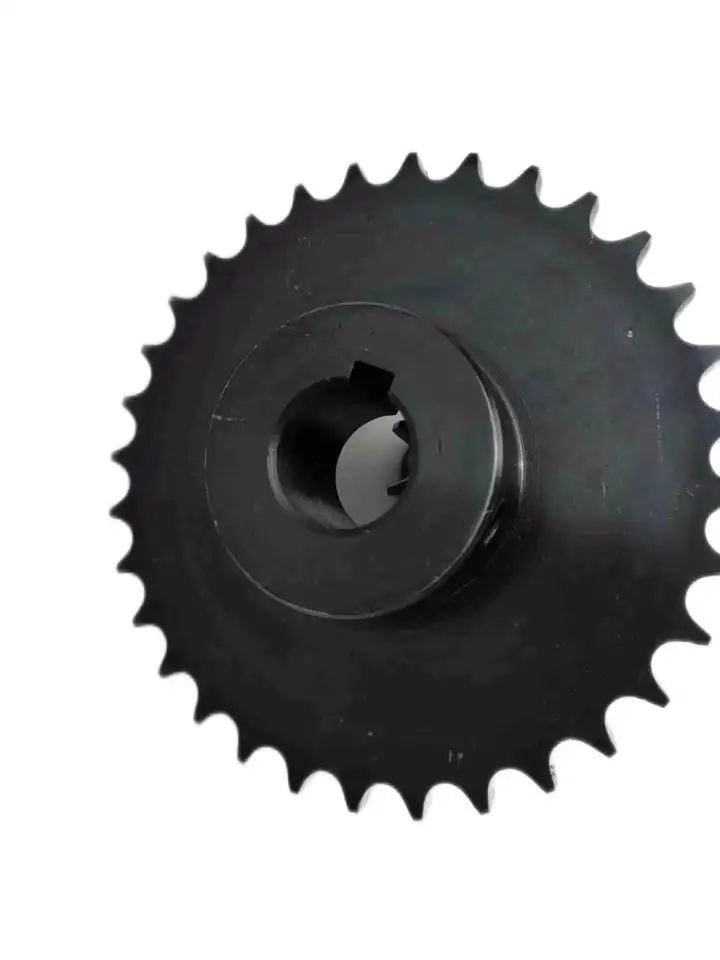
Cálculo de los requisitos de par para un conjunto de piñón de rueda
El cálculo del par motor necesario para un conjunto de piñón y rueda implica considerar diversos factores que influyen en la carga de par. Este par es crucial para seleccionar el motor o la fuente de alimentación adecuados para accionar el sistema eficazmente. A continuación, se presenta una guía paso a paso:
- 1. Determinar el par de carga: Identifique el par necesario para vencer la resistencia o carga del sistema. Esto incluye el par necesario para mover la carga, vencer la fricción y acelerarla, si corresponde.
- 2. Identifique el radio de la rueda dentada: Mida el radio del piñón (distancia desde el centro del piñón hasta el punto de contacto con la cadena o la correa).
- 3. Calcula la tensión en la cadena o correa: Si se utiliza una transmisión por cadena o correa, calcule la tensión de la cadena o correa. La tensión afecta al par motor necesario para la transmisión de potencia.
- 4. Contabilizar las pérdidas de eficiencia: Considere la eficiencia del sistema. No toda la potencia de entrada se convertirá en potencia de salida debido a la fricción y otras pérdidas. Tenga en cuenta esta eficiencia en sus cálculos.
- 5. Utilice la ecuación del torque: El par motor (T) se puede calcular utilizando la siguiente ecuación:
T = (Par de carga × Radio de la rueda dentada) ÷ (Eficiencia × Tensión)
Es fundamental utilizar unidades de medida consistentes (por ejemplo, newton-metros o pies-libras) para todos los valores de la ecuación.
Recuerde que las condiciones del mundo real pueden variar, y es recomendable añadir un factor de seguridad a los requisitos de par calculados para garantizar que el sistema pueda soportar cargas máximas inesperadas o variaciones en las condiciones de funcionamiento.
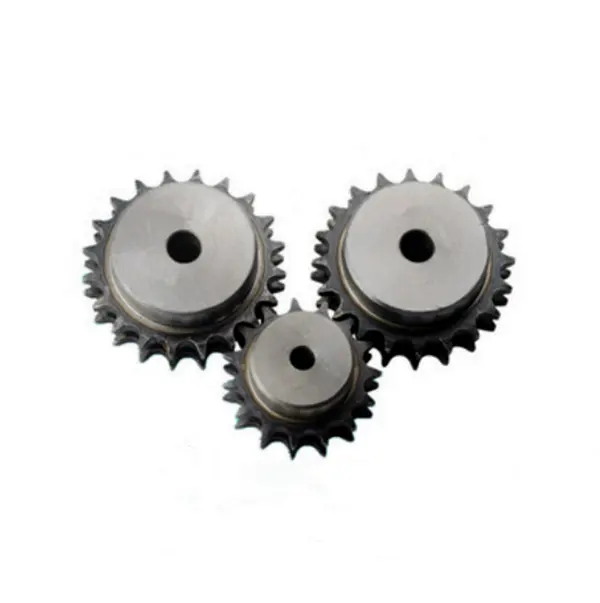
Special Considerations for Using a wheel sprocket System in Off-Road Vehicles
Off-road vehicles operate in rugged and challenging environments, which can put additional stress on the wheel sprocket system. Here are some special considerations to keep in mind when using a wheel sprocket system in off-road vehicles:
- Material Selection: Choose high-quality materials for the wheel sprocket that can withstand rough terrains, impacts, and exposure to elements. Materials like hardened steel or alloys with good impact resistance are commonly used.
- Sealing and Protection: Ensure that the wheel bearings and sprocket teeth are adequately sealed to prevent dirt, mud, water, and other debris from entering. Proper sealing helps to maintain smooth operation and prolong the lifespan of components.
- Reinforcement: Consider reinforcing the wheel sprocket assembly if the vehicle will encounter heavy loads or extreme conditions. Reinforcements can add strength and durability to handle challenging off-road conditions.
- Lubricación: Use a high-quality lubricant suitable for off-road conditions. Frequent lubrication is crucial to reduce friction, prevent corrosion, and protect components from wear and tear.
- Regular Inspection: Off-road vehicles experience higher vibrations and shocks, leading to accelerated wear. Perform regular inspections to detect any signs of damage, misalignment, or wear. Address issues promptly to avoid further problems.
- Shock Absorption: Consider incorporating shock-absorbing features or suspension systems to mitigate the impact on the wheel sprocket system during off-road driving. This helps to protect the components and improve overall vehicle performance.
- Environmental Considerations: Off-road environments often expose the wheel sprocket system to dirt, sand, water, and other harsh elements. Choose coatings or treatments that offer corrosion resistance to protect against environmental damage.
- Weight Consideration: Off-road vehicles may need to be lightweight to navigate difficult terrains effectively. Ensure the wheel sprocket components strike a balance between durability and weight to optimize vehicle performance.
- Service and Maintenance: Establish a regular maintenance schedule and perform necessary servicing after each off-road trip. Cleaning, inspection, and replacement of worn parts are vital to ensure the system’s reliability.
By taking these special considerations into account, the wheel sprocket system in off-road vehicles can withstand the demands of rough terrains and provide reliable performance in challenging environments.

Choosing the Right Size of Sprocket to Match a Wheel
Choosing the correct size of sprocket to match a wheel is essential for ensuring efficient power transmission and proper functionality of a mechanical system. Here are the steps to help you choose the right size of sprocket:
1. Determine the Pitch Diameter of the Wheel:
Measure the diameter of the wheel from the center to the point where the teeth of the sprocket will engage with the wheel. This measurement is known as the pitch diameter of the wheel.
2. Identify the Desired Gear Ratio:
Determine the gear ratio you want to achieve for your application. The gear ratio is the ratio of the number of teeth on the sprocket to the number of teeth on the wheel and determines the speed and torque output.
3. Calculate the Number of Teeth on the Sprocket:
Once you have the pitch diameter of the wheel and the desired gear ratio, you can calculate the number of teeth on the sprocket using the formula:
Number of Teeth on Sprocket = (Desired Gear Ratio) * (Number of Teeth on Wheel)
4. Select a Standard Sprocket Size:
Based on the calculated number of teeth on the sprocket, choose a standard sprocket size that comes closest to the calculated value. Sprockets are available in various tooth counts, and you may need to choose the nearest size available.
5. Consider Chain Compatibility:
If you are using a chain drive system, ensure that the selected sprocket is compatible with the chain you plan to use. The chain pitch (distance between the centers of adjacent roller pins) should match the pitch of the sprocket.
6. Verify Center Distance:
Check that the center distance between the wheel and the sprocket is appropriate for your application. The center distance is the distance between the centers of the wheel and the sprocket and should be set to achieve the desired tension and alignment of the chain or belt.
7. Consider the Material and Tooth Profile:
Select a sprocket material suitable for your application, such as steel, stainless steel, or plastic, based on factors like load, environment, and operating conditions. Additionally, consider the tooth profile (standard or custom) to ensure smooth engagement with the chain or belt.
By following these steps and considering the specific requirements of your machinery and mechanical system, you can choose the right size of sprocket to match your wheel and achieve optimal performance and longevity of the system.


editor by CX 2023-08-05