उत्पाद वर्णन
1) A series chains:
A) Simplex: 25-1 ~ 240-1
B) Duplex: 25-2 ~ 240-2
C) Triplex: 35-3 ~ 240-3
D) Quadruplex: 40-4 ~ 240-4
E) Quintuple: 40-5 ~ 240-5
F) Sextuple: 40-6 ~ 240-6
G) Octuple: 40-8 ~ 240-8
2) B series chains:
A) Simplex: 04B-1 ~ 48B-1
B) Duplex: 04B-2 ~ 48B-2
C) Triplex: 06B-3 ~ 48B-3
D) Quadruplex: 08B-4 ~ 48B-4
E) Quintuple: 08B-5 ~ 48B-5
F) Sextuple: 08B-6 ~ 48B-6
G) Octuple: 08B-8 ~ 48B-8
3) Colors available: Natural, yellow, blue, black
4) Materials: Alloy, Carbon steel, stainless steel
/* 22 जनवरी, 2571 19:08:37 */!function(){function s(e,r){var a,o={};try{e&&e.split(“,”).forEach(function(e,t){e&&(a=e.match(/(.*?):(.*)$/))&&1
| Usage: | Transmission Chain |
|---|---|
| सामग्री: | Alloy |
| Surface Treatment: | Polishing |
| Feature: | Heat Resistant |
| Chain Size: | 1/2"*11/128" |
| Structure: | Roller Chain |
| अनुकूलन: |
उपलब्ध
| अनुकूलित अनुरोध |
|---|
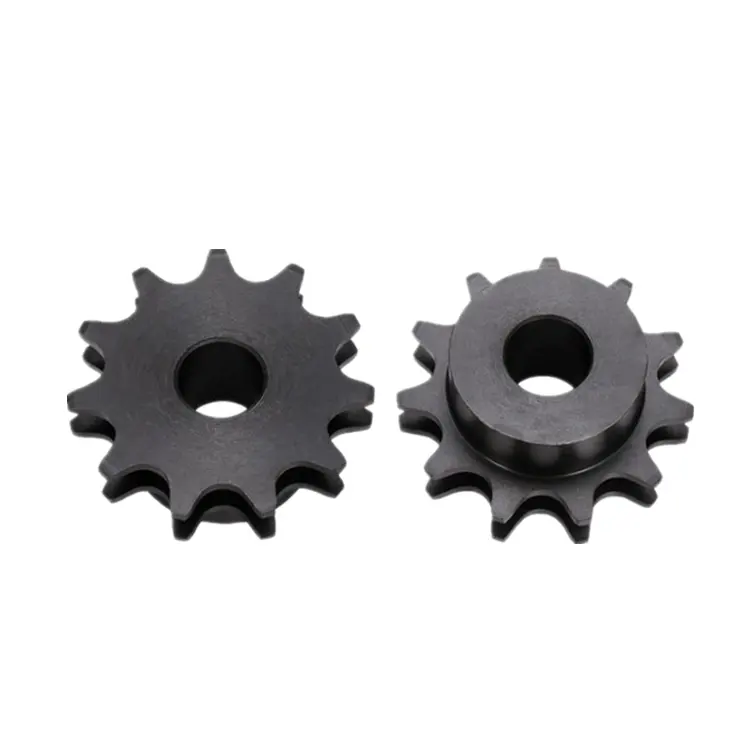
भारी मशीनरी और औद्योगिक उपकरणों में व्हील स्प्रोकेट सिस्टम
जी हां, भारी मशीनरी और औद्योगिक उपकरणों में विद्युत संचरण और गति नियंत्रण के लिए व्हील स्प्रोकेट प्रणाली का आमतौर पर उपयोग किया जाता है। व्हील स्प्रोकेट विन्यास दो शाफ्टों के बीच घूर्णी बल संचारित करने का एक बहुमुखी और कुशल तरीका है।
भारी मशीनरी और औद्योगिक उपकरणों में, पहिया आमतौर पर एक शाफ्ट से जुड़ा होता है, जबकि स्प्रोकेट दूसरे शाफ्ट पर लगा होता है। एक चेन या दांतेदार बेल्ट पहिये और स्प्रोकेट के चारों ओर लिपटी होती है, जो उन्हें जोड़ती है। जब पहिया घूमता है, तो चेन या बेल्ट स्प्रोकेट से जुड़ जाती है, जिससे स्प्रोकेट और उससे जुड़ा शाफ्ट भी घूमने लगता है। यह तंत्र एक शाफ्ट से दूसरे शाफ्ट तक शक्ति का स्थानांतरण करता है, जिससे मशीनरी के विभिन्न घटक और पुर्जे कार्य कर पाते हैं।
भारी मशीनरी में व्हील स्प्रोकेट सिस्टम के सामान्य अनुप्रयोगों में निम्नलिखित शामिल हैं:
- निर्माण मशीनरी: व्हील लोडर, एक्सकेवेटर, क्रेन और अन्य निर्माण उपकरण अक्सर विभिन्न गतिशील भागों में कुशल शक्ति संचरण के लिए व्हील स्प्रोकेट सिस्टम का उपयोग करते हैं।
- सामग्री प्रबंधन उपकरण: फोर्कलिफ्ट, कन्वेयर सिस्टम और अन्य सामग्री हैंडलिंग उपकरण सामान और सामग्री को सुचारू और विश्वसनीय रूप से स्थानांतरित करने के लिए व्हील स्प्रोकेट कॉन्फ़िगरेशन का उपयोग करते हैं।
- खनन उपकरण: ड्रिलिंग रिग और कन्वेयर जैसी खनन मशीनरी में अक्सर चुनौतीपूर्ण वातावरण में बिजली संचरण के लिए व्हील स्प्रोकेट असेंबली शामिल होती हैं।
- कृषि मशीनरी: ट्रैक्टर, कंबाइन और अन्य कृषि उपकरण पहियों और कटाई तंत्र जैसे विभिन्न घटकों को चलाने के लिए व्हील स्प्रोकेट सिस्टम का उपयोग करते हैं।
- औद्योगिक रोबोटिक्स: विनिर्माण क्षेत्र में रोबोट और स्वचालित प्रणालियाँ सटीक गति नियंत्रण और कुशल विद्युत संचरण के लिए अक्सर व्हील स्प्रोकेट सेटअप का उपयोग करती हैं।
व्हील स्प्रोकेट सिस्टम का एक प्रमुख लाभ यह है कि यह भारी भार को संभालने और लंबी दूरी तक शक्ति संचारित करने में सक्षम है। यह विभिन्न औद्योगिक परिवेशों में शक्ति संचरण का एक विश्वसनीय और किफायती तरीका है। हालांकि, सिस्टम के इष्टतम प्रदर्शन और दीर्घायु को सुनिश्चित करने के लिए उचित रखरखाव और संरेखण अत्यंत महत्वपूर्ण हैं।
कुल मिलाकर, व्हील स्प्रोकेट सिस्टम भारी मशीनरी और औद्योगिक उपकरणों में व्यापक रूप से उपयोग किया जाने वाला और प्रभावी पावर ट्रांसमिशन समाधान है, जो विभिन्न प्रकार के अनुप्रयोगों में बहुमुखी प्रतिभा और दक्षता प्रदान करता है।
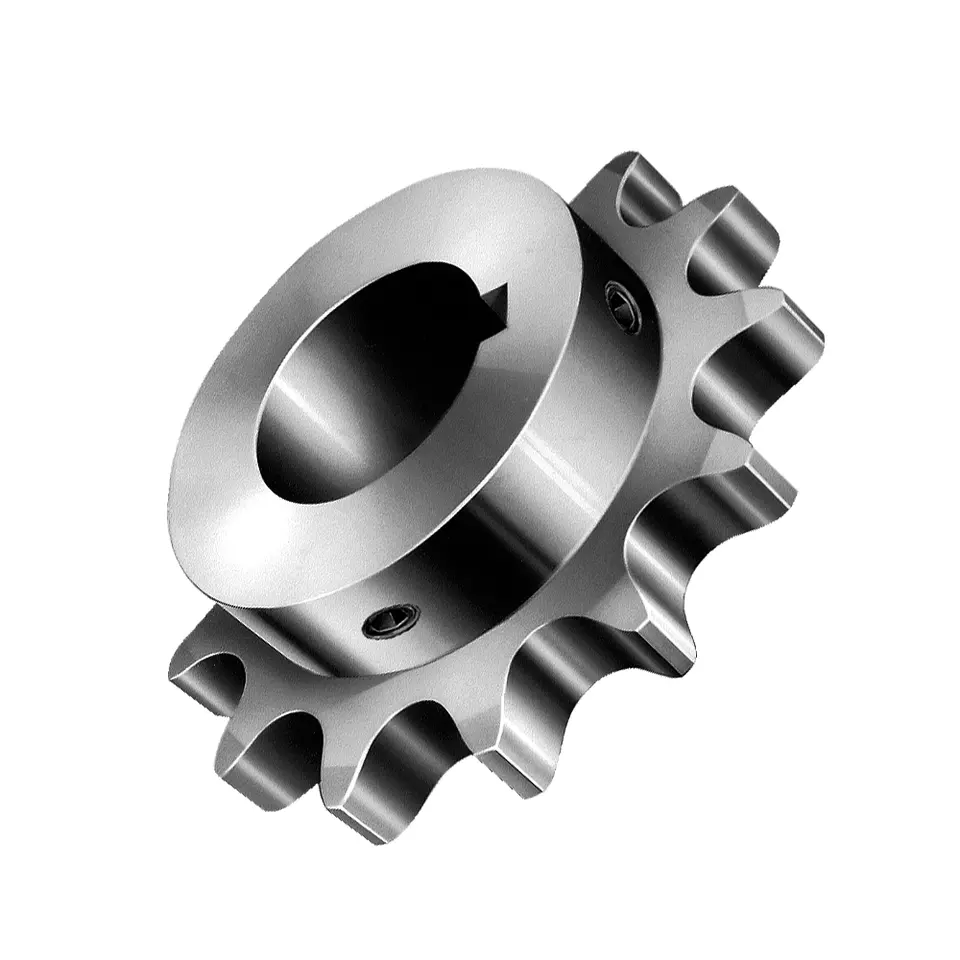
Choosing the Right Material for a Sprocket to Ensure Longevity
Choosing the right material for a sprocket is crucial to ensure its longevity and reliable performance in a given application. The material selection depends on various factors such as load, speed, operating environment, and budget. Here are some common materials used for sprockets and their considerations:
- इस्पात: Steel sprockets are widely used in a wide range of applications due to their excellent strength, durability, and wear resistance. They are suitable for heavy-duty and high-speed operations. Different grades of steel, such as carbon steel or alloy steel, offer varying levels of hardness and strength.
- स्टेनलेस स्टील: Stainless steel sprockets are preferred when corrosion resistance is essential, making them suitable for applications where the sprocket is exposed to moisture, chemicals, or outdoor elements. They are commonly used in food processing, pharmaceutical, and marine industries.
- Cast Iron: Cast iron sprockets offer good wear resistance and are often used in low to medium-speed applications. They are cost-effective and provide excellent performance in less demanding conditions.
- प्लास्टिक: Plastic sprockets are lightweight and corrosion-resistant. They are commonly used in applications where low noise, self-lubrication, and resistance to chemicals or moisture are required. However, they have limited load-carrying capacity and may not be suitable for heavy-duty applications.
- एल्युमिनियम: Aluminum sprockets are lightweight and commonly used in applications where weight reduction is critical, such as aerospace and certain machinery. However, they are not as durable as steel sprockets and are not suitable for high loads or harsh environments.
When choosing the right material for a sprocket, consider the following:
- Load Capacity: Select a material that can handle the expected loads in the application without deforming or wearing excessively.
- Speed: Higher speeds may require materials with better heat dissipation and wear resistance.
- Environment: Consider factors such as moisture, chemicals, temperature, and outdoor exposure. Choose a material with suitable corrosion resistance and resilience to environmental conditions.
- Maintenance: Some materials may require more frequent maintenance or lubrication to ensure longevity.
- Cost: Balance the material’s performance with the budget constraints of the project.
It’s essential to consult with sprocket manufacturers or material experts to determine the most appropriate material for your specific application. They can provide valuable insights and recommendations based on your requirements, helping to ensure the longevity and optimal performance of the sprocket in your machinery or equipment.
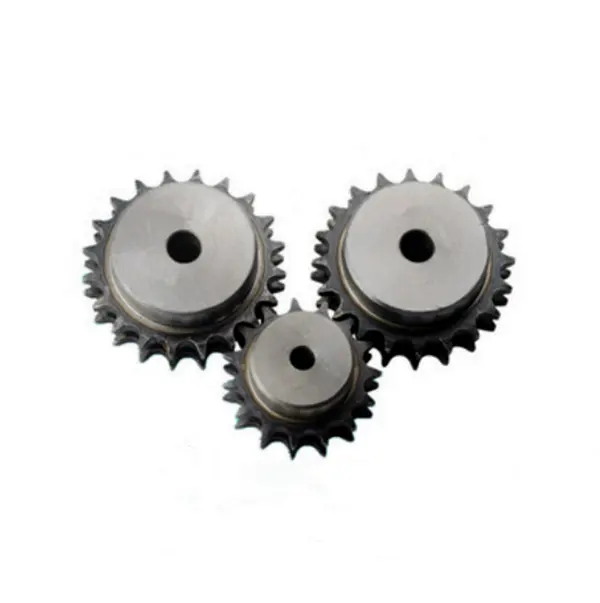
Working Principle of a wheel sprocket System
In a wheel sprocket system, the sprocket is a toothed wheel that meshes with a chain or a belt to transmit rotational motion and power from one component to another. The working principle can be explained in the following steps:
1. Power Input:
The system begins with a power input source, such as an electric motor or an engine, that generates rotational motion or torque.
2. Sprocket and Chain/Belt:
The power is transferred to the sprocket, which is mounted on a shaft. The sprocket has teeth that fit into the gaps of the chain or engage with the teeth of the belt.
3. Chain/Belt Movement:
As the sprocket rotates, it pulls the chain or belt along with it due to the engagement between the teeth. This movement is transmitted to the connected component, which could be another sprocket, a wheel, or any other part of the machinery.
4. Power Output:
The rotational motion or power is then delivered to the connected component, which performs a specific function depending on the application. For example, the power could be used to drive a conveyor belt, rotate the wheels of a vehicle, or operate various industrial machines.
5. Speed and Torque:
The size of the sprocket and the number of teeth, along with the size of the chain or belt, determine the speed and torque ratio between the input and output components. Changing the size of the sprocket or using different-sized sprockets in the system can alter the speed and torque characteristics of the machinery.
6. Efficiency and Maintenance:
Efficient power transmission relies on proper alignment and tension of the chain or belt with the sprocket. Regular maintenance, such as lubrication and inspection, is essential to ensure smooth operation and prevent premature wear or damage to the system.
The wheel sprocket system is widely used in various applications, including bicycles, motorcycles, industrial machinery, agricultural equipment, and more, where efficient power transmission and motion control are required.


editor by Dream 2024-04-23