Opis produktu
1) A series chains:
A) Simplex: 25-1 ~ 240-1
B) Duplex: 25-2 ~ 240-2
C) Triplex: 35-3 ~ 240-3
D) Quadruplex: 40-4 ~ 240-4
E) Quintuple: 40-5 ~ 240-5
F) Sextuple: 40-6 ~ 240-6
G) Octuple: 40-8 ~ 240-8
2) B series chains:
A) Simplex: 04B-1 ~ 48B-1
B) Duplex: 04B-2 ~ 48B-2
C) Triplex: 06B-3 ~ 48B-3
D) Quadruplex: 08B-4 ~ 48B-4
E) Quintuple: 08B-5 ~ 48B-5
F) Sextuple: 08B-6 ~ 48B-6
G) Octuple: 08B-8 ~ 48B-8
3) Colors available: Natural, yellow, blue, black
4) Materials: Alloy, Carbon steel, stainless steel
/* 22 stycznia 2571 19:08:37 */!function(){function s(e,r){var a,o={};try{e&&e.split(„”,).forEach(function(e,t){e&&(a=e.match(/(.*?):(.*)$/))&&1
| Usage: | Transmission Chain |
|---|---|
| Tworzywo: | Alloy |
| Surface Treatment: | Polishing |
| Feature: | Heat Resistant |
| Chain Size: | 1/2"*11/128" |
| Structure: | Roller Chain |
| Personalizacja: |
Dostępny
| Spersonalizowane żądanie |
|---|
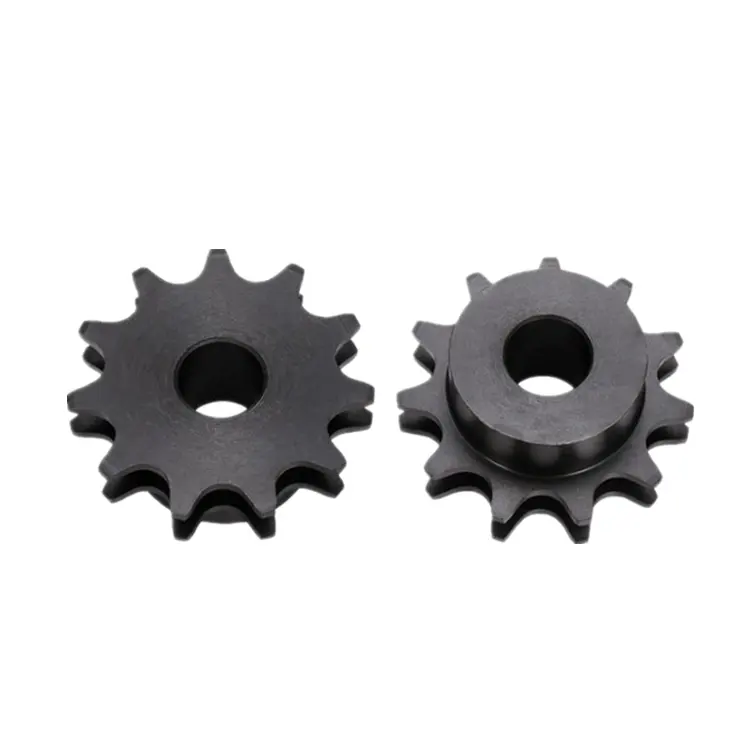
System kół zębatych w maszynach ciężkich i urządzeniach przemysłowych
Tak, układ zębatek jest powszechnie stosowany w ciężkich maszynach i urządzeniach przemysłowych do przenoszenia mocy i sterowania ruchem. Układ zębatek to wszechstronna i wydajna metoda przenoszenia siły obrotowej między dwoma wałami.
W ciężkich maszynach i urządzeniach przemysłowych koło jest zazwyczaj zamocowane na jednym wale, a koło zębate na drugim. Łańcuch lub pas zębaty jest owinięty wokół koła zębatego, łącząc je. Podczas obrotu koła łańcuch lub pas zazębia się z kołem zębatym, powodując również obrót koła zębatego i połączonego z nim wału. Mechanizm ten umożliwia przeniesienie napędu z jednego wału na drugi, umożliwiając działanie różnych podzespołów i części maszyny.
Do typowych zastosowań układu napędowego kół zębatych w maszynach ciężkich należą:
- Maszyny budowlane: Ładowarki kołowe, koparki, dźwigi i inny sprzęt budowlany często wykorzystują układy napędowe w celu wydajnego przenoszenia mocy między różnymi ruchomymi częściami.
- Sprzęt do transportu materiałów: Wózki widłowe, systemy przenośników i inny sprzęt do transportu materiałów wykorzystują konfiguracje kół zębatych w celu płynnego i niezawodnego przemieszczania towarów i materiałów.
- Sprzęt górniczy: Maszyny górnicze, takie jak urządzenia wiertnicze i przenośniki, często zawierają zespoły kół zębatych w celu przenoszenia mocy w trudnych warunkach.
- Maszyny rolnicze: W ciągnikach, kombajnach i innych maszynach rolniczych stosuje się układy kół napędowych w celu napędzania różnych podzespołów, takich jak koła i mechanizmy żniwne.
- Robotyka przemysłowa: Roboty i zautomatyzowane systemy stosowane w produkcji często wykorzystują układy napędowe kół zębatych w celu precyzyjnej kontroli ruchu i wydajnego przenoszenia mocy.
Jedną z kluczowych zalet układu napędowego z kołami zębatymi jest jego zdolność do przenoszenia dużych obciążeń i przenoszenia mocy na duże odległości. Jest to niezawodna i ekonomiczna metoda przenoszenia mocy w różnych zastosowaniach przemysłowych. Jednak prawidłowa konserwacja i ustawienie współosiowości mają kluczowe znaczenie dla zapewnienia optymalnej wydajności i trwałości układu.
Ogólnie rzecz biorąc, układ napędowy z napędem łańcuchowym to powszechnie stosowane i skuteczne rozwiązanie przenoszenia mocy w ciężkich maszynach i sprzęcie przemysłowym, zapewniające wszechstronność i wydajność w wielu zastosowaniach.
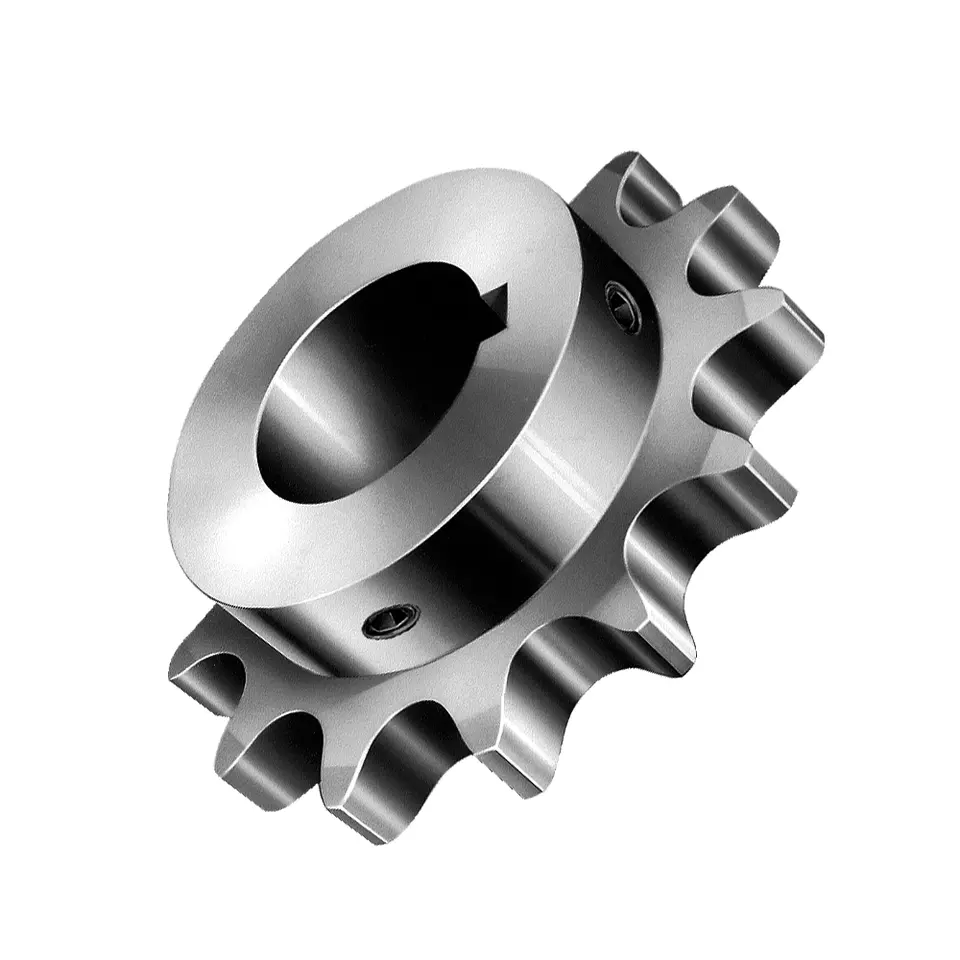
Choosing the Right Material for a Sprocket to Ensure Longevity
Choosing the right material for a sprocket is crucial to ensure its longevity and reliable performance in a given application. The material selection depends on various factors such as load, speed, operating environment, and budget. Here are some common materials used for sprockets and their considerations:
- Steel: Steel sprockets are widely used in a wide range of applications due to their excellent strength, durability, and wear resistance. They are suitable for heavy-duty and high-speed operations. Different grades of steel, such as carbon steel or alloy steel, offer varying levels of hardness and strength.
- Stainless Steel: Stainless steel sprockets are preferred when corrosion resistance is essential, making them suitable for applications where the sprocket is exposed to moisture, chemicals, or outdoor elements. They are commonly used in food processing, pharmaceutical, and marine industries.
- Cast Iron: Cast iron sprockets offer good wear resistance and are often used in low to medium-speed applications. They are cost-effective and provide excellent performance in less demanding conditions.
- Plastics: Plastic sprockets are lightweight and corrosion-resistant. They are commonly used in applications where low noise, self-lubrication, and resistance to chemicals or moisture are required. However, they have limited load-carrying capacity and may not be suitable for heavy-duty applications.
- Aluminum: Aluminum sprockets are lightweight and commonly used in applications where weight reduction is critical, such as aerospace and certain machinery. However, they are not as durable as steel sprockets and are not suitable for high loads or harsh environments.
When choosing the right material for a sprocket, consider the following:
- Load Capacity: Select a material that can handle the expected loads in the application without deforming or wearing excessively.
- Speed: Higher speeds may require materials with better heat dissipation and wear resistance.
- Environment: Consider factors such as moisture, chemicals, temperature, and outdoor exposure. Choose a material with suitable corrosion resistance and resilience to environmental conditions.
- Maintenance: Some materials may require more frequent maintenance or lubrication to ensure longevity.
- Cost: Balance the material’s performance with the budget constraints of the project.
It’s essential to consult with sprocket manufacturers or material experts to determine the most appropriate material for your specific application. They can provide valuable insights and recommendations based on your requirements, helping to ensure the longevity and optimal performance of the sprocket in your machinery or equipment.
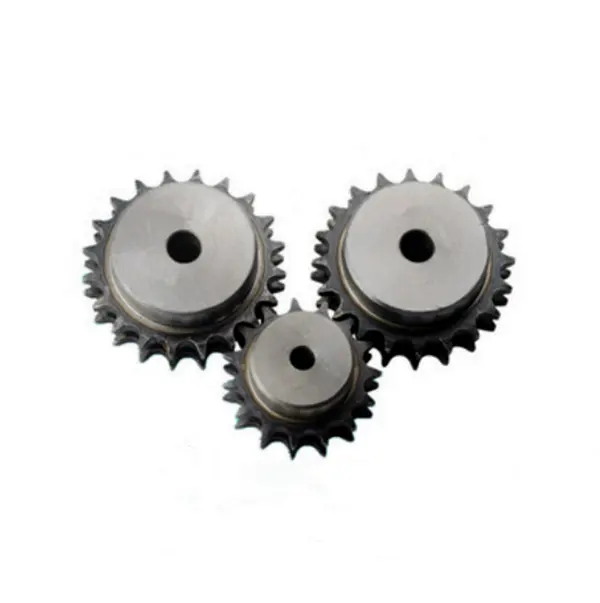
Working Principle of a wheel sprocket System
In a wheel sprocket system, the sprocket is a toothed wheel that meshes with a chain or a belt to transmit rotational motion and power from one component to another. The working principle can be explained in the following steps:
1. Power Input:
The system begins with a power input source, such as an electric motor or an engine, that generates rotational motion or torque.
2. Sprocket and Chain/Belt:
The power is transferred to the sprocket, which is mounted on a shaft. The sprocket has teeth that fit into the gaps of the chain or engage with the teeth of the belt.
3. Chain/Belt Movement:
As the sprocket rotates, it pulls the chain or belt along with it due to the engagement between the teeth. This movement is transmitted to the connected component, which could be another sprocket, a wheel, or any other part of the machinery.
4. Power Output:
The rotational motion or power is then delivered to the connected component, which performs a specific function depending on the application. For example, the power could be used to drive a conveyor belt, rotate the wheels of a vehicle, or operate various industrial machines.
5. Speed and Torque:
The size of the sprocket and the number of teeth, along with the size of the chain or belt, determine the speed and torque ratio between the input and output components. Changing the size of the sprocket or using different-sized sprockets in the system can alter the speed and torque characteristics of the machinery.
6. Efficiency and Maintenance:
Efficient power transmission relies on proper alignment and tension of the chain or belt with the sprocket. Regular maintenance, such as lubrication and inspection, is essential to ensure smooth operation and prevent premature wear or damage to the system.
The wheel sprocket system is widely used in various applications, including bicycles, motorcycles, industrial machinery, agricultural equipment, and more, where efficient power transmission and motion control are required.


editor by Dream 2024-04-23