Produktbeschreibung
Welded Metric Roller Drive Conveyor Chain CZPT Plastic Stainless Steel Duplex Cast Iron Plate Flat Top Finished Bore Idler Bushed Taper Lock Qd Sprocket
Standard sprockets:
|
||||||||||||||||||||||||||||||||||||||||||||||||||||||||
Customization process :
1.Provide documentation: CAD, DWG, DXF, PDF,3D model ,STEP, IGS, PRT
2.Quote: We will give you the best price within 24 hours
3.Place an order: Confirm the cooperation details and CZPT the contract, and provide the labeling service
4.Processing and customization: Short delivery time
Related products:
Our Factory
If you need to customize transmission products,
please click here to contact us!
Chain Sprockets:
Company Information:
| Standard Or Nonstandard: | Standard |
|---|---|
| Anwendung: | Motor, Electric Cars, Motorcycle, Machinery, Marine, Agricultural Machinery, Car |
| Hardness: | Hardened Tooth Surface |
| Manufacturing Method: | Cut Gear |
| Toothed Portion Shape: | Spur Gear |
| Material: | Custom Made |
| Proben: |
US$ 9999/Piece
1 Stück (Mindestbestellmenge) | |
|---|
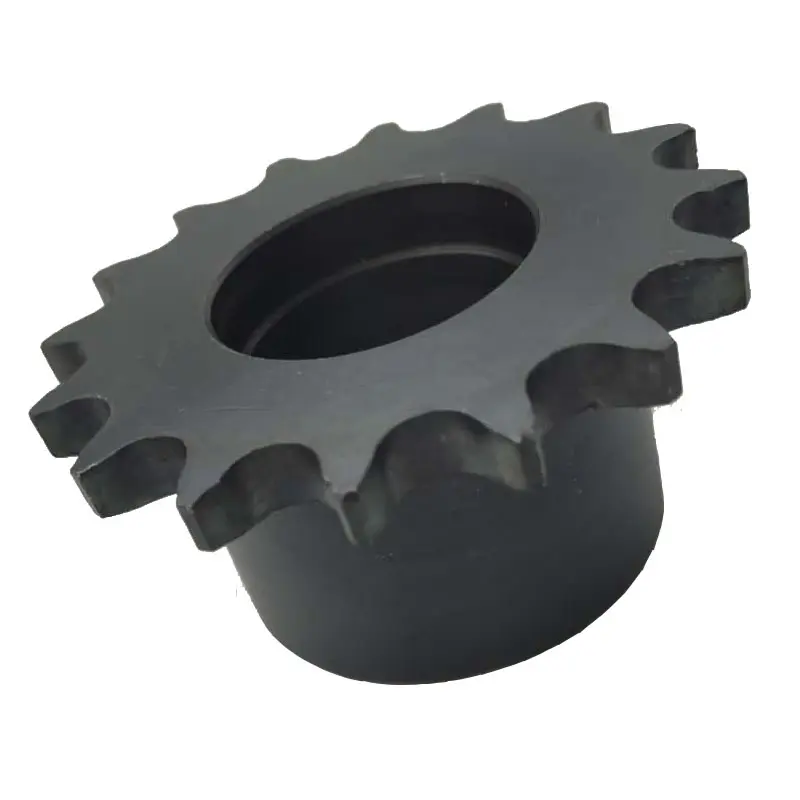
Kompatibilität von Kettenrädern mit Rädern
Im Allgemeinen sind Kettenräder für bestimmte Radtypen ausgelegt, und es gelten bestimmte Anforderungen, um die korrekte Kompatibilität zu gewährleisten:
- Kettengröße und Teilung: Das Kettenrad muss in Größe und Teilung zur Kette passen, mit der es verwendet werden soll. Beispielsweise benötigt man für eine Rollenkette mit einer Teilung von 0,625 Zoll ein Kettenrad mit derselben Teilung, um einen korrekten Sitz zu gewährleisten.
- Anzahl der Zähne: Die Zähnezahl des Kettenrads muss mit der Anzahl der Kettenglieder übereinstimmen. Die Kette muss reibungslos und ohne zu klemmen oder zu überspringen mit dem Kettenrad kämmen.
- Zahnprofil: Das Zahnprofil des Kettenrads sollte der Form der Kettenrollen entsprechen, um einen reibungslosen Eingriff zu gewährleisten und den Verschleiß zu minimieren.
- Schaftgröße: Die Mittelbohrung des Kettenrads muss dem Durchmesser der Welle entsprechen, auf der es montiert wird. Die Verwendung der richtigen Wellengröße gewährleistet einen sicheren Sitz und verhindert ein Wackeln.
- Hub-Konfiguration: Manche Kettenräder besitzen Naben, die als Verlängerungen an beiden Seiten des Kettenrads angebracht sind. Länge und Form der Nabe sollten den Anforderungen der jeweiligen Anwendung entsprechen.
- Material und Festigkeit: Berücksichtigen Sie Material und Festigkeit des Kettenrads entsprechend der Belastung und den Umgebungsbedingungen der Anwendung. Für Anwendungen mit hoher Beanspruchung können Kettenräder aus robusten Materialien erforderlich sein, um den auftretenden Kräften und Belastungen standzuhalten.
Bei der Auswahl eines Kettenrads für ein bestimmtes Rad ist es unerlässlich, die Spezifikationen und Richtlinien des Herstellers zu beachten. Die Kombination inkompatibler Kettenräder und Räder kann zu vorzeitigem Verschleiß, Leistungseinbußen und potenziellen Sicherheitsrisiken führen. Im Zweifelsfall bezüglich der Kompatibilität wenden Sie sich bitte an den Hersteller oder einen sachkundigen Experten, um das richtige Kettenrad für Ihre Anwendung auszuwählen.
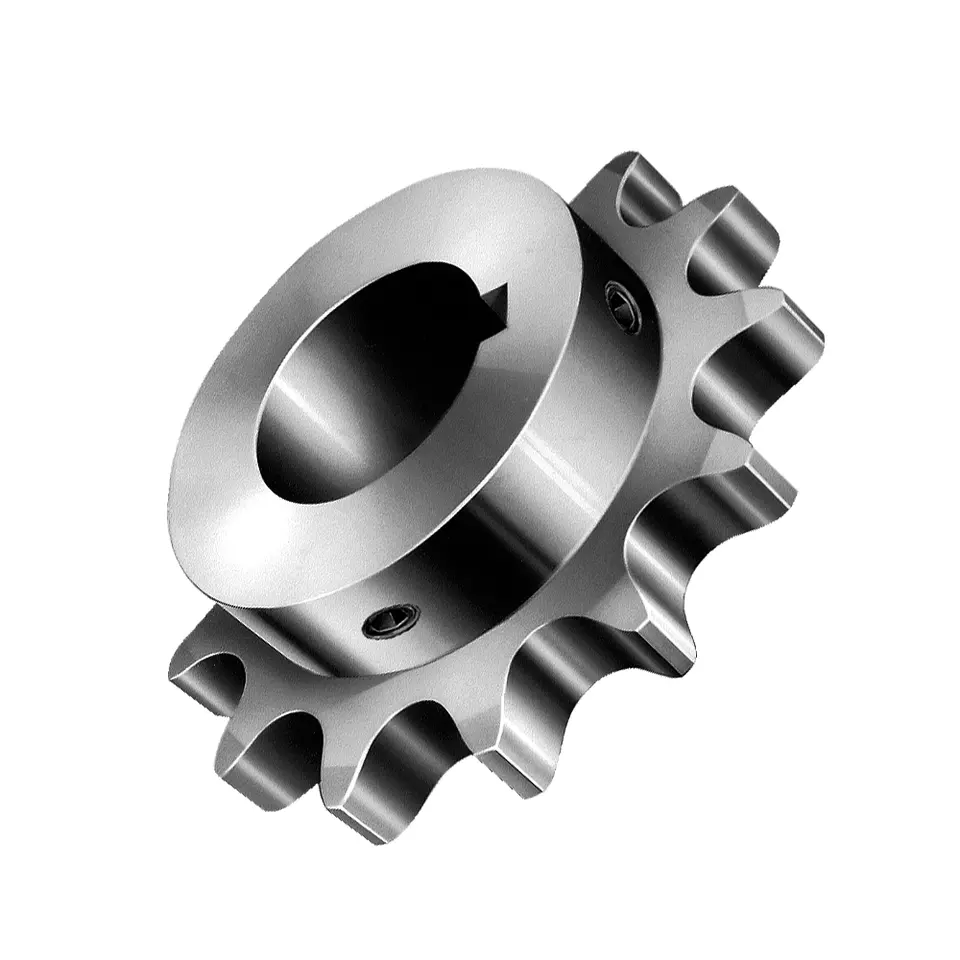
Choosing the Right Material for a Sprocket to Ensure Longevity
Choosing the right material for a sprocket is crucial to ensure its longevity and reliable performance in a given application. The material selection depends on various factors such as load, speed, operating environment, and budget. Here are some common materials used for sprockets and their considerations:
- Stahl: Steel sprockets are widely used in a wide range of applications due to their excellent strength, durability, and wear resistance. They are suitable for heavy-duty and high-speed operations. Different grades of steel, such as carbon steel or alloy steel, offer varying levels of hardness and strength.
- Edelstahl: Stainless steel sprockets are preferred when corrosion resistance is essential, making them suitable for applications where the sprocket is exposed to moisture, chemicals, or outdoor elements. They are commonly used in food processing, pharmaceutical, and marine industries.
- Cast Iron: Cast iron sprockets offer good wear resistance and are often used in low to medium-speed applications. They are cost-effective and provide excellent performance in less demanding conditions.
- Kunststoffe: Plastic sprockets are lightweight and corrosion-resistant. They are commonly used in applications where low noise, self-lubrication, and resistance to chemicals or moisture are required. However, they have limited load-carrying capacity and may not be suitable for heavy-duty applications.
- Aluminium: Aluminum sprockets are lightweight and commonly used in applications where weight reduction is critical, such as aerospace and certain machinery. However, they are not as durable as steel sprockets and are not suitable for high loads or harsh environments.
When choosing the right material for a sprocket, consider the following:
- Load Capacity: Select a material that can handle the expected loads in the application without deforming or wearing excessively.
- Speed: Higher speeds may require materials with better heat dissipation and wear resistance.
- Environment: Consider factors such as moisture, chemicals, temperature, and outdoor exposure. Choose a material with suitable corrosion resistance and resilience to environmental conditions.
- Maintenance: Some materials may require more frequent maintenance or lubrication to ensure longevity.
- Cost: Balance the material’s performance with the budget constraints of the project.
It’s essential to consult with sprocket manufacturers or material experts to determine the most appropriate material for your specific application. They can provide valuable insights and recommendations based on your requirements, helping to ensure the longevity and optimal performance of the sprocket in your machinery or equipment.
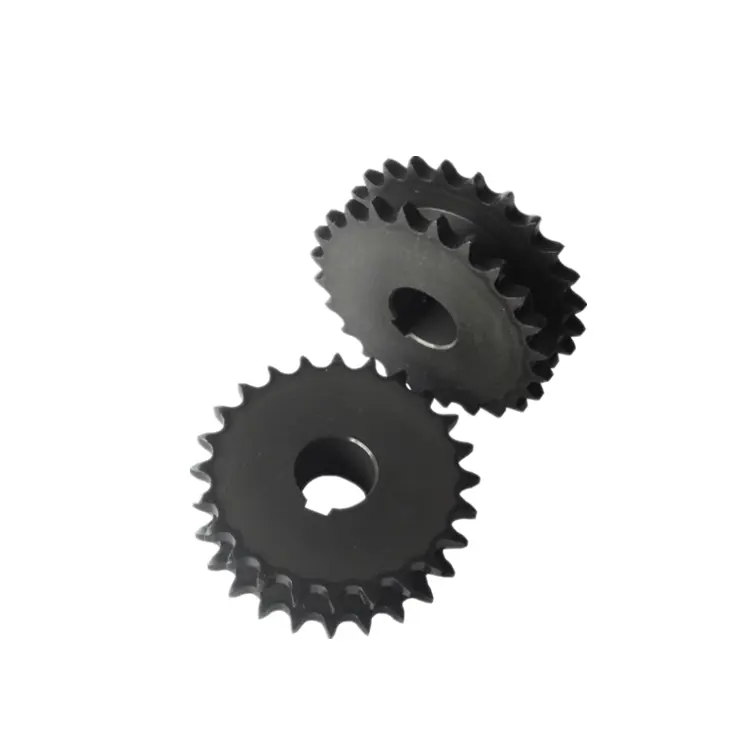
Eco-Friendly Materials for Manufacturing Wheels and Sprockets
Yes, there are eco-friendly materials used for manufacturing wheels and sprockets. As industries strive to reduce their environmental impact and promote sustainability, manufacturers are exploring alternative materials that are more environmentally friendly. Some of the eco-friendly materials used for manufacturing wheels and sprockets include:
1. Recycled Materials:
Using recycled materials, such as recycled plastic or metal, can significantly reduce the demand for virgin raw materials and lower the overall carbon footprint. These materials are obtained from post-consumer or post-industrial waste and processed to create new products, reducing the need for new resource extraction.
2. Biodegradable Materials:
Biodegradable plastics, such as PLA (polylactic acid) and PHA (polyhydroxyalkanoates), are derived from renewable plant sources and can break down naturally in the environment. These materials are gaining popularity for applications where disposal or end-of-life considerations are critical.
3. Sustainable Composites:
Manufacturers are developing sustainable composite materials that combine renewable fibers, such as bamboo, hemp, or flax, with biodegradable resins. These composites offer good strength and rigidity while being more environmentally friendly compared to traditional fiber-reinforced plastics.
4. Natural Materials:
In some cases, natural materials like wood or bamboo are used to create sprockets and wheels for specific applications. These materials are renewable and biodegradable, making them a more sustainable choice.
5. Low-Toxicity Materials:
Some eco-friendly materials focus on reducing the use of harmful chemicals during manufacturing. Low-toxicity materials are not only better for the environment but also for the health and safety of workers involved in the production process.
When selecting eco-friendly materials for wheels and sprockets, it’s essential to consider factors such as the specific application, load-bearing requirements, and the material’s end-of-life characteristics. Manufacturers and users can contribute to environmental sustainability by opting for these eco-friendly alternatives in their machinery and equipment.


editor by CX 2023-09-26