产品描述
Customized chain sprocket for agricultural machinery by China manufacturer
With more than 20 years’ experience, high-precision equipment and strict management system, CZPT can provide sprockets, gears, shafts, flanges and related transmission parts for you with stable quality and best service.
Q1: What information will be highly appreciated for a quotation?
A: It will be preferred if you can offer us the drawings, heat treatment and surface treatment requirements, required quantity, quoted currency (USD or EUR), or samples.
Q2: Are you a trading company or factory?
A: CZPT is a factory located in HangZhou, ZheJiang .
Q3: What is your terms of payment?
A: T/T 50% in advance, and 50% before shipment. We’ll show you the photos of the products and packages before you pay the balance.
Q4: Do you test all your goods before delivery?
A: Yes, CZPT has adopted a strict quality management system and all the items will be inspected according to the inspection instruction with good inspection records.
Q5: Is there any customer that has assessed your quality management system?
A:Yes, CZPT has passed the audit of many customers, such as Mitsubishi, CLAAS, Kardex and so on.
Q6: How does your company ensure the quality of the raw material?
A: The steels are purchased from our domestic CZPT steel mills. After receiving the raw material, the steel will be inspected by spectrograph imported from Germany. Besides, the CZPT number of steel will be well-managed in our ERP system to ensure the traceablity of our products.
Q7: How do you ensure the high quality of products?
A: With integral manufacturing processes, a strict quality control system and imported machines, we can manufacture high quality products.
Q8: What are your terms of delivery?
A: EXW, FOB ZheJiang .
Q9: How about your lead time?
A: Normally it will take 45 days after receiving your advance payment. The specific lead time depends on the items and the quantity of your order.
/* January 22, 2571 19:08:37 */!function(){function s(e,r){var a,o={};try{e&&e.split(“,”).forEach(function(e,t){e&&(a=e.match(/(.*?):(.*)$/))&&1
| Standard Or Nonstandard: | 标准 |
|---|---|
| Application: | Motor, Motorcycle, Machinery, Agricultural Machinery, Car |
| Hardness: | Hardened Tooth Surface |
| Manufacturing Method: | Forging Parts |
| 材料: | Carbon Steel |
| Teeth: | 9t-120t |
| 示例: |
US$ 9.99/Piece
1 件(最低订购量) | |
|---|
| 定制化: |
可用的
| 定制请求 |
|---|

Factors Affecting the Efficiency of a wheel sprocket Setup
Several factors can influence the efficiency of a wheel sprocket system in power transmission and motion control applications. These factors should be carefully considered and optimized to ensure the system’s overall effectiveness and performance:
- 1. Friction: Friction between the wheel, sprocket, and the chain or belt can lead to energy losses. Using high-quality materials and lubrication can help reduce friction and improve efficiency.
- 2. Alignment: Proper alignment between the wheel and the sprocket is critical. Misalignment can cause increased wear, noise, and reduced efficiency. Regular maintenance and alignment checks are essential.
- 3. Tension: The correct tension in the chain or belt is crucial for efficient power transmission. Too loose or too tight tension can lead to performance issues and premature wear.
- 4. Material and Design: The choice of materials for the wheel sprocket, as well as their design, can impact efficiency. High-quality materials and well-engineered components reduce wear and improve overall system performance.
- 5. Load Distribution: Uneven load distribution across the wheel sprocket can lead to localized wear and decreased efficiency. Ensuring proper load distribution helps maintain uniform wear and power transmission.
- 6. Environmental Factors: Harsh environmental conditions, such as dust, moisture, and extreme temperatures, can affect the efficiency of the system. Choosing suitable materials and implementing protective measures can mitigate these effects.
- 7. Maintenance: Regular maintenance, including lubrication, inspection, and timely replacement of worn components, is vital for the long-term efficiency of the system.
- 8. Speed and Torque: The operating speed and torque requirements of the application should be considered when selecting the appropriate wheel sprocket size and specifications.
- 9. Chain or Belt Type: Different types of chains or belts, such as roller chains, silent chains, or toothed belts, have varying efficiencies. Choosing the right type for the specific application is crucial.
- 10. System Integration: The wheel sprocket system should be integrated correctly with other components in the machinery to ensure smooth operation and minimal energy losses.
By carefully considering and optimizing these factors, it is possible to improve the efficiency of the wheel sprocket system, leading to reduced energy consumption, less wear and tear, and overall better performance.
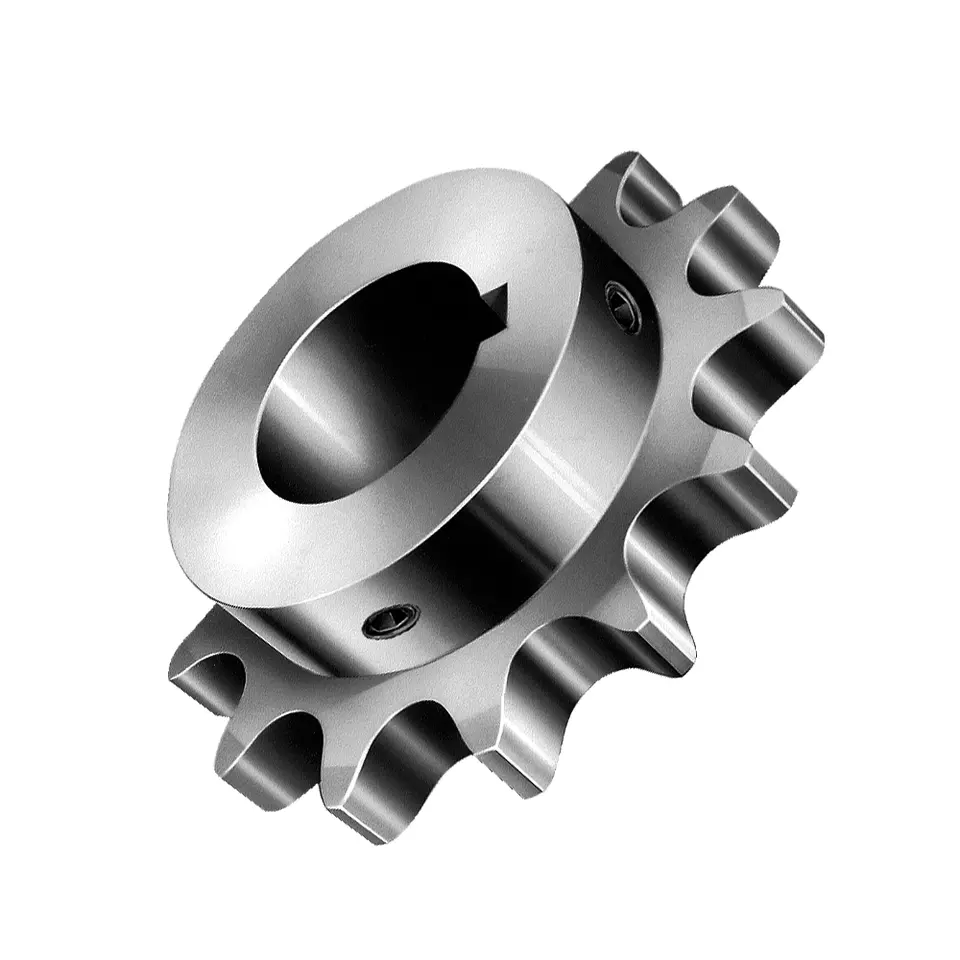
Choosing the Right Material for a Sprocket to Ensure Longevity
Choosing the right material for a sprocket is crucial to ensure its longevity and reliable performance in a given application. The material selection depends on various factors such as load, speed, operating environment, and budget. Here are some common materials used for sprockets and their considerations:
- Steel: Steel sprockets are widely used in a wide range of applications due to their excellent strength, durability, and wear resistance. They are suitable for heavy-duty and high-speed operations. Different grades of steel, such as carbon steel or alloy steel, offer varying levels of hardness and strength.
- Stainless Steel: Stainless steel sprockets are preferred when corrosion resistance is essential, making them suitable for applications where the sprocket is exposed to moisture, chemicals, or outdoor elements. They are commonly used in food processing, pharmaceutical, and marine industries.
- Cast Iron: Cast iron sprockets offer good wear resistance and are often used in low to medium-speed applications. They are cost-effective and provide excellent performance in less demanding conditions.
- Plastics: Plastic sprockets are lightweight and corrosion-resistant. They are commonly used in applications where low noise, self-lubrication, and resistance to chemicals or moisture are required. However, they have limited load-carrying capacity and may not be suitable for heavy-duty applications.
- Aluminum: Aluminum sprockets are lightweight and commonly used in applications where weight reduction is critical, such as aerospace and certain machinery. However, they are not as durable as steel sprockets and are not suitable for high loads or harsh environments.
When choosing the right material for a sprocket, consider the following:
- Load Capacity: Select a material that can handle the expected loads in the application without deforming or wearing excessively.
- Speed: Higher speeds may require materials with better heat dissipation and wear resistance.
- Environment: Consider factors such as moisture, chemicals, temperature, and outdoor exposure. Choose a material with suitable corrosion resistance and resilience to environmental conditions.
- Maintenance: Some materials may require more frequent maintenance or lubrication to ensure longevity.
- Cost: Balance the material’s performance with the budget constraints of the project.
It’s essential to consult with sprocket manufacturers or material experts to determine the most appropriate material for your specific application. They can provide valuable insights and recommendations based on your requirements, helping to ensure the longevity and optimal performance of the sprocket in your machinery or equipment.
选择与车轮匹配的合适尺寸的链轮
选择与车轮匹配的合适尺寸的链轮对于确保高效的动力传输和机械系统的正常运转至关重要。以下步骤可帮助您选择合适的链轮尺寸:
1. 确定车轮的节圆直径:
测量车轮直径,即从车轮中心到链轮齿与车轮啮合点的距离。这个测量值称为车轮的节圆直径。
2. 确定所需的齿轮比:
确定您应用所需的齿轮比。齿轮比是指链轮齿数与车轮齿数的比值,它决定了速度和扭矩输出。
3. 计算链轮的齿数:
一旦知道了车轮的节圆直径和所需的齿轮比,就可以使用以下公式计算链轮的齿数:
链轮齿数 = (所需齿轮比)* (车轮齿数)
4. 选择标准链轮尺寸:
根据计算出的链轮齿数,选择最接近计算值的标准链轮尺寸。链轮有多种齿数可供选择,您可能需要选择最接近的尺寸。
5. 考虑链兼容性:
如果您使用的是链传动系统,请确保所选链轮与您计划使用的链条兼容。链条节距(相邻滚子销中心之间的距离)应与链轮节距相匹配。
6. 核实中心距:
检查车轮和链轮之间的中心距是否适合您的应用。中心距是指车轮和链轮中心之间的距离,应进行设置以实现链条或皮带所需的张紧度和对齐度。
7. 考虑材料和齿形:
根据负载、环境和运行条件等因素,选择适合您应用的链轮材料,例如钢、不锈钢或塑料。此外,还要考虑齿形(标准或定制),以确保与链条或皮带平稳啮合。
通过遵循这些步骤并考虑您的机械和机械系统的具体要求,您可以选择合适尺寸的链轮来匹配您的车轮,从而实现系统的最佳性能和使用寿命。


editor by Dream 2024-05-09