Opis produktu
DIN 8187 Industry Sprocket Made to Order Stainless Steel Sprocket for Roller Chain & Agriculture Chain & Food Machinery (DIN, ANSI Standard)(06B20T)
Opis produktu
1. Produce strictly in accordance with ANSI or DIN standard dimension
2. Material: C45 steel / Stainless Steel 304 & 316
3. Standard: ANSI, DIN, JINS, ISO, Standard America or customer drawing
4. Pilot bore, finished bore, taper bore and special bore.
5. Bright surface and high precision
6. Advanced heat treatment and surface treatment craft
7. Best quality and competitive price.
8. Welcome OEM / ODM
9. Application: Sprocket is mainly used in agricultural machinery, conveying machinery, mine mining machinery, construction machinery, mechanical transmission equipment of oil and so on.
10. Processing equipment: Hobbing machine, Slotting machine, CNC lathes and other equipment.
11. Sprocket models: Contains special sprocket (custom) according to customer’s drawings, standard sprocket (American standard and metric).
Features:Sprocket / Gear / CZPT / Steel CZPT / Lost wax casting and accessories / Investment casting
Materials: Carbon steel, alloy steel, stainless steel, ductile iron, gray iron, high chromium iron
| Product name | DIN 8187 Industry Sprocket (06B20T) |
| Materials Available | 1. Stainless Steel: SS304, SS316, etc |
| 2. Alloy Steel: C45, 45Mn, 42CrMo, 20CrMo, etc | |
| 3. OEM according to your request | |
| Obróbka powierzchni | Heat treatment, Quenching treatment, High frequency normalizing treatment, Polishing, Electrophoresis paint processing, Anodic oxidation treatment, etc |
| Characteristic | Fire resistant, Oil resistant, Heat resistant, CZPT resistance, Oxidative resistance, Corrosion resistance, etc |
| Design criterion | ISO DIN ANSI & Customer’s Drawing |
| Rozmiar | Customer’s Drawing & ISO standard |
| Aplikacja | Industrial transmission equipment |
| Package | Wooden Case / Container and pallet, or made-to-order |
| Certificate | ISO9001: 2008 |
| Korzyść | Quality first, Service first, Competitive price, Fast delivery |
| Delivery Time | 20 days for samples. 45 days for official order. |
Szczegółowe zdjęcia
View more products,please click here…
Profil firmy
| Standard Or Nonstandard: | Standard |
|---|---|
| Application: | Industry |
| Hardness: | Hardened Tooth Surface |
| Tworzywo: | Alloy Steel/Stainless Steel |
| Typ: | Sprocket |
| Sample: | for Free |
| Próbki: |
US$ 0/Piece
1 sztuka (minimalne zamówienie) | |
|---|
| Personalizacja: |
Dostępny
| Spersonalizowane żądanie |
|---|
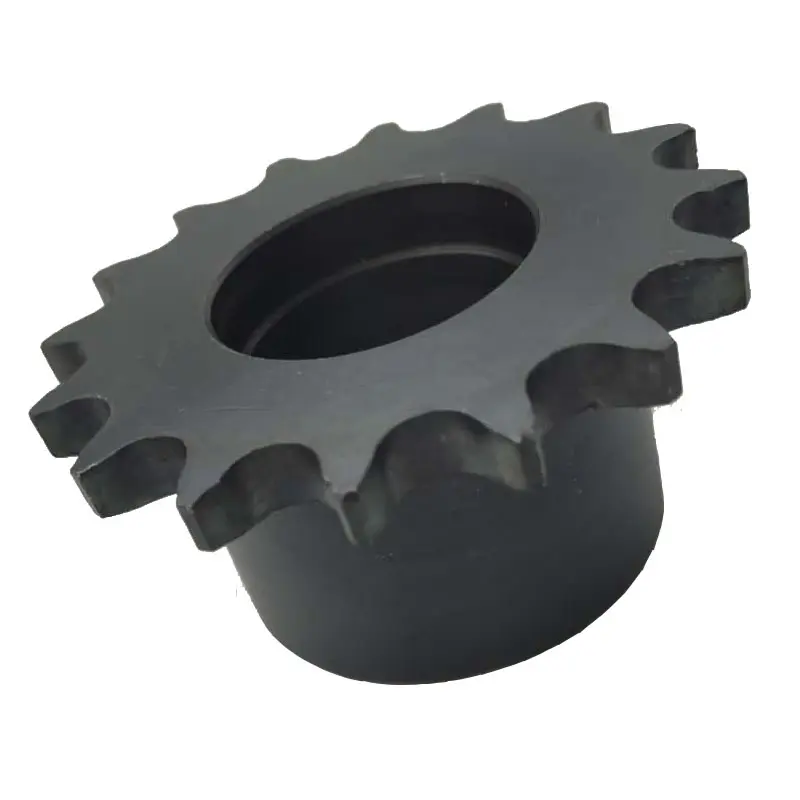
Compatibility of Chain Sprockets with Wheels
In general, chain sprockets are designed to work with specific types of wheels, and there are certain requirements for ensuring proper compatibility:
- Chain Size and Pitch: The chain sprocket must match the size and pitch of the chain it is intended to work with. For example, if you have a roller chain with a pitch of 0.625 inches, you need a sprocket with the same pitch to ensure a proper fit.
- Number of Teeth: The number of teeth on the sprocket should be compatible with the number of chain links. The chain should mesh smoothly with the sprocket without any binding or skipping.
- Tooth Profile: The tooth profile of the sprocket should match the shape of the chain’s rollers to ensure smooth engagement and minimize wear.
- Shaft Size: The center hole (bore) of the sprocket should match the diameter of the shaft it will be mounted on. Using the correct shaft size ensures a secure fit and prevents wobbling.
- Hub Configuration: Some sprockets have hubs, which are extensions on either side of the sprocket. The hub’s length and configuration should match the requirements of the specific application.
- Material and Strength: Consider the material and strength of the sprocket based on the application’s load and environmental conditions. Heavy-duty applications may require sprockets made of robust materials to withstand the forces and stresses.
It’s crucial to follow the manufacturer’s specifications and guidelines when selecting a chain sprocket for a particular wheel. Mixing incompatible sprockets and wheels can result in premature wear, inefficiencies, and potential safety hazards. If you are unsure about the compatibility, consult with the manufacturer or a knowledgeable expert to ensure you choose the right sprocket for your specific application.
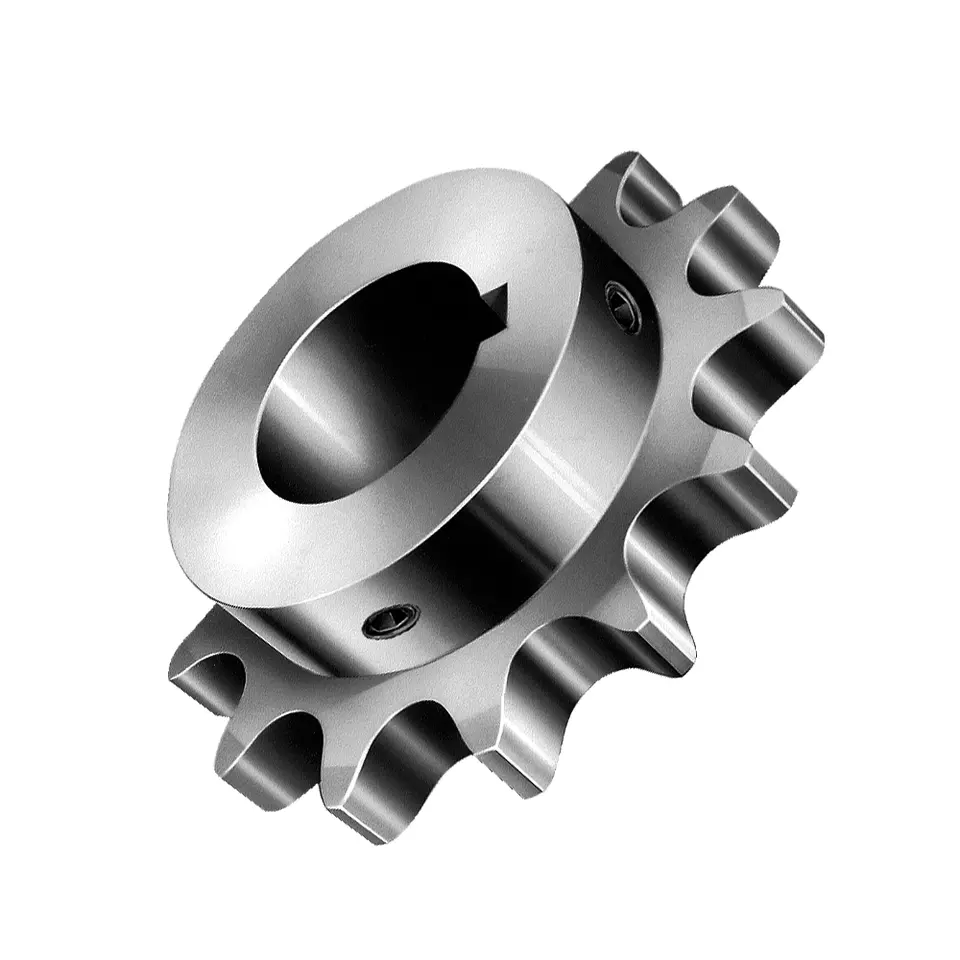
Choosing the Right Material for a Sprocket to Ensure Longevity
Choosing the right material for a sprocket is crucial to ensure its longevity and reliable performance in a given application. The material selection depends on various factors such as load, speed, operating environment, and budget. Here are some common materials used for sprockets and their considerations:
- Steel: Steel sprockets are widely used in a wide range of applications due to their excellent strength, durability, and wear resistance. They are suitable for heavy-duty and high-speed operations. Different grades of steel, such as carbon steel or alloy steel, offer varying levels of hardness and strength.
- Stainless Steel: Stainless steel sprockets are preferred when corrosion resistance is essential, making them suitable for applications where the sprocket is exposed to moisture, chemicals, or outdoor elements. They are commonly used in food processing, pharmaceutical, and marine industries.
- Cast Iron: Cast iron sprockets offer good wear resistance and are often used in low to medium-speed applications. They are cost-effective and provide excellent performance in less demanding conditions.
- Plastics: Plastic sprockets are lightweight and corrosion-resistant. They are commonly used in applications where low noise, self-lubrication, and resistance to chemicals or moisture are required. However, they have limited load-carrying capacity and may not be suitable for heavy-duty applications.
- Aluminum: Aluminum sprockets are lightweight and commonly used in applications where weight reduction is critical, such as aerospace and certain machinery. However, they are not as durable as steel sprockets and are not suitable for high loads or harsh environments.
When choosing the right material for a sprocket, consider the following:
- Load Capacity: Select a material that can handle the expected loads in the application without deforming or wearing excessively.
- Speed: Higher speeds may require materials with better heat dissipation and wear resistance.
- Environment: Consider factors such as moisture, chemicals, temperature, and outdoor exposure. Choose a material with suitable corrosion resistance and resilience to environmental conditions.
- Maintenance: Some materials may require more frequent maintenance or lubrication to ensure longevity.
- Cost: Balance the material’s performance with the budget constraints of the project.
It’s essential to consult with sprocket manufacturers or material experts to determine the most appropriate material for your specific application. They can provide valuable insights and recommendations based on your requirements, helping to ensure the longevity and optimal performance of the sprocket in your machinery or equipment.

Wybór odpowiedniego rozmiaru zębatki pasującej do koła
Wybór odpowiedniego rozmiaru zębatki do koła jest kluczowy dla zapewnienia efektywnego przenoszenia mocy i prawidłowego działania układu mechanicznego. Oto kroki, które pomogą Ci wybrać odpowiedni rozmiar zębatki:
1. Określ średnicę podziałową koła:
Zmierz średnicę koła od środka do punktu, w którym zęby zębatki zazębią się z kołem. Ten wymiar nazywany jest średnicą podziałową koła.
2. Określ pożądany współczynnik przełożenia:
Określ przełożenie, jakie chcesz osiągnąć dla swojego zastosowania. Przełożenie to stosunek liczby zębów koła zębatego do liczby zębów koła i określa prędkość oraz moment obrotowy.
3. Oblicz liczbę zębów na kole zębatym:
Mając już średnicę podziałową koła i pożądany współczynnik przełożenia, można obliczyć liczbę zębów koła zębatego, korzystając ze wzoru:
Liczba zębów na kole zębatym = (Pożądane przełożenie) * (Liczba zębów na kole)
4. Wybierz standardowy rozmiar zębatki:
Na podstawie obliczonej liczby zębów zębatki wybierz standardowy rozmiar zębatki, który jest najbliższy obliczonej wartości. Zębatki są dostępne w różnych ilościach zębów i może być konieczne wybranie rozmiaru najbardziej zbliżonego do dostępnego.
5. Weź pod uwagę kompatybilność łańcucha:
Jeśli używasz napędu łańcuchowego, upewnij się, że wybrana zębatka jest kompatybilna z łańcuchem, którego planujesz używać. Podziałka łańcucha (odległość między środkami sąsiednich sworzni rolkowych) powinna odpowiadać podziałce zębatki.
6. Sprawdź odległość między środkami:
Sprawdź, czy odległość między kołem a zębatką jest odpowiednia do Twojego zastosowania. Odległość między środkami koła a zębatką to odległość między środkami koła i zębatki, która powinna być ustawiona w celu uzyskania pożądanego napięcia i wyrównania łańcucha lub pasa.
7. Weź pod uwagę materiał i profil zęba:
Wybierz materiał zębatki odpowiedni do Twojego zastosowania, taki jak stal, stal nierdzewna lub tworzywo sztuczne, biorąc pod uwagę takie czynniki, jak obciążenie, środowisko i warunki pracy. Dodatkowo, weź pod uwagę profil zęba (standardowy lub niestandardowy), aby zapewnić płynne zazębienie z łańcuchem lub pasem.
Postępując zgodnie z poniższymi krokami i biorąc pod uwagę konkretne wymagania posiadanych maszyn i układów mechanicznych, można dobrać właściwy rozmiar zębatki pasujący do koła, co pozwoli uzyskać optymalną wydajność i trwałość układu.


editor by CX 2023-10-02