Produktbeschreibung
DIN 8187 Industry Sprocket Made to Order Stainless Steel Sprocket for Roller Chain & Agriculture Chain & Food Machinery (DIN, ANSI Standard)(06B20T)
Produktbeschreibung
1. Produce strictly in accordance with ANSI or DIN standard dimension
2. Material: C45 steel / Stainless Steel 304 & 316
3. Standard: ANSI, DIN, JINS, ISO, Standard America or customer drawing
4. Pilot bore, finished bore, taper bore and special bore.
5. Bright surface and high precision
6. Advanced heat treatment and surface treatment craft
7. Best quality and competitive price.
8. Welcome OEM / ODM
9. Application: Sprocket is mainly used in agricultural machinery, conveying machinery, mine mining machinery, construction machinery, mechanical transmission equipment of oil and so on.
10. Processing equipment: Hobbing machine, Slotting machine, CNC lathes and other equipment.
11. Sprocket models: Contains special sprocket (custom) according to customer’s drawings, standard sprocket (American standard and metric).
Features:Sprocket / Gear / CZPT / Steel CZPT / Lost wax casting and accessories / Investment casting
Materials: Carbon steel, alloy steel, stainless steel, ductile iron, gray iron, high chromium iron
| Product name | DIN 8187 Industry Sprocket (06B20T) |
| Materials Available | 1. Stainless Steel: SS304, SS316, etc |
| 2. Alloy Steel: C45, 45Mn, 42CrMo, 20CrMo, etc | |
| 3. OEM according to your request | |
| Oberflächenbehandlung | Heat treatment, Quenching treatment, High frequency normalizing treatment, Polishing, Electrophoresis paint processing, Anodic oxidation treatment, etc |
| Characteristic | Fire resistant, Oil resistant, Heat resistant, CZPT resistance, Oxidative resistance, Corrosion resistance, etc |
| Design criterion | ISO DIN ANSI & Customer’s Drawing |
| Size | Customer’s Drawing & ISO standard |
| Anwendung | Industrial transmission equipment |
| Package | Wooden Case / Container and pallet, or made-to-order |
| Certificate | ISO9001: 2008 |
| Vorteil | Quality first, Service first, Competitive price, Fast delivery |
| Delivery Time | 20 days for samples. 45 days for official order. |
Detaillierte Fotos
View more products,please click here…
Unternehmensprofil
| Standard Or Nonstandard: | Standard |
|---|---|
| Anwendung: | Industry |
| Hardness: | Hardened Tooth Surface |
| Material: | Alloy Steel/Stainless Steel |
| Typ: | Kettenrad |
| Sample: | for Free |
| Proben: |
US$ 0/Piece
1 Stück (Mindestbestellmenge) | |
|---|
| Anpassung: |
Verfügbar
| Kundenspezifische Anfrage |
|---|
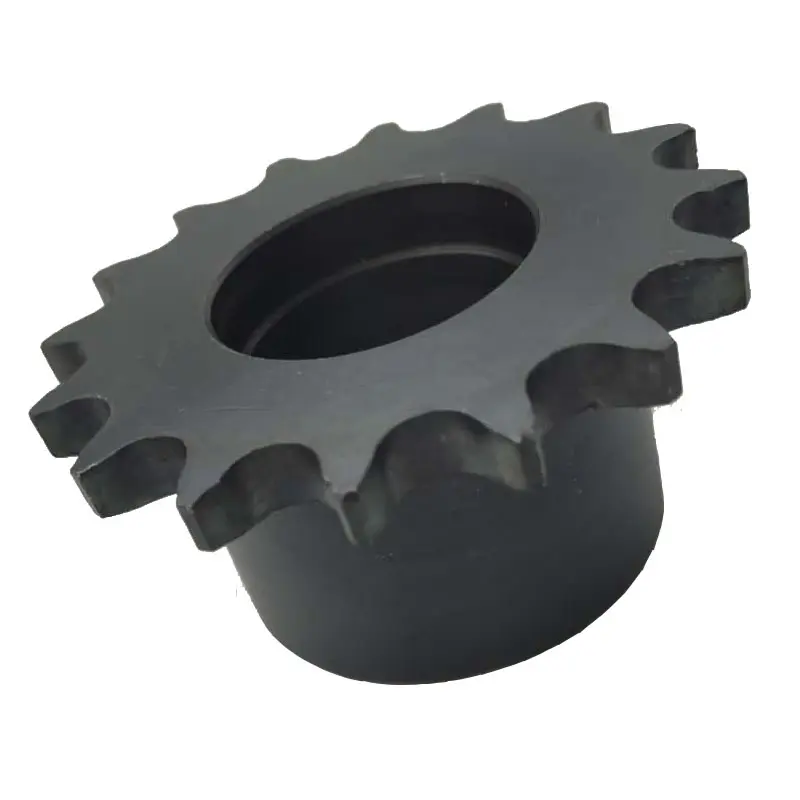
Kompatibilität von Kettenrädern mit Rädern
Im Allgemeinen sind Kettenräder für bestimmte Radtypen ausgelegt, und es gelten bestimmte Anforderungen, um die korrekte Kompatibilität zu gewährleisten:
- Kettengröße und Teilung: Das Kettenrad muss in Größe und Teilung zur Kette passen, mit der es verwendet werden soll. Beispielsweise benötigt man für eine Rollenkette mit einer Teilung von 0,625 Zoll ein Kettenrad mit derselben Teilung, um einen korrekten Sitz zu gewährleisten.
- Anzahl der Zähne: Die Zähnezahl des Kettenrads muss mit der Anzahl der Kettenglieder übereinstimmen. Die Kette muss reibungslos und ohne zu klemmen oder zu überspringen mit dem Kettenrad kämmen.
- Zahnprofil: Das Zahnprofil des Kettenrads sollte der Form der Kettenrollen entsprechen, um einen reibungslosen Eingriff zu gewährleisten und den Verschleiß zu minimieren.
- Schaftgröße: Die Mittelbohrung des Kettenrads muss dem Durchmesser der Welle entsprechen, auf der es montiert wird. Die Verwendung der richtigen Wellengröße gewährleistet einen sicheren Sitz und verhindert ein Wackeln.
- Hub-Konfiguration: Manche Kettenräder besitzen Naben, die als Verlängerungen an beiden Seiten des Kettenrads angebracht sind. Länge und Form der Nabe sollten den Anforderungen der jeweiligen Anwendung entsprechen.
- Material und Festigkeit: Berücksichtigen Sie Material und Festigkeit des Kettenrads entsprechend der Belastung und den Umgebungsbedingungen der Anwendung. Für Anwendungen mit hoher Beanspruchung können Kettenräder aus robusten Materialien erforderlich sein, um den auftretenden Kräften und Belastungen standzuhalten.
Bei der Auswahl eines Kettenrads für ein bestimmtes Rad ist es unerlässlich, die Spezifikationen und Richtlinien des Herstellers zu beachten. Die Kombination inkompatibler Kettenräder und Räder kann zu vorzeitigem Verschleiß, Leistungseinbußen und potenziellen Sicherheitsrisiken führen. Im Zweifelsfall bezüglich der Kompatibilität wenden Sie sich bitte an den Hersteller oder einen sachkundigen Experten, um das richtige Kettenrad für Ihre Anwendung auszuwählen.
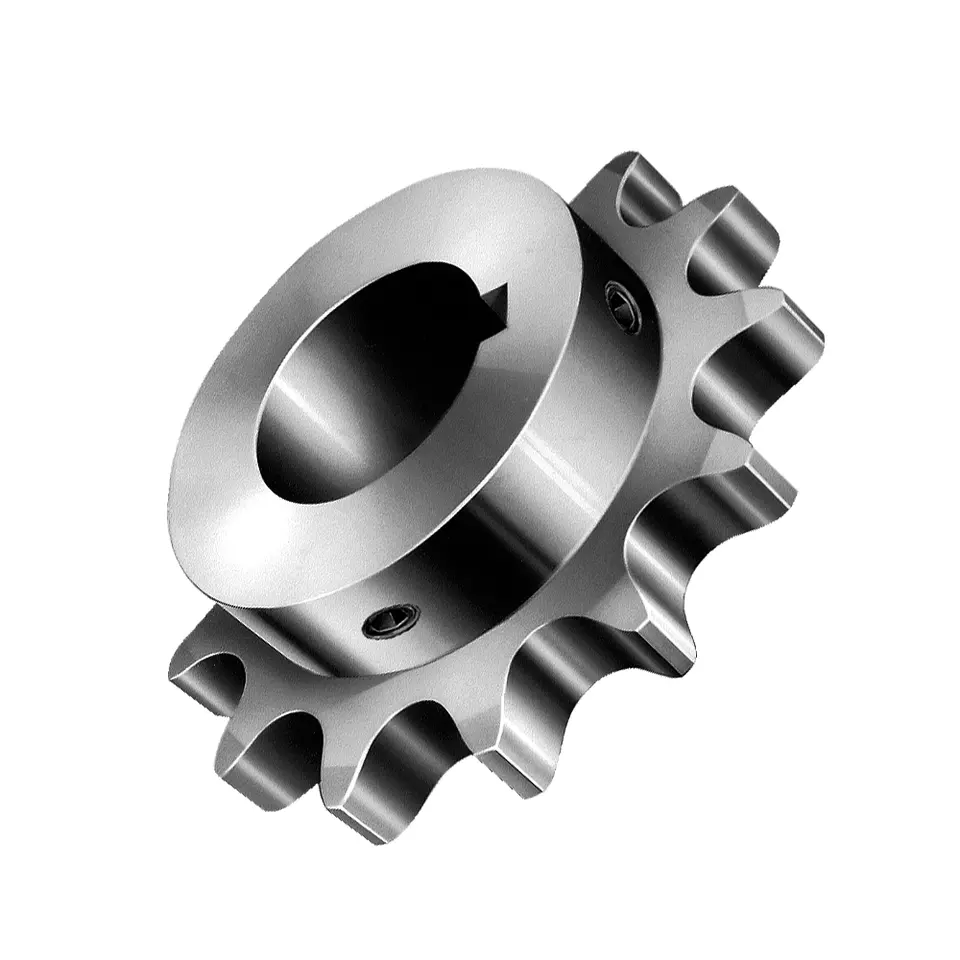
Choosing the Right Material for a Sprocket to Ensure Longevity
Choosing the right material for a sprocket is crucial to ensure its longevity and reliable performance in a given application. The material selection depends on various factors such as load, speed, operating environment, and budget. Here are some common materials used for sprockets and their considerations:
- Stahl: Steel sprockets are widely used in a wide range of applications due to their excellent strength, durability, and wear resistance. They are suitable for heavy-duty and high-speed operations. Different grades of steel, such as carbon steel or alloy steel, offer varying levels of hardness and strength.
- Edelstahl: Stainless steel sprockets are preferred when corrosion resistance is essential, making them suitable for applications where the sprocket is exposed to moisture, chemicals, or outdoor elements. They are commonly used in food processing, pharmaceutical, and marine industries.
- Cast Iron: Cast iron sprockets offer good wear resistance and are often used in low to medium-speed applications. They are cost-effective and provide excellent performance in less demanding conditions.
- Kunststoffe: Plastic sprockets are lightweight and corrosion-resistant. They are commonly used in applications where low noise, self-lubrication, and resistance to chemicals or moisture are required. However, they have limited load-carrying capacity and may not be suitable for heavy-duty applications.
- Aluminium: Aluminum sprockets are lightweight and commonly used in applications where weight reduction is critical, such as aerospace and certain machinery. However, they are not as durable as steel sprockets and are not suitable for high loads or harsh environments.
When choosing the right material for a sprocket, consider the following:
- Load Capacity: Select a material that can handle the expected loads in the application without deforming or wearing excessively.
- Speed: Higher speeds may require materials with better heat dissipation and wear resistance.
- Environment: Consider factors such as moisture, chemicals, temperature, and outdoor exposure. Choose a material with suitable corrosion resistance and resilience to environmental conditions.
- Maintenance: Some materials may require more frequent maintenance or lubrication to ensure longevity.
- Cost: Balance the material’s performance with the budget constraints of the project.
It’s essential to consult with sprocket manufacturers or material experts to determine the most appropriate material for your specific application. They can provide valuable insights and recommendations based on your requirements, helping to ensure the longevity and optimal performance of the sprocket in your machinery or equipment.

Choosing the Right Size of Sprocket to Match a Wheel
Choosing the correct size of sprocket to match a wheel is essential for ensuring efficient power transmission and proper functionality of a mechanical system. Here are the steps to help you choose the right size of sprocket:
1. Determine the Pitch Diameter of the Wheel:
Measure the diameter of the wheel from the center to the point where the teeth of the sprocket will engage with the wheel. This measurement is known as the pitch diameter of the wheel.
2. Identify the Desired Gear Ratio:
Determine the gear ratio you want to achieve for your application. The gear ratio is the ratio of the number of teeth on the sprocket to the number of teeth on the wheel and determines the speed and torque output.
3. Calculate the Number of Teeth on the Sprocket:
Once you have the pitch diameter of the wheel and the desired gear ratio, you can calculate the number of teeth on the sprocket using the formula:
Number of Teeth on Sprocket = (Desired Gear Ratio) * (Number of Teeth on Wheel)
4. Select a Standard Sprocket Size:
Based on the calculated number of teeth on the sprocket, choose a standard sprocket size that comes closest to the calculated value. Sprockets are available in various tooth counts, and you may need to choose the nearest size available.
5. Consider Chain Compatibility:
If you are using a chain drive system, ensure that the selected sprocket is compatible with the chain you plan to use. The chain pitch (distance between the centers of adjacent roller pins) should match the pitch of the sprocket.
6. Verify Center Distance:
Check that the center distance between the wheel and the sprocket is appropriate for your application. The center distance is the distance between the centers of the wheel and the sprocket and should be set to achieve the desired tension and alignment of the chain or belt.
7. Consider the Material and Tooth Profile:
Select a sprocket material suitable for your application, such as steel, stainless steel, or plastic, based on factors like load, environment, and operating conditions. Additionally, consider the tooth profile (standard or custom) to ensure smooth engagement with the chain or belt.
By following these steps and considering the specific requirements of your machinery and mechanical system, you can choose the right size of sprocket to match your wheel and achieve optimal performance and longevity of the system.


editor by CX 2023-10-02