Opis produktu
Welded Metric Roller Drive Conveyor Chain CZPT Plastic Stainless Steel Duplex Cast Iron Plate Flat Top Finished Bore Idler Bushed Taper Lock Qd Sprocket
Standard sprockets:
|
||||||||||||||||||||||||||||||||||||||||||||||||||||||||
Customization process :
1.Provide documentation: CAD, DWG, DXF, PDF,3D model ,STEP, IGS, PRT
2.Quote: We will give you the best price within 24 hours
3.Place an order: Confirm the cooperation details and CZPT the contract, and provide the labeling service
4.Processing and customization: Short delivery time
Related products:
Our Factory
If you need to customize transmission products,
please click here to contact us!
Chain Sprockets:
Company Information:
/* 22 stycznia 2571 19:08:37 */!function(){function s(e,r){var a,o={};try{e&&e.split(„”,).forEach(function(e,t){e&&(a=e.match(/(.*?):(.*)$/))&&1
| Standard Or Nonstandard: | Standard |
|---|---|
| Application: | Motor, Electric Cars, Motorcycle, Machinery, Marine, Agricultural Machinery, Car |
| Hardness: | Hardened Tooth Surface |
| Manufacturing Method: | Cut Gear |
| Toothed Portion Shape: | Spur Gear |
| Tworzywo: | Custom Made |
| Próbki: |
US$ 9999/Piece
1 sztuka (minimalne zamówienie) | |
|---|
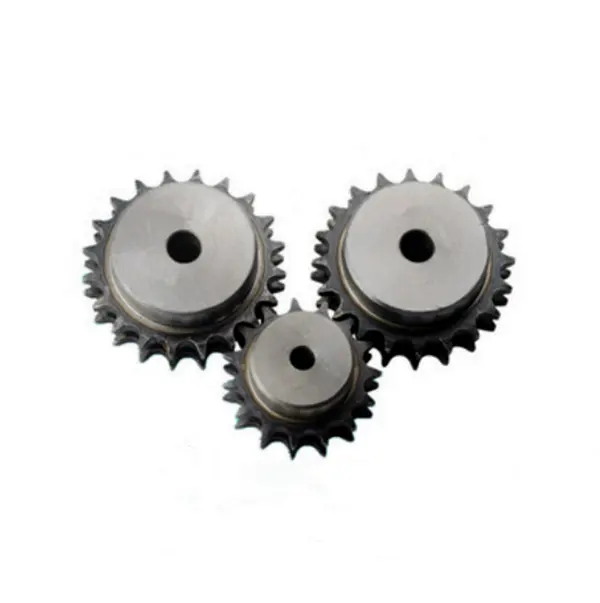
Ensuring Proper Alignment between a Wheel and its Corresponding Sprocket
Proper alignment between a wheel and its corresponding sprocket is crucial for the smooth and efficient operation of the wheel sprocket system. Misalignment can lead to increased wear, noise, and reduced performance. Here are some steps to ensure proper alignment:
- Use Precision Components: Ensure that both the wheel sprocket are high-quality, precision-manufactured components that meet the required specifications. Using well-machined components will aid in achieving better alignment.
- Check Axle Alignment: Make sure the axle or shaft on which the wheel sprocket are mounted is straight and properly aligned. Any misalignment in the axle can lead to misalignment of the wheel sprocket.
- Proper Mounting: Ensure that the wheel sprocket are securely and correctly mounted on the axle or shaft. Use appropriate fasteners and tightening techniques to prevent any movement or shifting during operation.
- Check for Parallelism: The axes of the wheel sprocket should be parallel to each other. Measure the distance between the axes at multiple points to verify parallel alignment.
- Use Alignment Tools: Alignment tools, such as laser alignment systems, can be employed to accurately align the wheel sprocket. These tools can help identify and correct misalignments effectively.
- Check Tension and Tensioner Alignment: If a tensioner is used in the system, ensure that it is properly aligned and applying the right tension to the chain or belt. Incorrect tension can cause misalignment.
- Regular Maintenance: Implement a regular maintenance schedule to check and adjust alignment as needed. Regular inspections can help identify and address alignment issues before they cause significant problems.
- Monitor Performance: Keep an eye on the performance of the wheel sprocket system. Unusual noises, vibrations, or signs of wear can indicate misalignment and should be investigated promptly.
Proper alignment is essential for the long-term performance and reliability of the wheel sprocket system. By following these steps and conducting regular maintenance, you can ensure that the wheel sprocket work together harmoniously, providing efficient power transmission and minimizing wear and tear.
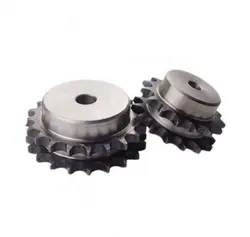
Sprawdzanie zużycia koła zębatego
Regularna kontrola zębatki koła jest niezbędna, aby zapewnić jej prawidłowe działanie i zidentyfikować wszelkie oznaki zużycia. Oto kroki kontroli zębatki koła:
- Kontrola wizualna: Zacznij od wizualnej oceny zębatki koła zębatego pod kątem widocznych śladów zużycia, uszkodzeń lub odkształceń. Poszukaj pęknięć, odprysków, wgnieceń lub innych nierówności na powierzchni obu elementów.
- Sprawdź, czy nie ma rozbieżności: Sprawdź, czy koła zębate są prawidłowo ustawione względem siebie. Nieprawidłowe ustawienie może prowadzić do przyspieszonego zużycia i wpłynąć na ogólną wydajność układu.
- Zmierz zużycie: Za pomocą suwmiarki lub miernika zużycia zmierz profil zęba zębatki i powierzchnię toczną koła. Porównaj te pomiary z oryginalnymi specyfikacjami, aby określić, czy nastąpiło znaczne zużycie.
- Kontrola zębów i zazębienia łańcucha: Jeśli koło zębate jest częścią układu napędowego łańcucha, należy dokładnie sprawdzić zęby koła zębatego i zazębienie łańcucha. Zużyte lub wydłużone zęby mogą powodować słabe zazębienie łańcucha i prowadzić do jego przedwczesnej awarii.
- Smarowanie: Sprawdź smarowanie koła zębatego. Niedostateczne lub nadmierne smarowanie może powodować zwiększone tarcie, co prowadzi do zużycia i obniżenia wydajności.
- Stan łożyska: Jeśli koło jest zamontowane na wale z łożyskami, sprawdź łożyska pod kątem oznak zużycia, hałasu lub nierównego ruchu. Prawidłowo działające łożyska są kluczowe dla płynnej pracy układu.
- Sprawdź elementy montażowe: Upewnij się, że wszystkie nakrętki, śruby i inne elementy montażowe są solidnie dokręcone. Luźne elementy złączne mogą powodować wibracje i problemy z ustawieniem współosiowości.
- Sprawdź, czy nie ma zanieczyszczeń: Usuń wszelkie zanieczyszczenia, brud i ciała obce, które mogły nagromadzić się na kole lub zębatce. Zanieczyszczenia mogą przyspieszyć zużycie i uszkodzić podzespoły.
- Wymiana lub konserwacja: Na podstawie wyników inspekcji określ, czy jakiekolwiek części wymagają wymiany lub konserwacji. Niezwłocznie rozwiąż wszelkie problemy, aby zapobiec dalszym uszkodzeniom i utrzymać wydajność systemu.
Regularne kontrole i konserwacje mogą pomóc przedłużyć żywotność zespołu kół zębatych, zoptymalizować wydajność i zagwarantować bezpieczeństwo układu mechanicznego.
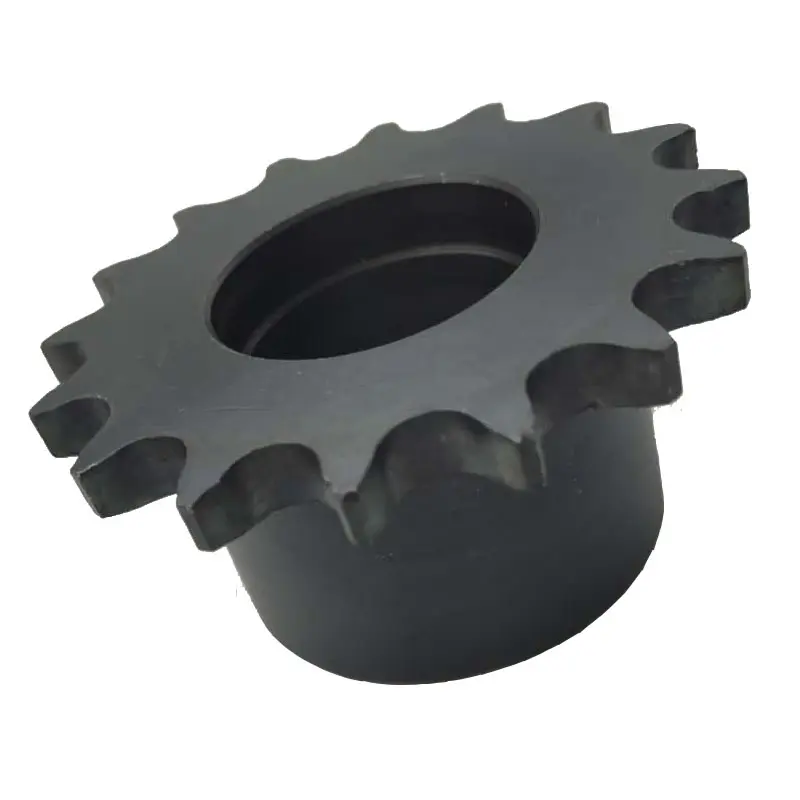
Role of a wheel sprocket in a Mechanical System
In a mechanical system, a wheel sprocket play a crucial role in transferring motion and power from one component to another. They are essential elements of various machines and mechanisms, such as bicycles, conveyor systems, automobiles, and industrial machinery. Let’s explore their functions in more detail:
1. Wheel:
The wheel is a circular component with a central shaft (axle) that allows it to rotate freely around the axle’s axis. Its primary functions include:
- Motion Transmission: When a force is applied to the wheel’s outer edge, it rotates around the axle, enabling the transfer of linear motion into rotational motion.
- Load Bearing: The wheel’s structure and material are designed to support and distribute the load placed on it, allowing smooth movement over various surfaces.
- Reduction of Friction: By using wheels, the friction between the moving object and the ground is significantly reduced, making it easier to move heavy loads with less effort.
- Directional Control: Wheels can be attached to steering mechanisms to control the direction of movement in vehicles and other equipment.
2. Sprocket:
A sprocket is a toothed wheel designed to mesh with a chain or a belt, facilitating motion transfer between the sprocket and the chain/belt. Its key functions include:
- Power Transmission: When rotational force (torque) is applied to the sprocket, the teeth engage with the links of the chain or belt, transferring motion and power from one sprocket to another.
- Speed and Torque Conversion: Different-sized sprockets can be used to adjust the speed and torque of the driven component in a mechanical system.
- Positive Drive: The teeth on the sprocket and the links on the chain/belt create a positive drive system, reducing the likelihood of slippage or loss of power during operation.
- Chain/Belt Tensioning: Sprockets help maintain proper tension in the chain or belt, ensuring optimal performance and longevity of the power transmission system.
Together, wheels and sprockets form a vital part of mechanical systems, enabling efficient motion transmission, power transfer, and control in a wide range of applications across various industries.


editor by Dream 2024-04-22