Descripción del Producto
Nonstandard Industry MADE-TO-ORDER Or PLW Plywood Case Chain Sprocket Motorcycle Parts
Descripción del Producto
1. Produce strictly in accordance with ANSI or DIN standard dimension
2. Material: 1045 steel / Stainless Steel 304 & 316
3. Standard: ANSI, DIN, JINS, ISO, Standard America or customer drawing
4. Pilot bore, finished bore, taper bore and special bore
5. Bright surface and high precision
6. Advanced heat treatment and surface treatment craft
7. Best quality and competitive price
8. Welcome OEM / ODM
9. Processing equipment: Hobbing machine, Slotting machine, CNC lathes and other equipment.
10. Sprocket models: Contains special sprocket according to customer’s drawings, standard sprocket (American standard and metric).
| Product name | Zinc-Plated Driving Sprocket From China (05B16T-1) |
| Materials Available | 1. Stainless Steel: SS304, SS316, etc |
| 2. Alloy Steel: C45, 45Mn, 42CrMo, 20CrMo, etc | |
| 3. OEM according to your request | |
| Tratamiento de superficies | Heat treatment, Quenching treatment, High frequency normalizing treatment, Polishing, Electrophoresis paint processing, Anodic oxidation treatment, etc |
| Characteristic | Fire resistant, Oil resistant, Heat resistant, CZPT resistance, Oxidative resistance, Corrosion resistance, etc |
| Design criterion | ISO DIN ANSI & Customer’s Drawing |
| Size | Customer’s Drawing & ISO standard |
| Application | Industrial transmission equipment |
| Package | Wooden Case / Container and pallet, or made-to-order |
| Certificate | ISO9001: 2008 |
| Advantage | Quality first, Service first, Competitive price, Fast delivery |
| Delivery Time | 20 days for samples. 45 days for official order. |
View more products,please click here…
Fotos detalladas
Company Profile
| Estándar o no estándar: | Nonstandard |
|---|---|
| Solicitud: | Motorcycle, Machinery, Marine, Agricultural Machinery, Car, Industry |
| Dureza: | Superficie del diente endurecida |
| Material: | Alloy Steel/Stainless Steel |
| Tipo: | Rueda de espigas |
| Sample: | for Free |
| Muestras: |
US$ 0/Piece
1 unidad (pedido mínimo) | |
|---|
| Personalización: |
Disponible
| Solicitud personalizada |
|---|
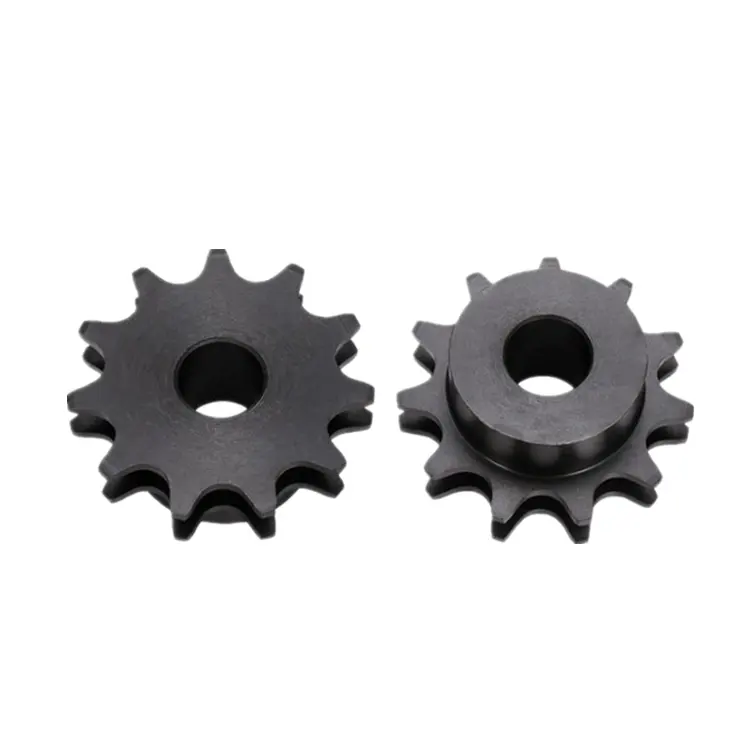
wheel sprocket System in Heavy Machinery and Industrial Equipment
Yes, a wheel sprocket system is commonly used in heavy machinery and industrial equipment for power transmission and motion control. The wheel sprocket configuration is a versatile and efficient method of transmitting rotational force between two shafts.
In heavy machinery and industrial equipment, the wheel is typically attached to one shaft, while the sprocket is mounted on another shaft. A chain or a toothed belt is wrapped around the wheel sprocket, connecting them. When the wheel is rotated, the chain or belt engages with the sprocket, causing the sprocket and the connected shaft to rotate as well. This mechanism allows the transfer of power from one shaft to the other, enabling various components and parts of the machinery to function.
Common applications of the wheel sprocket system in heavy machinery include:
- Construction Machinery: Wheel loaders, excavators, cranes, and other construction equipment often use wheel sprocket systems for efficient power transmission in various moving parts.
- Material Handling Equipment: Forklifts, conveyor systems, and other material handling equipment utilize wheel sprocket configurations to move goods and materials smoothly and reliably.
- Mining Equipment: Mining machinery, such as drilling rigs and conveyors, often incorporate wheel sprocket assemblies for power transmission in challenging environments.
- Agricultural Machinery: Tractors, combines, and other agricultural equipment use wheel sprocket systems to drive various components like wheels and harvesting mechanisms.
- Industrial Robotics: Robots and automated systems in manufacturing often utilize wheel sprocket setups for precise motion control and efficient power transmission.
One of the key advantages of the wheel sprocket system is its ability to handle heavy loads and transmit power over long distances. It is a reliable and cost-effective method of power transmission in various industrial settings. However, proper maintenance and alignment are crucial to ensuring the system’s optimal performance and longevity.
Overall, the wheel sprocket system is a widely used and effective power transmission solution in heavy machinery and industrial equipment, offering versatility and efficiency in a range of applications.
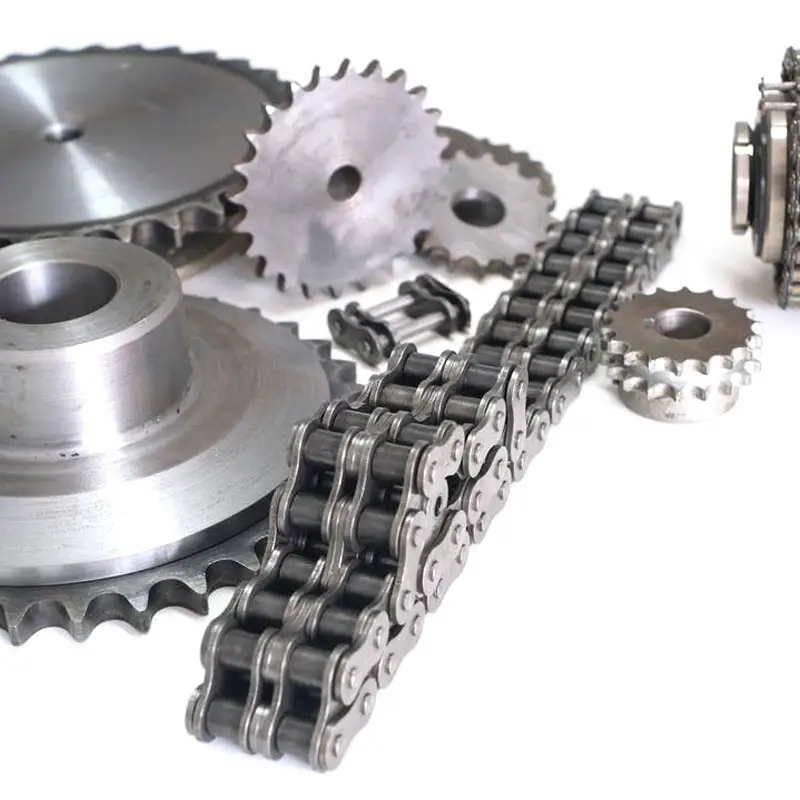
Uso de una rueda dentada de correa en lugar de una rueda dentada de cadena con una rueda
Sí, en muchos casos, se puede utilizar un piñón de correa en lugar de un piñón de cadena con una rueda, siempre que el sistema esté diseñado para adaptarse a dicho cambio.
Tanto los piñones de cadena como los de correa cumplen la misma función fundamental: transferir el movimiento de rotación y la potencia entre la rueda y el componente accionado. Sin embargo, existen algunas consideraciones importantes que se deben tener en cuenta al reemplazar un piñón de cadena por uno de correa:
- Alineación: Los piñones de correa y de cadena deben estar correctamente alineados con la rueda para garantizar una transmisión de potencia fluida y eficiente. Cualquier desalineación puede provocar un desgaste prematuro y reducir el rendimiento general del sistema.
- Tensión: Los sistemas de transmisión por cadena requieren una tensión específica para evitar holgura y mantener un acoplamiento adecuado entre los piñones y la cadena. Los sistemas de transmisión por correa, por otro lado, requieren la tensión apropiada para evitar deslizamientos. Asegurar la tensión correcta para cada tipo de piñón es fundamental para un funcionamiento fiable.
- Capacidad de carga: Al seleccionar un piñón de correa, tenga en cuenta la capacidad de carga y los requisitos de par del sistema. Los piñones de correa pueden tener capacidades de carga diferentes a las de los piñones de cadena, y usar el tipo incorrecto puede provocar un desgaste prematuro o una falla.
- Velocidad y RPM: Los sistemas de transmisión por correa pueden tener velocidades de funcionamiento y límites de RPM diferentes a los de los sistemas de transmisión por cadena. Asegúrese de que la rueda dentada seleccionada pueda soportar la velocidad de rotación deseada sin exceder sus límites de diseño.
- Diseño del sistema: El cambio de un sistema de transmisión por cadena a uno por correa (o viceversa) puede requerir modificaciones en el diseño general del sistema, incluyendo el tamaño de los piñones y la disposición del sistema. Consulte con un ingeniero o un profesional cualificado para garantizar que el reemplazo sea adecuado y seguro.
En general, sustituir un piñón de cadena por uno de correa puede ser una opción viable en ciertas aplicaciones. Sin embargo, es fundamental tener en cuenta los factores mencionados anteriormente y evaluar la compatibilidad del nuevo piñón con el sistema existente para lograr un rendimiento y una durabilidad óptimos.
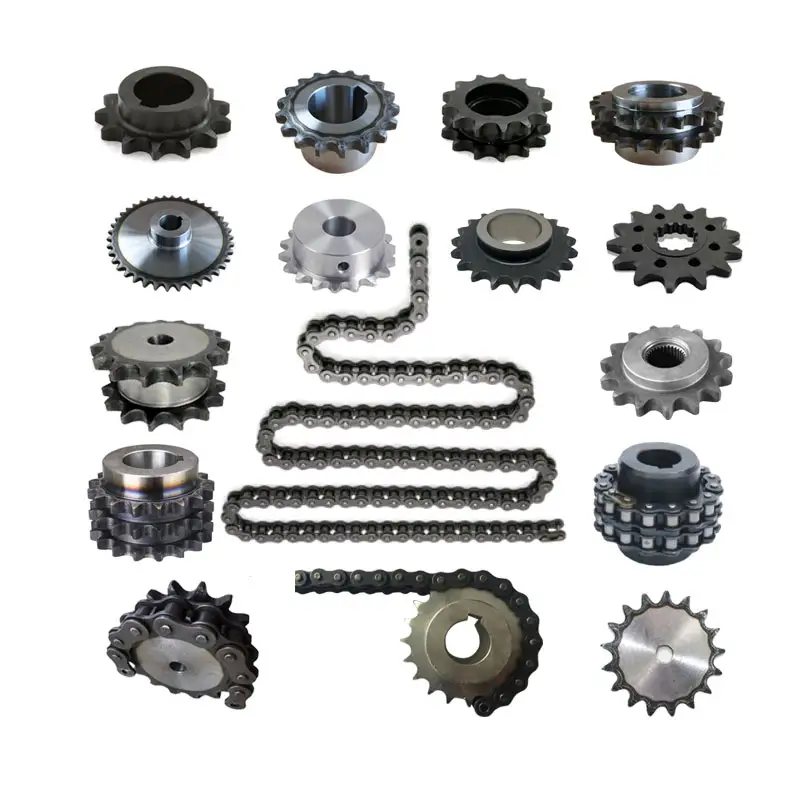
Calculating Gear Ratio for a wheel sprocket Setup
In a wheel sprocket system, the gear ratio represents the relationship between the number of teeth on the sprocket and the number of teeth on the wheel. The gear ratio determines the speed and torque relationship between the two components. To calculate the gear ratio, use the following formula:
Gear Ratio = Number of Teeth on Sprocket ÷ Number of Teeth on Wheel
For example, if the sprocket has 20 teeth and the wheel has 60 teeth, the gear ratio would be:
Gear Ratio = 20 ÷ 60 = 1/3
The gear ratio can also be expressed as a decimal or percentage. In the above example, the gear ratio can be expressed as 0.3333 or 33.33%.
It’s important to note that the gear ratio affects the rotational speed and torque of the wheel sprocket. A gear ratio greater than 1 indicates that the sprocket’s speed is higher than the wheel’s speed, resulting in increased rotational speed and reduced torque at the wheel. Conversely, a gear ratio less than 1 indicates that the sprocket’s speed is lower than the wheel’s speed, resulting in decreased rotational speed and increased torque at the wheel.
The gear ratio is crucial in various applications where precise control of speed and torque is required, such as bicycles, automobiles, and industrial machinery.


editor by CX 2023-08-01