Produktbeschreibung
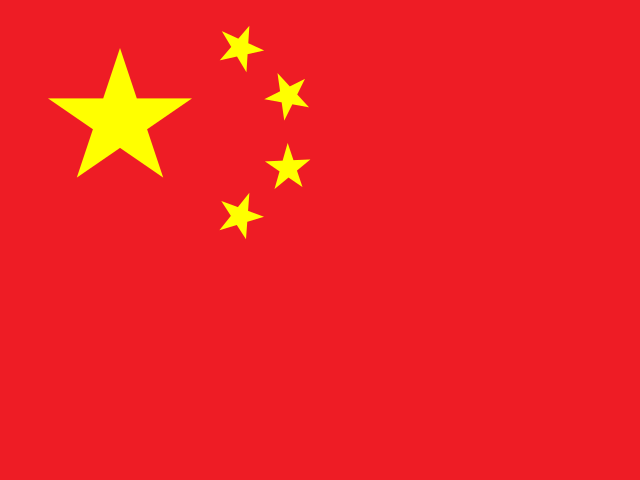
PC200 20y-27-11581 Excavator Parts Sprocket Wheel Chain Sprocket
|
Material |
40SiMnTi |
|
Finish |
Smooth |
|
Colors |
Black or yellow |
|
Technique |
Forging casting |
|
Oberflächenhärte |
HRC52-58 |
|
Warranty time |
2000 hour |
|
Certification |
ISO9001-9002 |
|
FOB Price |
FOB HangZhou USD 200-2000/Piece |
|
Mindestbestellmenge |
2 piece |
|
Delivery Time |
Within 30 days after contract established |
| For ktsu | ||||||||
| PC20-7 | PC30 | PC30-3 | PC30-5 | PC30-6 | PC40-7 | PC45 | PC45-2 | PC55 |
| PC120-6 | PC130 | PC130-7 | PC200 | PC200-1 | PC200-3 | PC200-5 | PC200-6 | PC200-7 |
| PC200-8 | PC210-6 | PC220-1 | PC220-3 | PC220-6 | PC220-7 | PC220-8 | PC270-7 | PC202B |
| PC220LC-6 | PC220LC-8 | PC240 | PC300 | PC300-3 | PC300-5 | PC300-6 | PC300-7 | PC300-7K |
| PC300LC-7 | PC350-6/7 | PC400 | PC400-3 | PC400-5 | PC400-6 | PC400lc-7 | PC450-6 | PC450-7 |
| PC600 | PC650 | PC750 | PC800 | PC1100 | PC1250 | PC2000 | ||
| D20 | D31 | D50 | D60 | D61 | D61PX | D65A | D65P | D64P-12 |
| D80 | D85 | D155 | D275 | D355 | ||||
| For HITACHI | ||||||||
| EX40-1 | EX40-2 | EX55 | EX60 | EX60-2 | EX60-3 | EX60-5 | EX70 | EX75 |
| EX100 | EX110 | EX120 | EX120-1 | EX120-2 | EX120-3 | EX120-5 | EX130-1 | EX200-1 |
| EX200-2 | EX200-3 | EX200-5 | EX220-3 | EX220-5 | EX270 | EX300 | EX300-1 | EX300-2 |
| EX300-3 | EX300-5 | EX300A | EX330 | EX370 | EX400-1 | EX400-2 | EX400-3 | EX400-5 |
| EX450 | ZAX30 | ZAX55 | ZAX200 | ZAX200-2 | ZAX330 | ZAX450-1 | ZAX450-3 | ZAX450-5 |
| ZX110 | ZX120 | ZX200 | ZX200 | ZX200-1 | ZX200-3 | ZX200-5g | ZX200LC-3 | ZX210 |
| ZX210-3 | ZX210-3 | ZX210-5 | ZX225 | ZX240 | ZX250 | ZX270 | ZX30 | ZX330 |
| ZX330 | ZX350 | ZX330C | ZX450 | ZX50 | ||||
| For CAT | ||||||||
| E200B | E200-5 | E320D | E215 | E320DL | E324D | E324DL | E329DL | E300L |
| E320S | E320 | E320DL | E240 | E120-1 | E311 | E312B | E320BL | E345 |
| E324 | E140 | E300B | E330C | E120 | E70 | E322C | E322B | E325 |
| E325L | E330 | E450 | CAT225 | CAT312B | CAT315 | CAT320 | CAT320C | CAT320BL |
| CAT330 | CAT322 | CAT245 | CAT325 | CAT320L | CAT973 | |||
| D3 | D3C | D4 | D4D | D4H | D5M | D5H | D6 | D6D |
| D6M | D6R | D6T | D7 | D7H | D7R | D8 | D8N | D8R |
| D9R | D9N | D9G | D10 | |||||
| For Sumitomo | ||||||||
| SH120 | SH120-3 | SH200 | SH210-5 | SH200 | SH220-3 | SH220-5/7 | SH290-3 | SH350-5/7 |
| SH220 | SH280 | SH290-7 | SH260 | SH300 | SH300-3 | SH300-5 | SH350 | SH60 |
| SH430 | ||||||||
| For KOBELCO | ||||||||
| SK120-6 | SK120-5 | SK210-8 | SK210LC-8 | SK220 | SK220-1 | SK220-3 | SK220-5/6 | SK200 |
| SK200 | SK200 | SK200-3 | SK200-6 | SK200-8 | SK200-5/6 | SK60 | SK290 | SK100 |
| SK230 | SK250 | SK250-8 | SK260LC-8 | SK300 | SK300-2 | SK300-4 | SK310 | SK320 |
| SK330-8 | SK330 | SK350LC-8 | SK235SR | SK450 | SK480 | SK30-6 | ||
| For DAEWOO | ||||||||
| DH200 | DH220-3 | DH220 | DH220S | DH280-2 | DH280-3 | DH55 | DH258 | DH130 |
| DH370 | DH80 | DH500 | DH450 | /DH225 | ||||
| For HYUNDAI | ||||||||
| R60-5 | R60-7 | R60-7 | R80-7 | R200 | R200-3 | R210 | R210 | R210-9 |
| R210LC | R210LC-7 | R225 | R225-3 | R225-7 | R250 | R250-7 | R290 | R290LC |
| R290LC-7 | R320 | R360 | R954 | |||||
| For KATO | ||||||||
| HD512 | HD1430 | HD 512III | HD 820III | HD820R | HD1430III | HD700VII | HD 1250VII | HD250SE |
| HD400SE | HD550SE | HD1880 | ||||||
| For DOOSAN | ||||||||
| DX225 | DX225LCA | DX258 | DX300 | DX300LCA | DX420 | DX430 | ||
| For VOLVO | ||||||||
| EC160C | EC160D | EC180B | EC180C | EC180D | EC210 | EC210 | EC210B | EC240B |
| EC290 | EC290B | EC240 | EC55 | EC360 | EC360B | EC380D | EC460 | EC460B |
| EC460C | EC700 | EC140 | EC140B | EC160B | ||||
| After-sales Service: | Online Service |
|---|---|
| Warranty: | 12 Momths |
| Typ: | Undercarriage Parts |
| Anpassung: |
Verfügbar
| Kundenspezifische Anfrage |
|---|
.shipping-cost-tm .tm-status-off{background: none;padding:0;color: #1470cc}
|
Versandkosten:
Geschätzte Frachtkosten pro Einheit. |
über Versandkosten und voraussichtliche Lieferzeit. |
|---|
| Zahlungsmethode: |
|
|---|---|
|
Erste Zahlung Vollständige Zahlung |
| Währung: | US$ |
|---|
| Rückgabe & Erstattung: | Sie können bis zu 30 Tage nach Erhalt der Produkte eine Rückerstattung beantragen. |
|---|
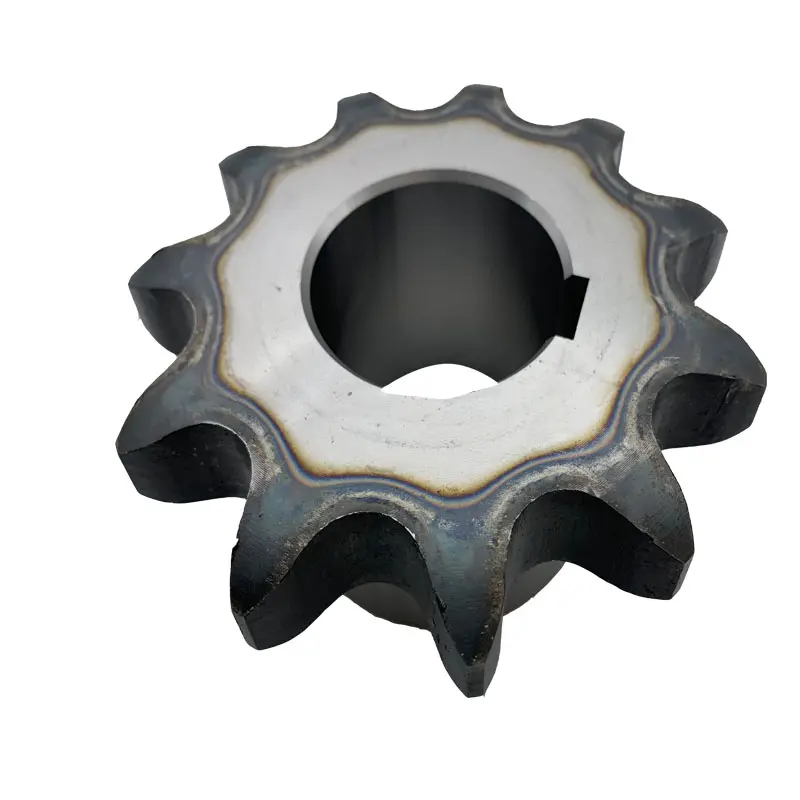
Alternatives to Chain Sprockets in wheel sprocket Configuration
While chain sprockets are commonly used in wheel sprocket configurations, there are alternative methods for power transmission in various applications:
- Gear and Gear Rack: Gears are toothed wheels that mesh with each other to transmit power. Instead of using a chain and sprocket, gears can directly engage with each other, offering a smooth and efficient power transfer. Gear racks, which are linear gears, can be used in place of wheels for linear motion applications.
- Belt and Pulley: Belts and pulleys offer a flexible and quiet means of power transmission. They work similarly to chain and sprocket systems but use belts instead of chains. Pulleys have grooves that grip the belt, allowing power to be transferred between the pulleys.
- Gear Train: A gear train consists of multiple gears meshed together to achieve specific speed and torque ratios. Gear trains are often used in complex machinery and mechanical systems where precise power transmission is required.
- Direct Drive: In some applications, direct drive mechanisms can be used, where the motor or power source is directly connected to the wheel or load without any intermediate components like sprockets or gears.
- Friction Drive: Friction drive systems use the friction between two surfaces to transfer power. One surface, such as a rubber wheel, is pressed against another surface to achieve power transmission.
The choice of alternative power transmission methods depends on various factors, including the application requirements, available space, speed, torque, and efficiency considerations. Each alternative method has its advantages and limitations, and the selection should be based on the specific needs of the mechanical system.
When considering alternatives to chain sprockets, it is essential to analyze the requirements of your application and consult with engineering experts or manufacturers to determine the most suitable method of power transmission for optimal performance and longevity.
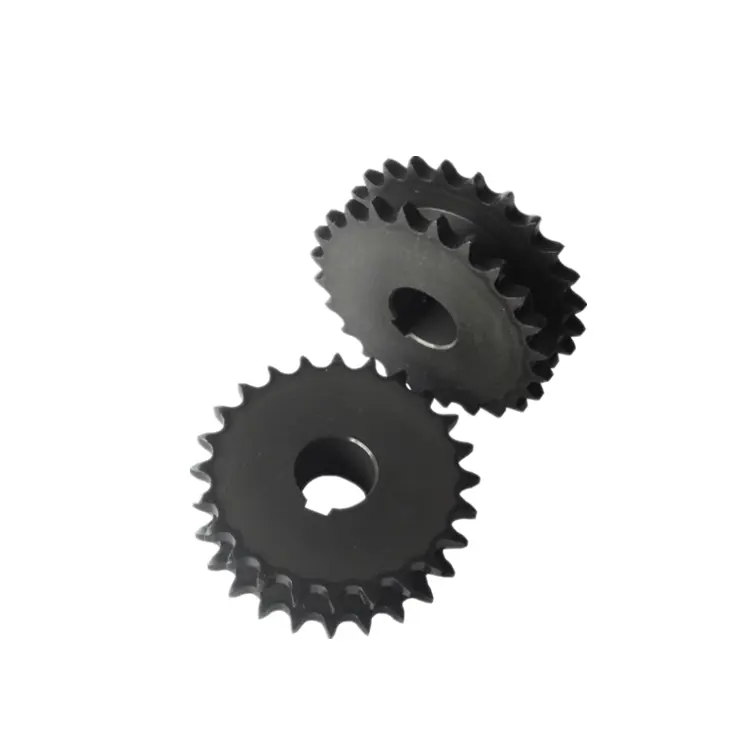
Vertikale Kraftübertragung mit Radkettenradsystem
Ja, ein Rad-Ketten-System kann zur vertikalen Kraftübertragung eingesetzt werden. In solchen Fällen ist das System so konstruiert, dass es Kraft und Bewegung zwischen vertikal ausgerichteten Wellen überträgt. Die vertikale Kraftübertragung mittels Rad-Ketten-System folgt ähnlichen Prinzipien wie die horizontale Übertragung, jedoch sind einige Faktoren zu berücksichtigen:
- Last und Drehmoment: Bei der vertikalen Kraftübertragung kann das Gewicht der Last den Drehmomentbedarf erheblich beeinflussen. Das Drehmoment muss ausreichen, um die Last unter Berücksichtigung von Reibung und anderen Widerstandskräften entgegen der Schwerkraft anzuheben.
- Kettenradauswahl: Die Wahl des richtigen Kettenrads ist für den vertikalen Antrieb entscheidend. Die Zähne des Kettenrads müssen so konstruiert sein, dass sie Kette oder Riemen effektiv in Eingriff bringen und ein Durchrutschen verhindern, insbesondere beim Heben schwerer Lasten.
- Schmierung: Eine sachgemäße Schmierung ist unerlässlich, um Reibung und Verschleiß im System zu reduzieren. Bei vertikalen Anwendungen können spezielle Schmierstoffe erforderlich sein, um einen reibungslosen Betrieb zu gewährleisten und vorzeitigen Ausfall zu verhindern.
- Spannung: Die korrekte Spannung von Kette oder Riemen ist für die vertikale Kraftübertragung entscheidend. Richtige Spannung verhindert Durchhängen und gewährleistet den korrekten Eingriff zwischen Rad und Kettenrad.
- Überhängende Last: Bei vertikalen Anordnungen kann das Gewicht der Kettenrad- und Wellenbaugruppe eine zusätzliche Last auf die Lager ausüben. Eine ausreichende Abstützung und die Wahl geeigneter Lager sind erforderlich, um diese Last aufzunehmen.
Vertikale Kraftübertragung mittels Rad-Ketten-System findet in verschiedenen Anwendungen Verwendung, darunter Förderanlagen, Aufzüge und einige Industriemaschinen. Eine fachgerechte Konstruktion, Installation und Wartung sind unerlässlich für einen sicheren und effizienten Betrieb in vertikalen Konfigurationen.
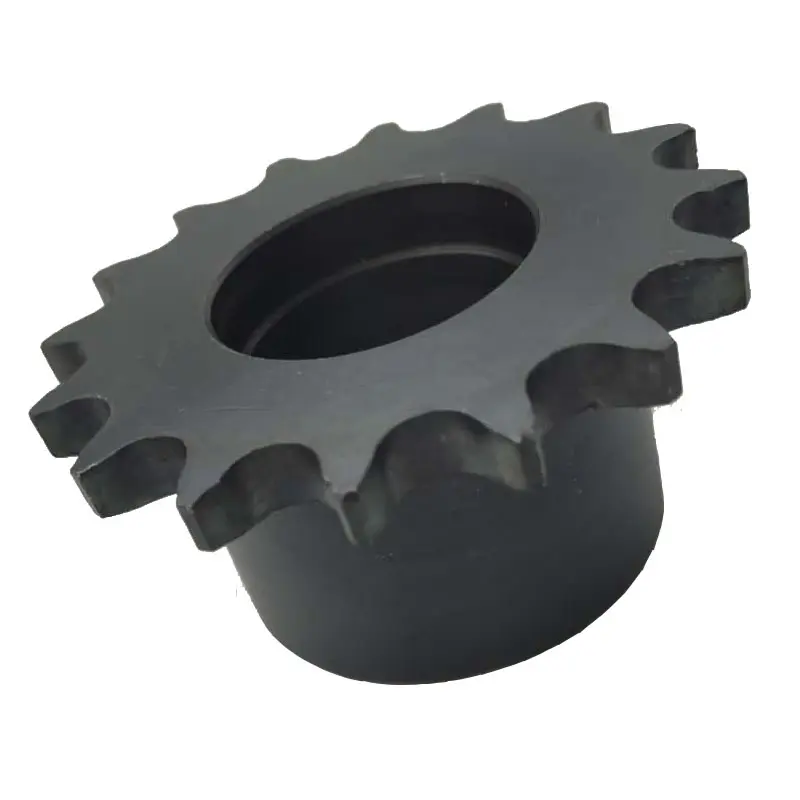
Role of a wheel sprocket in a Mechanical System
In a mechanical system, a wheel sprocket play a crucial role in transferring motion and power from one component to another. They are essential elements of various machines and mechanisms, such as bicycles, conveyor systems, automobiles, and industrial machinery. Let’s explore their functions in more detail:
1. Wheel:
The wheel is a circular component with a central shaft (axle) that allows it to rotate freely around the axle’s axis. Its primary functions include:
- Motion Transmission: When a force is applied to the wheel’s outer edge, it rotates around the axle, enabling the transfer of linear motion into rotational motion.
- Load Bearing: The wheel’s structure and material are designed to support and distribute the load placed on it, allowing smooth movement over various surfaces.
- Reduction of Friction: By using wheels, the friction between the moving object and the ground is significantly reduced, making it easier to move heavy loads with less effort.
- Directional Control: Wheels can be attached to steering mechanisms to control the direction of movement in vehicles and other equipment.
2. Sprocket:
A sprocket is a toothed wheel designed to mesh with a chain or a belt, facilitating motion transfer between the sprocket and the chain/belt. Its key functions include:
- Power Transmission: When rotational force (torque) is applied to the sprocket, the teeth engage with the links of the chain or belt, transferring motion and power from one sprocket to another.
- Speed and Torque Conversion: Different-sized sprockets can be used to adjust the speed and torque of the driven component in a mechanical system.
- Positive Drive: The teeth on the sprocket and the links on the chain/belt create a positive drive system, reducing the likelihood of slippage or loss of power during operation.
- Chain/Belt Tensioning: Sprockets help maintain proper tension in the chain or belt, ensuring optimal performance and longevity of the power transmission system.
Together, wheels and sprockets form a vital part of mechanical systems, enabling efficient motion transmission, power transfer, and control in a wide range of applications across various industries.


editor by CX 2023-11-16