Produktbeschreibung
|
Business type |
Manufacturer & Exporter |
||
|
Main export market |
Europe, North and South America, Southeast Asia, Oceania, Middle East, Africa |
||
|
Material |
Alloy Steel, Carbon Steel, Stainless Steel,Aluminum, Copper, Brass |
||
|
Manufacturing method |
Forged and then machined, hobbed, if need can also weld |
||
|
Heat treatment |
Hardening and Tempering, High Frequency Quenching, Carburizing Quenching |
||
|
Surface treatment |
Oxide black, Galvanized, Nickel plated, Chrome plated,Painted and so on |
||
|
Modell |
ANSI: 25/35/41/40/50/60/80/100/120/140/160/180/200/240 |
||
|
DIN/ISO:04C/06C/085/08A/10A/12A/16A/20A/24A/28A/32A/36A/40A/48A |
|||
|
DIN/ISO:04B/05B/06B/08B/10B/12B/16B/20B/24B/28B/32B/36B/40B/48B |
|||
|
Process |
Forging, Hobbing, Precision machining |
||
|
Zähne |
8T-100T |
||
|
Type |
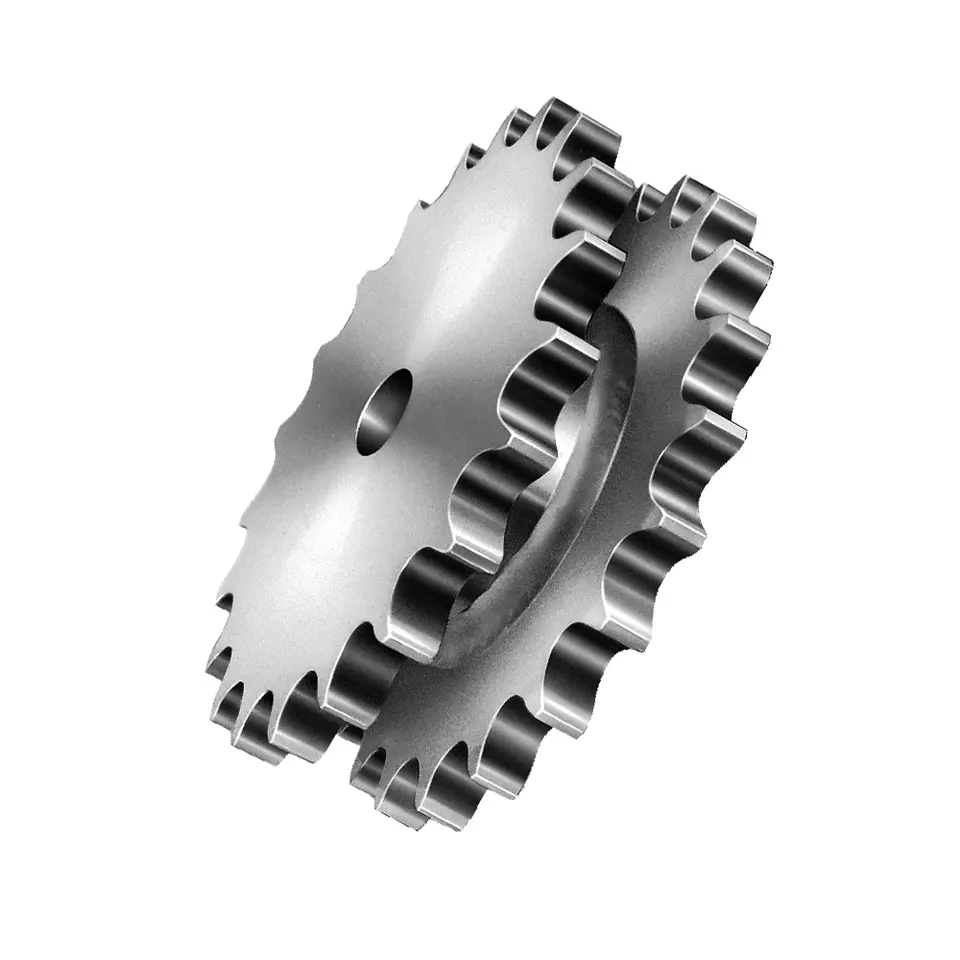
Type A sprockets :Plate (without Hub) |
||
|
Type B sprockets:One side with hub |
|||
|
Type C sprockets: Double side with hub |
|||
|
Finished bore sprockets:With the inner hole ,keyway and screw |
|||
1.Fast delivery: Standard products can be delivered in as fast as 20 days
2.Good service: timely reply, prompt quotation, responsible for the product
3.High cost performance: can maintain price stability for a certain period of time, bringing greater profits to customers
4.Good quality: production and testing have corresponding supervision to ensure product quality and get high praise from customers
5.OEM service: products can be customized according to drawings and requirements
We are responsible for the ordered products. We are very confident in the products we produce. Of course, if you have any problems after receiving the goods, you can contact us directly. We will confirm and negotiate in time to solve your difficulties.
|
Versandkosten:
Geschätzte Frachtkosten pro Einheit. |
Wird verhandelt |
|---|
| Standard Or Nonstandard: | Standard |
|---|---|
| Anwendung: | Motor, Motorcycle, Machinery, Agricultural Machinery |
| Hardness: | Hardened Tooth Surface |
| Proben: |
US$ 35/kg
1 kg(Min.Order) | Muster bestellen |
|---|
| Anpassung: |
Verfügbar
| Kundenspezifische Anfrage |
|---|
How to Identify and Troubleshoot Common Issues with Wheels and Sprockets
Identifying and troubleshooting common issues with wheels and sprockets can help you maintain their proper functioning and prevent potential problems. Here are some steps to follow:
- Abnormal Noise: If you notice unusual noise during operation, it could indicate misalignment, worn sprockets, or a loose chain. Check for any loose bolts or fasteners and ensure proper alignment of the sprockets.
- Chain Slippage: Chain slippage can occur due to insufficient tension or worn-out sprocket teeth. Check the chain tension and adjust it to the recommended level. Inspect the sprocket teeth for signs of wear and replace them if necessary.
- Uneven Wear: Uneven wear on the sprocket teeth can be a result of misalignment or a worn-out chain. Check the alignment of the sprockets and adjust as needed. If the chain is stretched or has damaged links, replace it with a new one.
- Excessive Vibration: Excessive vibration may be caused by imbalanced wheels or misaligned sprockets. Check for any bent or damaged wheels and ensure proper alignment of the sprockets.
- Chain Skipping: If the chain skips over the sprocket teeth during operation, it could be due to worn sprocket teeth or a loose chain. Inspect the sprocket teeth for signs of wear and replace them if necessary. Adjust the chain tension to the proper level.
- Chain Jamming: Chain jamming can occur if there is debris or dirt between the chain and sprockets. Clean the chain and sprockets thoroughly to remove any obstructions.
- Excessive Chain Wear: Regularly inspect the chain for signs of wear, such as elongation, damaged links, or rust. Replace the chain if it is significantly worn to avoid damage to the sprockets.
- Overheating: Overheating can be caused by high friction between the chain and sprockets or improper lubrication. Ensure proper lubrication and check for any misalignment or tight spots in the system.
By identifying these common issues and performing regular inspections, you can troubleshoot problems early on and take appropriate corrective measures, ensuring the smooth operation and longevity of the wheel sprocket assembly.
Temperaturgrenzen für den Betrieb des Radkettenradsystems
Die Betriebstemperaturgrenzen eines Rad-Kettenrad-Systems hängen von den verwendeten Werkstoffen ab. Unterschiedliche Werkstoffe weisen unterschiedliche Temperaturtoleranzen auf, und eine Überschreitung dieser Grenzen kann zu Leistungseinbußen, vorzeitigem Verschleiß und sogar zum Systemausfall führen.
Hier sind einige gängige Werkstoffe, die in Radkettensystemen verwendet werden, und ihre allgemeinen Temperaturgrenzen aufgeführt:
- Stahl: Stahlkettenräder und -räder, die in vielen Anwendungen weit verbreitet sind, weisen typischerweise einen Temperaturbereich von -40 °C bis 500 °C auf. Der genaue Temperaturbereich kann jedoch je nach Stahlsorte und aufgebrachten Beschichtungen oder Behandlungen variieren.
- Edelstahl: Kettenräder und Räder aus Edelstahl bieten eine verbesserte Korrosionsbeständigkeit und halten höheren Temperaturen stand als herkömmlicher Stahl. Ihr Temperaturbereich liegt typischerweise zwischen -100 °C und 600 °C.
- Kunststoffe: Kettenräder und Räder aus Kunststoff werden häufig bei geringen Lasten und niedrigen Drehzahlen eingesetzt. Die Temperaturgrenze für Kunststoffbauteile variiert stark je nach verwendetem Kunststoff. Im Allgemeinen liegt sie zwischen -40 °C und 150 °C.
- Aluminium: Aluminium-Kettenräder und -Räder haben einen Temperaturbereich von etwa -40 °C bis 250 °C (-40 °F bis 482 °F). Sie werden häufig in Anwendungen eingesetzt, bei denen eine Gewichtsreduzierung entscheidend ist.
Um die Temperaturgrenzen der einzelnen Komponenten des Radkettensystems genau zu bestimmen, ist es unerlässlich, die Herstellerspezifikationen und Materialdatenblätter zu konsultieren. Faktoren wie Last, Drehzahl und Umgebungsbedingungen können die tatsächliche Temperaturtoleranz des Systems ebenfalls beeinflussen.
Beim Betrieb eines Kettenradsystems nahe seiner Temperaturgrenzen sind regelmäßige Überwachung und Wartung erforderlich, um die Integrität der Komponenten und die Gesamtleistung des Systems zu gewährleisten. Bei Anwendungen mit extremen Temperaturen, die die typischen Grenzwerte der Materialien überschreiten, können spezielle Hochtemperaturwerkstoffe oder Kühlmaßnahmen erforderlich sein, um einen zuverlässigen Betrieb sicherzustellen.
Can a wheel sprocket System be Used in Bicycles and Other Vehicles?
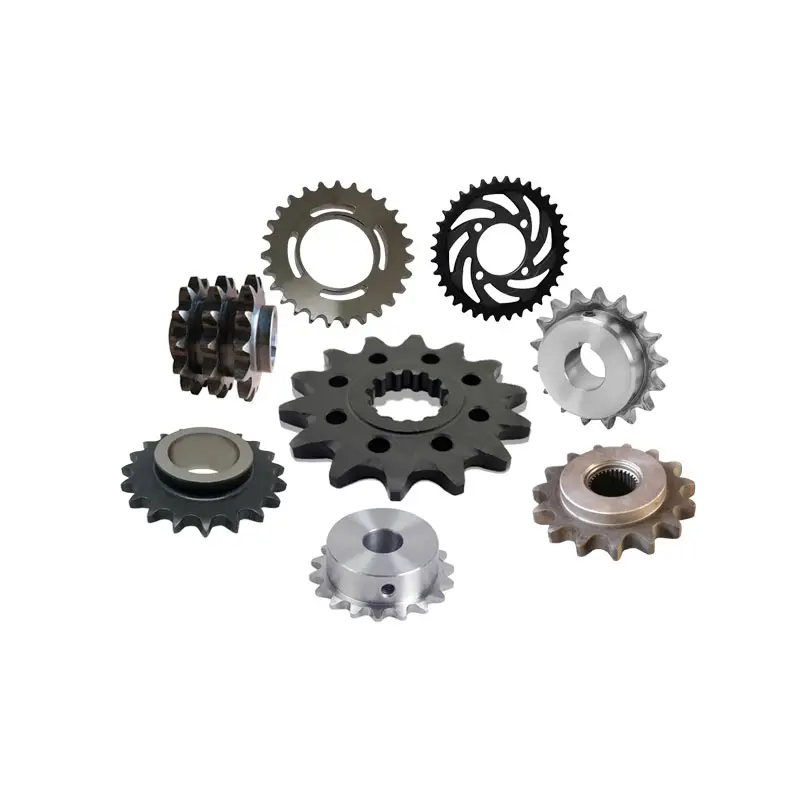
Yes, a wheel sprocket system is commonly used in bicycles and various other vehicles. In bicycles, the wheel sprocket system is a fundamental part of the drivetrain, which transfers power from the rider’s legs to the wheels, propelling the bicycle forward.
The typical bicycle drivetrain consists of a chain, front sprockets (chainrings), rear sprockets (cassette), and the bicycle’s wheels. When the rider pedals the bicycle, the chain engages with the sprockets, and as a result, the rotational motion from the pedaling is transferred to the rear wheel.
The selection of sprocket sizes (number of teeth on chainrings and cassette) can affect the gear ratio, allowing cyclists to adjust their pedaling effort and speed to suit different terrains and riding conditions. Smaller sprockets provide easier pedaling for climbing steep hills, while larger sprockets offer higher speeds on flat or downhill sections.
Beyond bicycles, the wheel sprocket system is widely used in various other vehicles and machinery to transmit power and control speed. It can be found in motorcycles, mopeds, electric scooters, and even some small electric vehicles. Additionally, the wheel sprocket system is prevalent in industrial machinery, where precise speed control and torque transmission are essential.
The efficiency and reliability of the wheel sprocket system make it a versatile and practical choice for many vehicles and mechanical applications.


editor by CX 2023-09-04