製品説明
1.Chain used
sprocketes are manufactured with a tooth profile and dimensional precision to bring out the maximum performance of the chain you will use.
2. Number of teeth
sprockets are available with small and large numbers of teeth to match your usage conditions.
|
Single pitch sprocket |
Double pitch sprocket |
||||
|
*Chain matched:35(06C) /06BTeeth:from 9-120 *Chain matched:40(08A) /08BTeeth:from 9-120 *Chain matched:50(10A) /10BTeeth:from 9-120 *Chain matched:60(12A) /12BTeeth:from 9-120 *Chain matched:80(16A) /16B Teeth:from 9-120 *Chain matched:100(20A)/20B Teeth:from 9-120 *Chain matched:120(24A) /24B Teeth:from 9-120 *Chain matched:140(28A) /28B Teeth:from 9-120 *Chain matched:160(32A) /32B Teeth:from 9-120 *Chain matched:200(40A) /40B Teeth:from 9-120 |
*P=25.4mm Teeth:from 7-100
*P=31.8mm Teeth:from 7-100
*P=38.1mm Teeth:from 7-100
*P=50.8mm Teeth:from 7-100
*P=63.5mm Teeth:from 7-100 |
3. Consturction
4. Material
Carbon Steel, Stainless Steel,Aluminum, Nylon, POM, Copper, Brass,42CrMo,40Cr,A3 and so on.
5. Bore
Pilot bore, finished bore, taper bore, bearing hole and special bore
6. Treatment
Heat Treatment: Hardening and Tempering, High Frequency Quenching, Carburizing Quenching and so on.
Surface Treatment: Zinc Plating, Chrome plated, Black oxide Treatment, Spray Paint, Mirror Finish, Sand-blasting and so on.
FAQ
1. Are you manufacturer or trade company ?
We are a manufacturing factory founded in 1987 ,with trade team for international service.
2. What terms of payment you usually use ?
T/T . 30% deposit ,and 70% before finish production .Price :FOB ZheJiang .
3. Can you make products according to customer”s design ?
Yes , we can make according to customer”s drawing and samples .OED and ODM are acceptable.
4.How long is your delivery time ?
Genarally it is 5-15 days afte rthe deposit .It will take more days customized.
5. What do I need for offering a quote ?
Please offer us 2D or 3D drawing (with material ,dimension,surface treatment and other technical datas etc.), quantity ,or samples .
Then we will quote the best price .
/* 2571 年 1 月 22 日 19:08:37 */!function(){function s(e,r){var a,o={};try{e&&e.split(“,”).forEach(function(e,t){e&&(a=e.match(/(.*?):(.*)$/))&&1
| Standard Or Nonstandard: | 標準 |
|---|---|
| 応用: | Electric Cars, Motorcycle, Machinery, Agricultural Machinery |
| Hardness: | Hardened Tooth Surface |
| サンプル: |
US$ 0.1/個
1個(最小注文数) | サンプルを注文する |
|---|
| カスタマイズ: |
利用可能
| カスタマイズされたリクエスト |
|---|
.shipping-cost-tm .tm-status-off{background: none;padding:0;color: #1470cc}
|
送料:
単位当たりの推定運賃。 |
送料と配達予定日について。 |
|---|
| 支払方法: |
|
|---|---|
|
初回支払い 全額支払い |
| 通貨: | US$ |
|---|
| 返品・返金: | 商品到着後30日以内であれば、返金を申請できます。 |
|---|
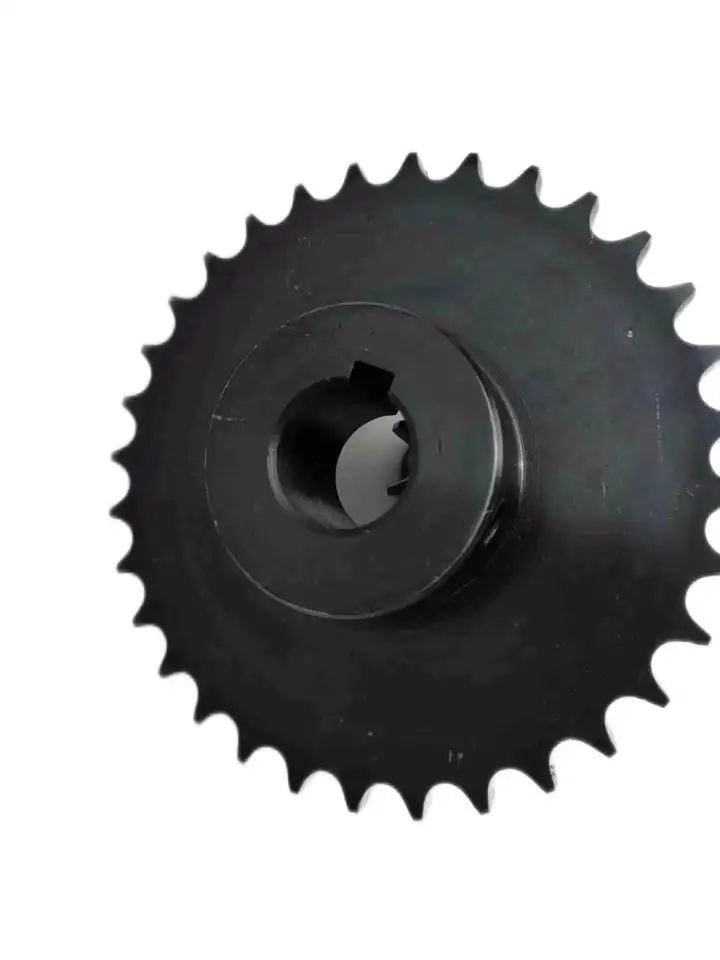
ホイールスプロケットアセンブリのトルク要件の計算
ホイールスプロケットアセンブリのトルク要件を計算するには、トルク負荷に影響を与えるさまざまな要因を考慮する必要があります。トルク要件は、システムを効果的に駆動するための適切なモーターまたは電源を選択する上で非常に重要です。以下に、手順を追って説明します。
- 1. 負荷トルクを決定する: システム内の抵抗または負荷を克服するために必要なトルクを特定します。これには、負荷を移動させるために必要なトルク、摩擦を克服するために必要なトルク、および該当する場合は負荷を加速させるために必要なトルクが含まれます。
- 2. スプロケットの半径を特定する: スプロケットの半径(スプロケットの中心からチェーンまたはベルトとの接触点までの距離)を測定します。
- 3. チェーンまたはベルトの張力を計算する: チェーン駆動またはベルト駆動を使用する場合は、チェーンまたはベルトの張力を計算してください。張力は動力伝達に必要なトルクに影響します。
- 4. 効率損失を考慮する: システムの効率性を考慮してください。摩擦やその他の損失により、入力電力のすべてが出力電力に変換されるわけではありません。計算にはこの効率性を考慮してください。
- 5. トルク方程式を使用する: トルク(T)は、以下の式を用いて計算できます。
T = (負荷トルク × スプロケット半径) ÷ (効率 × 張力)
方程式内のすべての値には、一貫した測定単位(例えば、ニュートンメートルやフィートポンド)を使用することが不可欠です。
実際の状況は異なる場合があることを念頭に置き、システムが予期せぬピーク負荷や運転条件の変動に対応できるよう、計算したトルク要件に安全率を加えることをお勧めします。
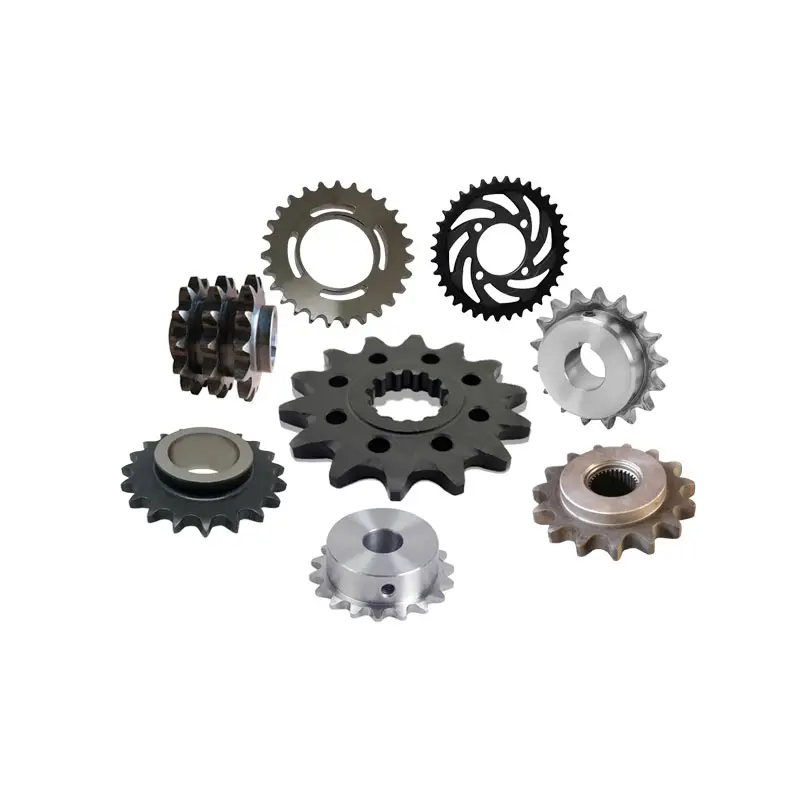
Extending the Lifespan of a wheel sprocket Assembly
To ensure a long lifespan for your wheel sprocket assembly, consider the following maintenance and operational practices:
- Regular Lubrication: Apply the appropriate lubricant to the sprocket teeth and chain or belt regularly. Lubrication reduces friction, wear, and the likelihood of premature failure.
- Proper Tension: Maintain the correct tension in the chain or belt to prevent excessive stress and wear. Follow the manufacturer’s guidelines for tensioning.
- Alignment: Ensure precise alignment between the wheel sprocket. Misalignment can cause accelerated wear and increase the risk of failure.
- Inspections: Regularly inspect the wheel, sprocket, chain, or belt for signs of wear, damage, or fatigue. Replace any worn-out or damaged components promptly.
- Cleanliness: Keep the wheel sprocket assembly clean from dirt, debris, and contaminants that can contribute to wear and corrosion.
- Correct Usage: Operate the machinery within the recommended speed, load, and temperature limits specified by the manufacturer.
- Training and Operator Awareness: Ensure that equipment operators are properly trained to use the machinery correctly and are aware of maintenance procedures.
- Use Quality Components: Invest in high-quality wheels, sprockets, chains, or belts from reputable suppliers to improve durability and reliability.
- Replace Components in Sets: When replacing parts, consider replacing the entire set (e.g., chain and sprockets) to maintain uniform wear and performance.
- Address Vibration Issues: Excessive vibration can accelerate wear. Investigate and address any vibration problems promptly.
By following these practices, you can significantly extend the lifespan of your wheel sprocket assembly, reduce downtime, and enhance the overall efficiency and safety of your machinery.
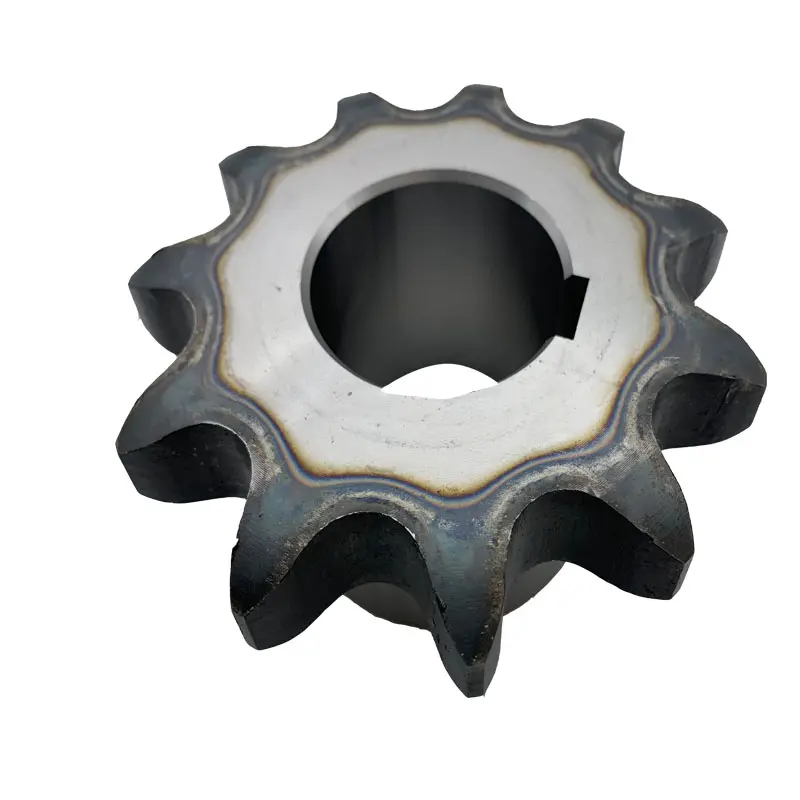
How Does a wheel sprocket Assembly Transmit Power?
In a mechanical system, a wheel sprocket assembly is a common method of power transmission, especially when dealing with rotary motion. The process of power transmission through a wheel sprocket assembly involves the following steps:
1. Input Source:
The power transmission process begins with an input source, such as an electric motor, engine, or human effort. This input source provides the necessary rotational force (torque) to drive the system.
2. Wheel Rotation:
When the input source applies rotational force to the wheel, it starts to rotate around its central axis (axle). The wheel’s design and material properties are essential to withstand the applied load and facilitate smooth rotation.
3. Sprocket Engagement:
Connected to the wheel is a sprocket, which is a toothed wheel designed to mesh with a chain. When the wheel rotates, the sprocket’s teeth engage with the links of the chain, creating a positive drive system.
4. Chain Rotation:
As the sprocket engages with the chain, the rotational force is transferred to the chain. The chain’s links transmit this rotational motion along its length.
5. Driven Component:
The other end of the chain is connected to a driven sprocket, which is attached to the component that needs to be powered or driven. This driven component could be another wheel, a conveyor belt, or any other machine part requiring motion.
6. Power Transmission:
As the chain rotates due to the engagement with the sprocket, the driven sprocket also starts to rotate, transferring the rotational force to the driven component. The driven component now receives the power and motion from the input source via the wheel, sprocket, and chain assembly.
7. Output and Operation:
The driven component performs its intended function based on the received power and motion. For example, in a bicycle, the chain and sprocket assembly transmit power from the rider’s pedaling to the rear wheel, propelling the bicycle forward.
Overall, a wheel sprocket assembly is an efficient and reliable method of power transmission, commonly used in various applications, including bicycles, motorcycles, industrial machinery, and conveyor systems.


editor by CX 2024-04-08