Descripción del Producto
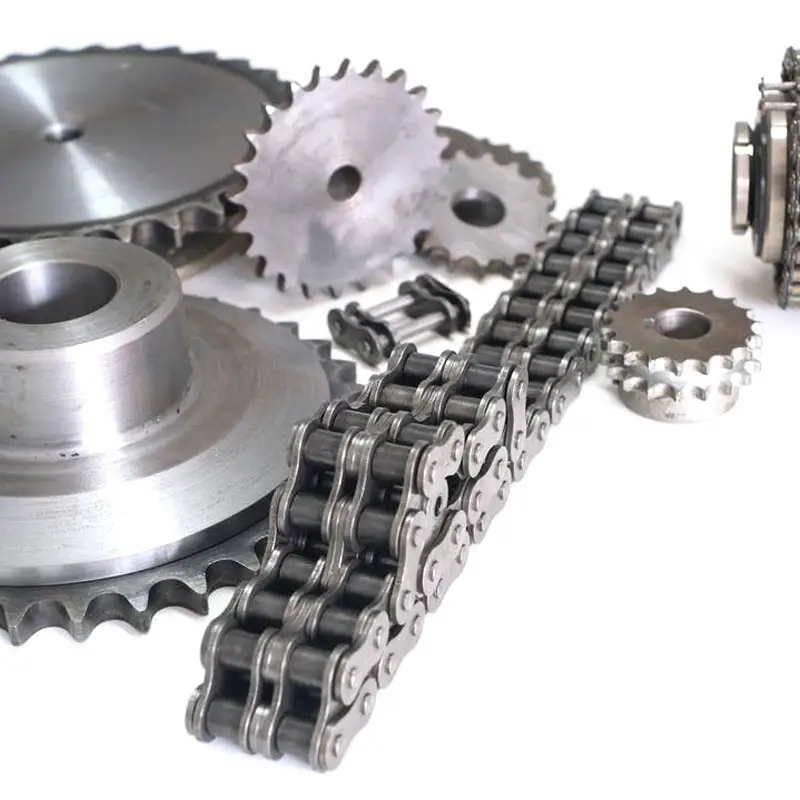
China ISO Standard Excavator Roller Chain Sprocket with Hubs Sprocket Gear
XIHU (WEST LAKE) DIS.HUA Chain Group is the most professional manufacturer of power transmission in China, manufacturing roller chains, industry sprockets, motorcycle sprockets, casting sprockets, different type of couplings, pulleys, taper bushes, locking devices, gears, shafts, CNC precision parts and so on. We have passed ISO9001, ISO14001, TS16949 such quality and enviroment certification.
Product Name: Industry Sprocket
Standard: ANSI, DIN, JIS, KANA
Material: Steel C45
Surface Treatment: Teeth Harden, chemical black finish
Hardness: 40-52 HRC
OEM: Yes
Place of Origin: China
Solicitud:
Industry sprockets can be usedin power driving, conveyor, lifting, mine, agricultural, food industry etc., together with roller chains.
| Product name | ISO Standard srpockets Chainwheels with hubs |
| Materials Available | 1. Stainless Steel: SS201, SS303, SS304, SS316, SS416, SS420 |
| 2. Steel:C45(K1045), C46(K1046),C20 | |
| 3. Brass:C36000 ( C26800), C37700 ( HPb59), C38500( HPb58), C27200(CuZn37), C28000(CuZn40) | |
| 4. Bronze: C51000, C52100, C54400, etc | |
| 5. Iron: 1213, 12L14,1215 | |
| 6. Aluminum: Al6061, Al6063 | |
| 7.OEM according to your request | |
| Tratamiento de superficies | Annealing, natural anodization, heat treatment, polishing, nickel plating, chrome plating, znic plating,yellow passivation, gold passivation, satin, Black surface painted etc. |
| Products Available | sprockt chains, pulley, shafts(axles, spline shafts, dart shafts),gears (pinions, wheels gear rack) bearing, bearing seat, bushing, coupling, lock assembly etc. |
| Processing Method | CNC machining, punch,turning, milling, drilling, grinding, broaching, welding and assembly |
| QC : | Technicians self-check in production,final-check before package by professional Quality inspector |
| Size | Drawings |
| Package | Wooden Case/Container and pallet, or as per customized specifications |
| Certificate | ISO9001:2008 , ISO14001:2001,ISO/TS 16949:2009 |
| Advantage | Quality first Service superior , Advanced equipment,Experienced workers,Perfect testing equipment |
| Lead Time | 15-25days samples. 30-45days offcial order |
FAQ:
1. Are you manufacturer or trade Company?
We are a factory founded in 1991 with trade team for international service.
2. What terms of payment you usually use?
T/T 30% deposit and 70% against document, Western Union, L/C at sight
3. what is your lead time for your goods?
Normally 45 days after confirmed order. 30 days could be available in low season for some items (during May to July), and 65 days during new year and hot season ( Jan to March).
4. Do you attend any Show?
We attend Hannover show in Germany, NMW in Austrilia, Canton fair, PTC, in China and many other special furniture shows.
| Estándar o no estándar: | Nonstandard |
|---|---|
| Solicitud: | Motor, Electric Cars, Motorcycle, Machinery, Marine, Toy, Agricultural Machinery |
| Dureza: | Superficie del diente endurecida |
| Método de fabricación: | Engranajes rodantes |
| Forma de la porción dentada: | Engranaje recto |
| Material: | Carbon Steel |
| Personalización: |
Disponible
| Solicitud personalizada |
|---|

Factors Affecting the Efficiency of a wheel sprocket Setup
Several factors can influence the efficiency of a wheel sprocket system in power transmission and motion control applications. These factors should be carefully considered and optimized to ensure the system’s overall effectiveness and performance:
- 1. Friction: Friction between the wheel, sprocket, and the chain or belt can lead to energy losses. Using high-quality materials and lubrication can help reduce friction and improve efficiency.
- 2. Alignment: Proper alignment between the wheel and the sprocket is critical. Misalignment can cause increased wear, noise, and reduced efficiency. Regular maintenance and alignment checks are essential.
- 3. Tension: The correct tension in the chain or belt is crucial for efficient power transmission. Too loose or too tight tension can lead to performance issues and premature wear.
- 4. Material and Design: The choice of materials for the wheel sprocket, as well as their design, can impact efficiency. High-quality materials and well-engineered components reduce wear and improve overall system performance.
- 5. Load Distribution: Uneven load distribution across the wheel sprocket can lead to localized wear and decreased efficiency. Ensuring proper load distribution helps maintain uniform wear and power transmission.
- 6. Environmental Factors: Harsh environmental conditions, such as dust, moisture, and extreme temperatures, can affect the efficiency of the system. Choosing suitable materials and implementing protective measures can mitigate these effects.
- 7. Maintenance: Regular maintenance, including lubrication, inspection, and timely replacement of worn components, is vital for the long-term efficiency of the system.
- 8. Speed and Torque: The operating speed and torque requirements of the application should be considered when selecting the appropriate wheel sprocket size and specifications.
- 9. Chain or Belt Type: Different types of chains or belts, such as roller chains, silent chains, or toothed belts, have varying efficiencies. Choosing the right type for the specific application is crucial.
- 10. System Integration: The wheel sprocket system should be integrated correctly with other components in the machinery to ensure smooth operation and minimal energy losses.
By carefully considering and optimizing these factors, it is possible to improve the efficiency of the wheel sprocket system, leading to reduced energy consumption, less wear and tear, and overall better performance.
Uso de una rueda dentada de correa en lugar de una rueda dentada de cadena con una rueda
Sí, en muchos casos, se puede utilizar un piñón de correa en lugar de un piñón de cadena con una rueda, siempre que el sistema esté diseñado para adaptarse a dicho cambio.
Tanto los piñones de cadena como los de correa cumplen la misma función fundamental: transferir el movimiento de rotación y la potencia entre la rueda y el componente accionado. Sin embargo, existen algunas consideraciones importantes que se deben tener en cuenta al reemplazar un piñón de cadena por uno de correa:
- Alineación: Los piñones de correa y de cadena deben estar correctamente alineados con la rueda para garantizar una transmisión de potencia fluida y eficiente. Cualquier desalineación puede provocar un desgaste prematuro y reducir el rendimiento general del sistema.
- Tensión: Los sistemas de transmisión por cadena requieren una tensión específica para evitar holgura y mantener un acoplamiento adecuado entre los piñones y la cadena. Los sistemas de transmisión por correa, por otro lado, requieren la tensión apropiada para evitar deslizamientos. Asegurar la tensión correcta para cada tipo de piñón es fundamental para un funcionamiento fiable.
- Capacidad de carga: Al seleccionar un piñón de correa, tenga en cuenta la capacidad de carga y los requisitos de par del sistema. Los piñones de correa pueden tener capacidades de carga diferentes a las de los piñones de cadena, y usar el tipo incorrecto puede provocar un desgaste prematuro o una falla.
- Velocidad y RPM: Los sistemas de transmisión por correa pueden tener velocidades de funcionamiento y límites de RPM diferentes a los de los sistemas de transmisión por cadena. Asegúrese de que la rueda dentada seleccionada pueda soportar la velocidad de rotación deseada sin exceder sus límites de diseño.
- Diseño del sistema: El cambio de un sistema de transmisión por cadena a uno por correa (o viceversa) puede requerir modificaciones en el diseño general del sistema, incluyendo el tamaño de los piñones y la disposición del sistema. Consulte con un ingeniero o un profesional cualificado para garantizar que el reemplazo sea adecuado y seguro.
En general, sustituir un piñón de cadena por uno de correa puede ser una opción viable en ciertas aplicaciones. Sin embargo, es fundamental tener en cuenta los factores mencionados anteriormente y evaluar la compatibilidad del nuevo piñón con el sistema existente para lograr un rendimiento y una durabilidad óptimos.
Can a wheel sprocket System be Used in Bicycles and Other Vehicles?
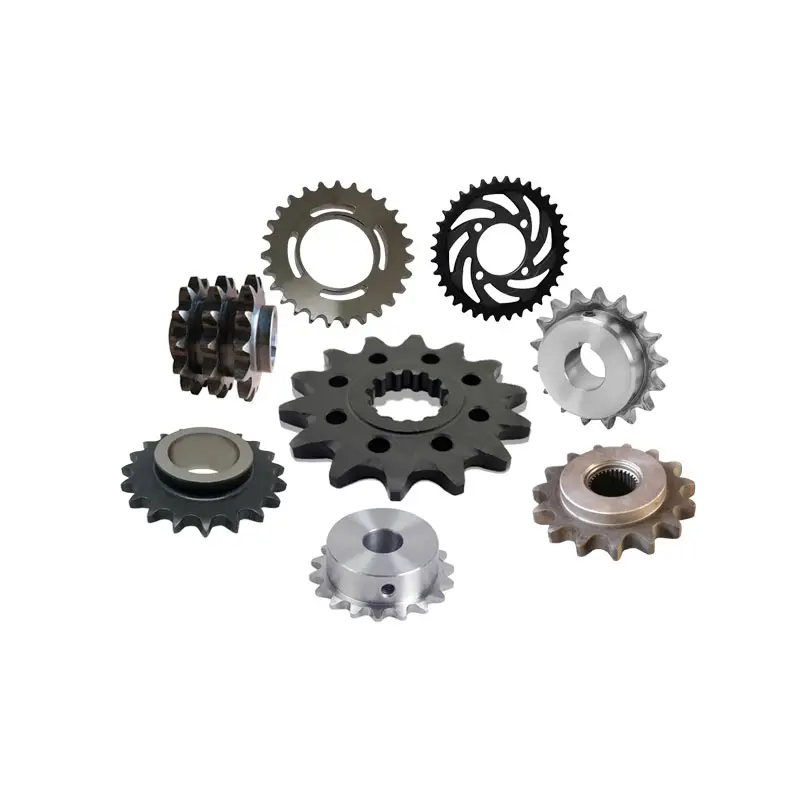
Yes, a wheel sprocket system is commonly used in bicycles and various other vehicles. In bicycles, the wheel sprocket system is a fundamental part of the drivetrain, which transfers power from the rider’s legs to the wheels, propelling the bicycle forward.
The typical bicycle drivetrain consists of a chain, front sprockets (chainrings), rear sprockets (cassette), and the bicycle’s wheels. When the rider pedals the bicycle, the chain engages with the sprockets, and as a result, the rotational motion from the pedaling is transferred to the rear wheel.
The selection of sprocket sizes (number of teeth on chainrings and cassette) can affect the gear ratio, allowing cyclists to adjust their pedaling effort and speed to suit different terrains and riding conditions. Smaller sprockets provide easier pedaling for climbing steep hills, while larger sprockets offer higher speeds on flat or downhill sections.
Beyond bicycles, the wheel sprocket system is widely used in various other vehicles and machinery to transmit power and control speed. It can be found in motorcycles, mopeds, electric scooters, and even some small electric vehicles. Additionally, the wheel sprocket system is prevalent in industrial machinery, where precise speed control and torque transmission are essential.
The efficiency and reliability of the wheel sprocket system make it a versatile and practical choice for many vehicles and mechanical applications.


editor by CX 2023-09-01