Descripción del Producto
Zhangzhou CZPT Machinery Co., Ltd.
(Norma DIN/ANSI/JIS o fabricado según plano.)
Descripción del Producto:
Fotos detalladas:
Perfil de la empresa:
ZHangZhoug CZPT Machinery Co., Ltd. es vicepresidente de la Rama de Transmisión por Cadena de la Asociación China de la Industria de Piezas Generales de Maquinaria y miembro del Comité Técnico de Estandarización de la Transmisión por Cadena de China.
Fundada en 1954, se dedica principalmente a la producción y venta de piñones, engranajes, poleas de correa de distribución y acoplamientos. Es una importante empresa fabricante de piñones en China y uno de los mayores fabricantes de piñones estándar del mundo. Su cartera de productos ha evolucionado desde la fabricación de piñones estándar hasta la producción de piezas de transmisión no estándar. Sus productos se comercializan principalmente en Norteamérica, Sudamérica, Europa, África, Japón, Corea del Sur, Oriente Medio, Rusia, el Sudeste Asiático y otras regiones, con una red de ventas global.
La empresa obtuvo la certificación del sistema de garantía de calidad ISO 9002 por primera vez en 1999, la certificación del sistema de gestión de calidad ISO 9001:2000 en 2003, la certificación del sistema de gestión de calidad ISO/TS16949 por primera vez en 2009, la certificación del sistema de gestión ambiental ISO 14001:2004 por primera vez en 2017, la certificación del sistema de gestión ambiental ISO 14001:2015 en 2017 y las certificaciones del sistema de gestión de calidad ISO 9001:2015 e IATF16949:2016 en 2018. Esto sienta las bases para que la empresa perfeccione su gestión interna y se abra al mercado externo.
La empresa se adhiere a la filosofía empresarial de "La calidad es vida, la tecnología es físico, la entrega es moral, la cantidad es crédito, el servicio es parentesco, el costo es vida", implementando una estrategia de actualización "impulsada por la innovación, integración gemela", promoviendo la excelencia en los productos de transmisión de la cadena y haciendo todo lo posible para crear "beneficio armonioso, beneficio de buena calidad, beneficio centenario".
/* 22 de enero de 2571 19:08:37 */!function(){function s(e,r){var a,o={};try{e&&e.split(“”,).forEach(function(e,t){e&&(a=e.match(/(.*?):(.*)$/))&&1
| Estándar o no estándar: | Estándar |
|---|---|
| Solicitud: | Motor, maquinaria, maquinaria agrícola, automóvil |
| Dureza: | Superficie del diente endurecida |
| Método de fabricación: | Engranajes rodantes |
| Forma de la porción dentada: | Engranaje recto |
| Material: | C45 |
| Personalización: |
Disponible
| Solicitud personalizada |
|---|
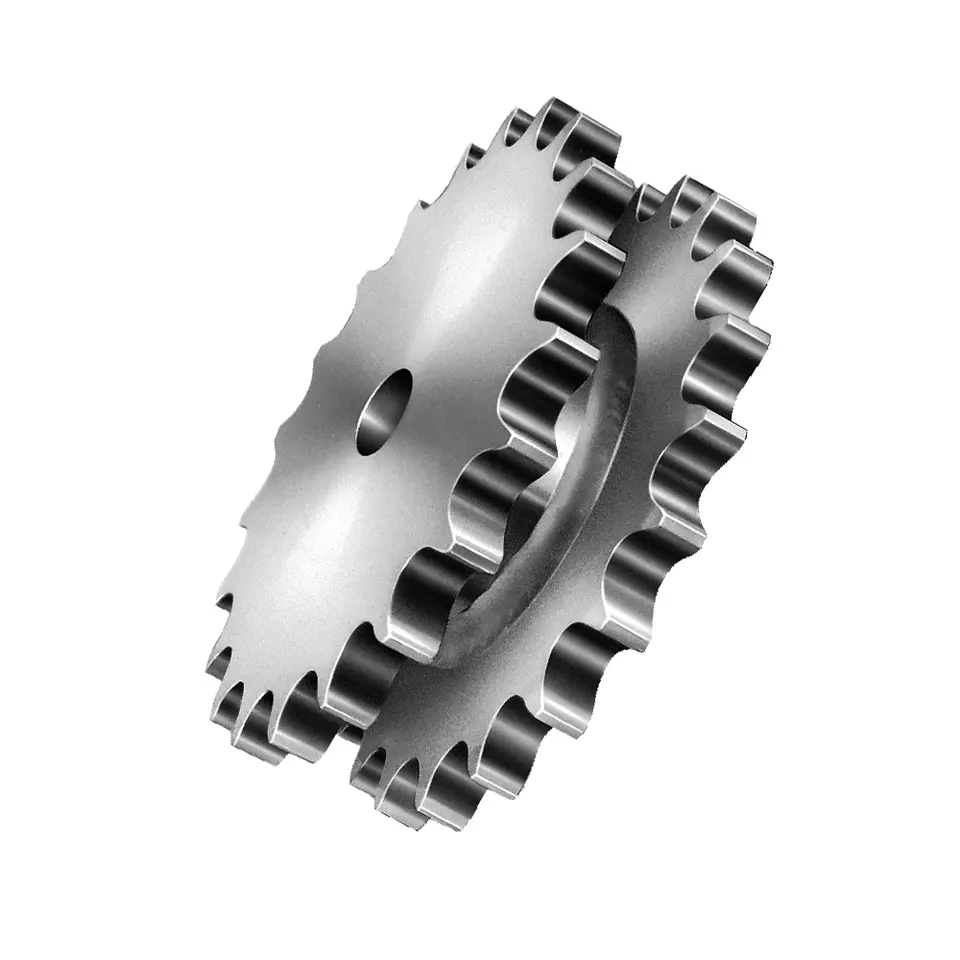
How to Identify and Troubleshoot Common Issues with Wheels and Sprockets
Identifying and troubleshooting common issues with wheels and sprockets can help you maintain their proper functioning and prevent potential problems. Here are some steps to follow:
- Abnormal Noise: If you notice unusual noise during operation, it could indicate misalignment, worn sprockets, or a loose chain. Check for any loose bolts or fasteners and ensure proper alignment of the sprockets.
- Chain Slippage: Chain slippage can occur due to insufficient tension or worn-out sprocket teeth. Check the chain tension and adjust it to the recommended level. Inspect the sprocket teeth for signs of wear and replace them if necessary.
- Uneven Wear: Uneven wear on the sprocket teeth can be a result of misalignment or a worn-out chain. Check the alignment of the sprockets and adjust as needed. If the chain is stretched or has damaged links, replace it with a new one.
- Excessive Vibration: Excessive vibration may be caused by imbalanced wheels or misaligned sprockets. Check for any bent or damaged wheels and ensure proper alignment of the sprockets.
- Chain Skipping: If the chain skips over the sprocket teeth during operation, it could be due to worn sprocket teeth or a loose chain. Inspect the sprocket teeth for signs of wear and replace them if necessary. Adjust the chain tension to the proper level.
- Chain Jamming: Chain jamming can occur if there is debris or dirt between the chain and sprockets. Clean the chain and sprockets thoroughly to remove any obstructions.
- Excessive Chain Wear: Regularly inspect the chain for signs of wear, such as elongation, damaged links, or rust. Replace the chain if it is significantly worn to avoid damage to the sprockets.
- Overheating: Overheating can be caused by high friction between the chain and sprockets or improper lubrication. Ensure proper lubrication and check for any misalignment or tight spots in the system.
By identifying these common issues and performing regular inspections, you can troubleshoot problems early on and take appropriate corrective measures, ensuring the smooth operation and longevity of the wheel sprocket assembly.
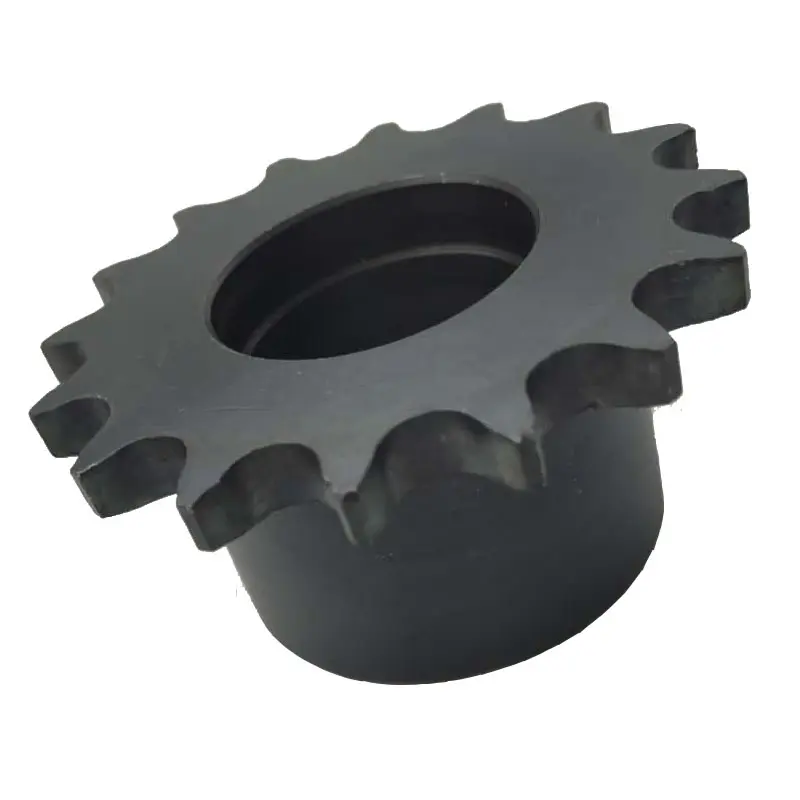
Using wheel sprocket Assembly in Robotics and Automation
Yes, wheel sprocket assemblies are commonly used in robotics and automation systems to transmit power and facilitate movement. These systems offer several advantages for robotic applications:
- Efficiency: wheel sprocket assemblies provide efficient power transmission, ensuring smooth and precise movement of robotic components.
- Compact Design: The compact nature of sprockets and wheels allows for space-saving designs, making them ideal for robotic applications where space is limited.
- Precision: Sprockets and wheels with accurate teeth profiles provide precise motion control, crucial for robotics and automation tasks that require high levels of accuracy.
- Low Noise: Properly lubricated and maintained wheel sprocket systems generate minimal noise during operation, contributing to quieter robotic movements.
- Customizability: wheel sprocket assemblies can be customized to suit specific robotic requirements, such as different gear ratios, sizes, and materials.
- Multiple Configurations: Depending on the robotic application, different configurations like single or multiple sprockets, idler sprockets, or rack and pinion systems can be used.
- High Load Capacity: Sprockets made from durable materials like steel can handle substantial loads, making them suitable for heavy-duty robotic tasks.
Examples of robotics and automation systems that commonly use wheel sprocket assemblies include:
- Robotic Arms: wheel sprocket systems are utilized in robotic arms to control their movement and reach.
- Automated Guided Vehicles (AGVs): AGVs use wheel sprocket assemblies for propulsion and steering, enabling them to navigate autonomously.
- Conveyor Systems: In automated factories, conveyor belts are often driven by sprockets and wheels for efficient material handling.
- Mobile Robots: Wheeled mobile robots use wheel sprocket assemblies to drive their wheels, enabling them to move in various directions.
- Robot Grippers: wheel sprocket mechanisms can be integrated into robot grippers to facilitate gripping and handling objects.
The choice to use wheel sprocket assemblies in robotics and automation depends on the specific application requirements, load capacity, precision, and environmental conditions. By selecting the appropriate sprockets, wheels, and materials, engineers can ensure reliable and efficient robotic performance in a wide range of automated tasks.
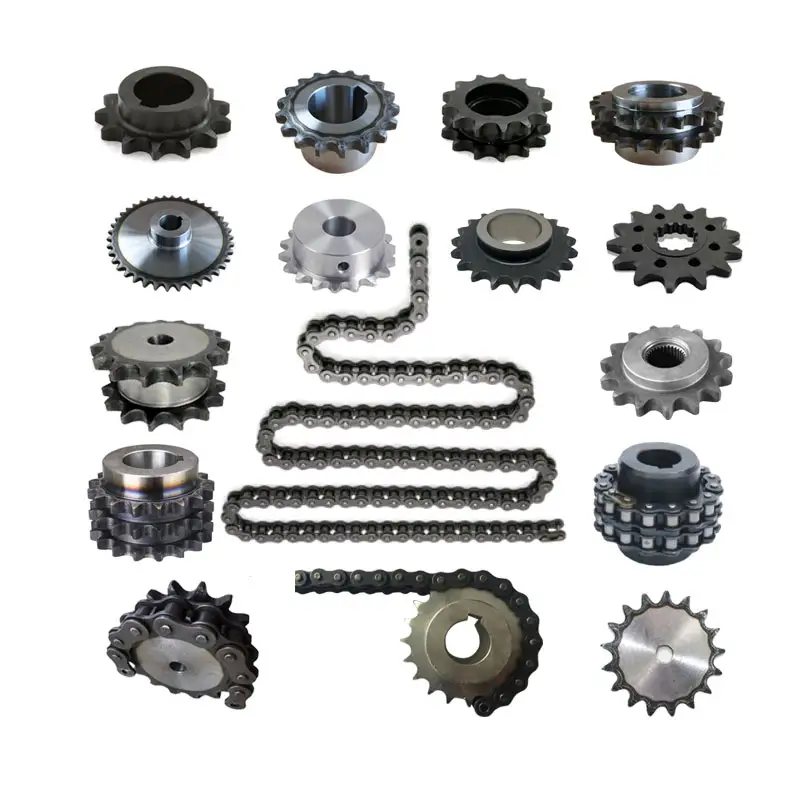
Calculating Gear Ratio for a wheel sprocket Setup
In a wheel sprocket system, the gear ratio represents the relationship between the number of teeth on the sprocket and the number of teeth on the wheel. The gear ratio determines the speed and torque relationship between the two components. To calculate the gear ratio, use the following formula:
Gear Ratio = Number of Teeth on Sprocket ÷ Number of Teeth on Wheel
For example, if the sprocket has 20 teeth and the wheel has 60 teeth, the gear ratio would be:
Gear Ratio = 20 ÷ 60 = 1/3
The gear ratio can also be expressed as a decimal or percentage. In the above example, the gear ratio can be expressed as 0.3333 or 33.33%.
It’s important to note that the gear ratio affects the rotational speed and torque of the wheel sprocket. A gear ratio greater than 1 indicates that the sprocket’s speed is higher than the wheel’s speed, resulting in increased rotational speed and reduced torque at the wheel. Conversely, a gear ratio less than 1 indicates that the sprocket’s speed is lower than the wheel’s speed, resulting in decreased rotational speed and increased torque at the wheel.
The gear ratio is crucial in various applications where precise control of speed and torque is required, such as bicycles, automobiles, and industrial machinery.


editor by CX 2024-04-13