Descripción del Producto
|
Business type |
Manufacturer & Exporter |
||
|
Main export market |
Europe, North and South America, Southeast Asia, Oceania, Middle East, Africa |
||
|
Material |
Alloy Steel, Carbon Steel, Stainless Steel,Aluminum, Copper, Brass |
||
|
Manufacturing method |
Forged and then machined, hobbed, if need can also weld |
||
|
Heat treatment |
Hardening and Tempering, High Frequency Quenching, Carburizing Quenching |
||
|
Surface treatment |
Oxide black, Galvanized, Nickel plated, Chrome plated,Painted and so on |
||
|
Modelo |
ANSI: 25/35/41/40/50/60/80/100/120/140/160/180/200/240 |
||
|
DIN/ISO:04C/06C/085/08A/10A/12A/16A/20A/24A/28A/32A/36A/40A/48A |
|||
|
DIN/ISO:04B/05B/06B/08B/10B/12B/16B/20B/24B/28B/32B/36B/40B/48B |
|||
|
Process |
Forging, Hobbing, Precision machining |
||
|
Dientes |
8T-100T |
||
|
Type |
Type A sprockets :Plate (without Hub) |
||
|
Type B sprockets:One side with hub |
|||
|
Type C sprockets: Double side with hub |
|||
|
Finished bore sprockets:With the inner hole ,keyway and screw |
|||
1.Fast delivery: Standard products can be delivered in as fast as 20 days
2.Good service: timely reply, prompt quotation, responsible for the product
3.High cost performance: can maintain price stability for a certain period of time, bringing greater profits to customers
4.Good quality: production and testing have corresponding supervision to ensure product quality and get high praise from customers
5.OEM service: products can be customized according to drawings and requirements
We are responsible for the ordered products. We are very confident in the products we produce. Of course, if you have any problems after receiving the goods, you can contact us directly. We will confirm and negotiate in time to solve your difficulties.
/* 22 de enero de 2571 19:08:37 */!function(){function s(e,r){var a,o={};try{e&&e.split(“”,).forEach(function(e,t){e&&(a=e.match(/(.*?):(.*)$/))&&1
| Estándar o no estándar: | Estándar |
|---|---|
| Solicitud: | Motor, Motorcycle, Machinery, Agricultural Machinery |
| Dureza: | Superficie del diente endurecida |
| Método de fabricación: | Smithing |
| Forma de la porción dentada: | Harden Tooth |
| Material: | Steel, C45 Steel,A3 Steel,Stainless Steel,40cr |
| Muestras: |
US$ 35/kg
1 kg(Min.Order) | |
|---|
| Personalización: |
Disponible
| Solicitud personalizada |
|---|
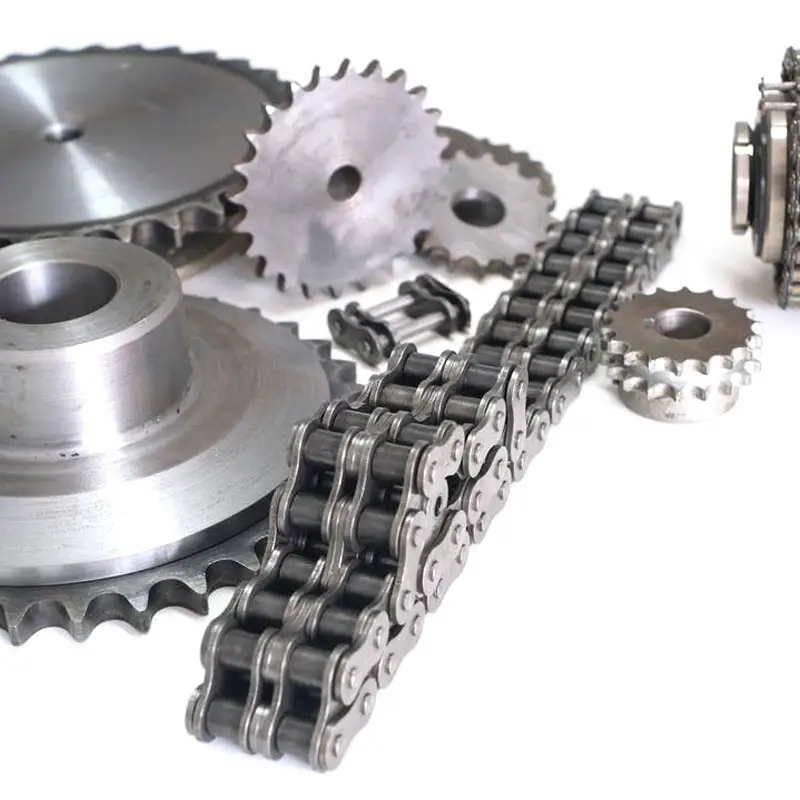
What are the Maintenance Requirements for a wheel sprocket Assembly?
Proper maintenance of the wheel sprocket assembly is essential to ensure its optimal performance and longevity. Here are some maintenance tips:
- Regular Cleaning: Keep the wheel sprocket assembly clean from dirt, debris, and grime. Regularly wipe down the sprockets and chain to prevent buildup, which can lead to accelerated wear.
- Lubricación: Apply a suitable lubricant to the chain and sprockets to reduce friction and wear. Lubrication also helps in maintaining smooth operation and preventing corrosion. However, avoid over-lubrication, as excessive grease can attract more dirt.
- Chain Tension: Check the tension of the chain regularly. A loose chain can result in slippage and damage to the sprockets, while an overly tight chain can increase wear and strain on the components. Adjust the chain tension as per the manufacturer’s guidelines.
- Inspection: Periodically inspect the sprockets and chain for signs of wear, damage, or elongation. Replace any worn-out or damaged components promptly to avoid further issues.
- Alineación: Ensure proper alignment of the sprockets and wheels. Misalignment can lead to uneven wear and reduced efficiency. Adjust the alignment as needed to maintain smooth power transmission.
- Replace Worn Parts: Over time, sprockets and chains will wear out due to regular use. Replace worn sprockets or chains with new ones from reputable suppliers to maintain optimal performance.
- Environmental Considerations: In certain applications, exposure to harsh environments or extreme temperatures may require more frequent maintenance and inspection.
By following these maintenance practices, you can extend the lifespan of the wheel sprocket assembly and ensure reliable operation in various applications.
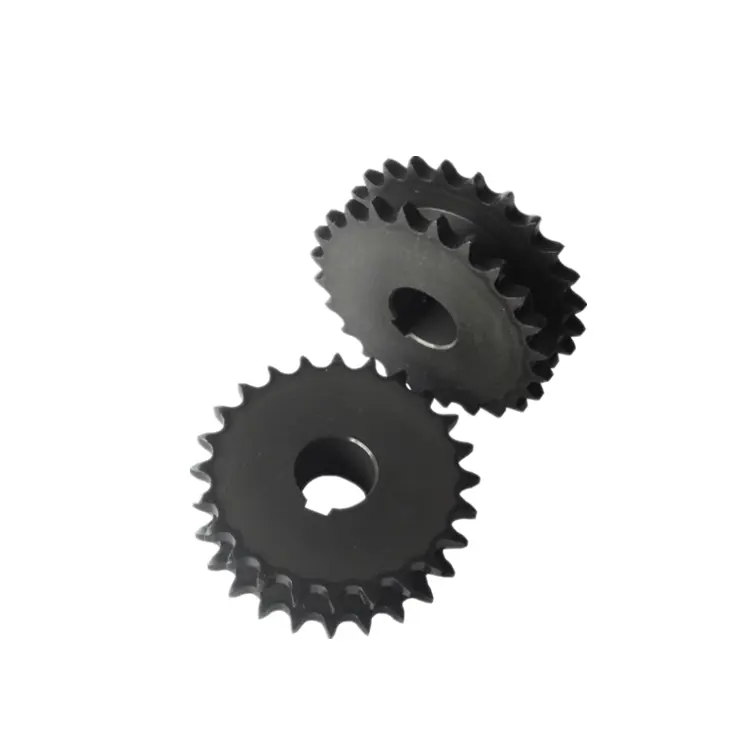
Sistema de transmisión de potencia vertical con piñón de rueda
Sí, un sistema de piñón y rueda puede utilizarse para la transmisión de potencia vertical. En estos casos, el sistema está diseñado para transmitir potencia y movimiento entre ejes alineados verticalmente. La transmisión de potencia vertical mediante un conjunto de piñón y rueda sigue principios similares a la transmisión horizontal, pero hay algunos factores a tener en cuenta:
- Carga y par motor: Al transmitir potencia verticalmente, el peso de la carga puede influir significativamente en los requisitos de par motor. El par debe ser suficiente para levantar la carga contra la gravedad, teniendo en cuenta la fricción y otras fuerzas de resistencia.
- Selección de piñones: Elegir la rueda dentada adecuada es fundamental para la transmisión vertical. Los dientes de la rueda dentada deben estar diseñados para acoplarse eficazmente a la cadena o correa y evitar deslizamientos, especialmente al levantar cargas pesadas.
- Lubricación: Una lubricación adecuada es esencial para reducir la fricción y el desgaste del sistema. Las aplicaciones verticales pueden requerir lubricantes específicos para garantizar un funcionamiento óptimo y prevenir fallos prematuros.
- Tensado: Mantener la tensión correcta en la cadena o correa es fundamental para la transmisión de potencia vertical. Una tensión adecuada evita que la cadena o correa se afloje y garantiza un acoplamiento correcto entre la rueda y el piñón.
- Carga en voladizo: En configuraciones verticales, el peso del conjunto de piñón y eje puede generar una carga en voladizo sobre los cojinetes. Para soportar esta carga, es necesario contar con un soporte adecuado y seleccionar los cojinetes correctos.
La transmisión de potencia vertical mediante un sistema de piñón y rueda se utiliza comúnmente en diversas aplicaciones, como sistemas de transporte, ascensores y cierta maquinaria industrial. Un diseño, instalación y mantenimiento adecuados son esenciales para garantizar un funcionamiento seguro y eficiente en configuraciones verticales.
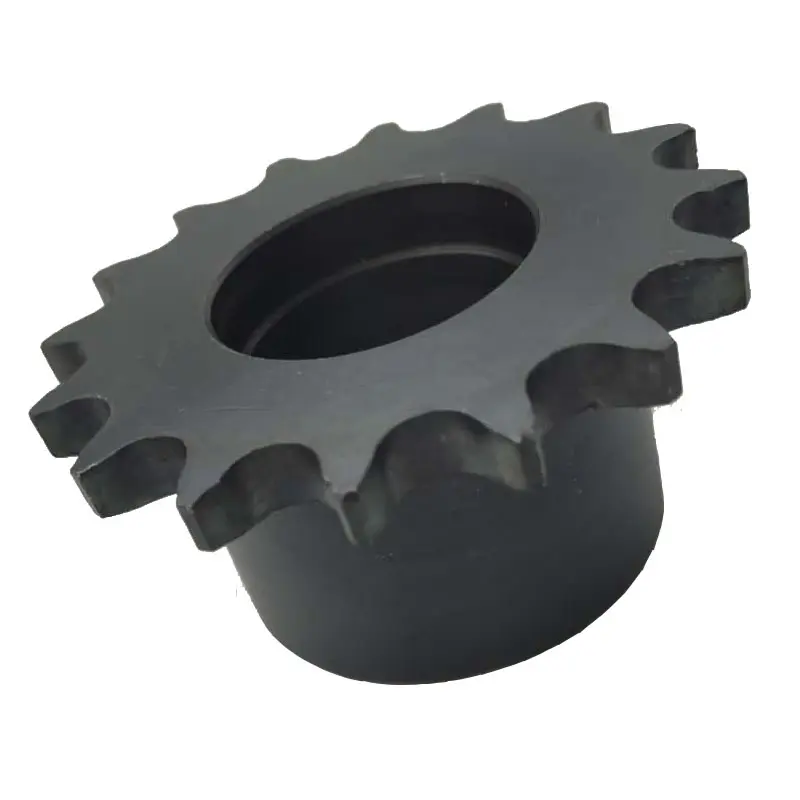
Role of a wheel sprocket in a Mechanical System
In a mechanical system, a wheel sprocket play a crucial role in transferring motion and power from one component to another. They are essential elements of various machines and mechanisms, such as bicycles, conveyor systems, automobiles, and industrial machinery. Let’s explore their functions in more detail:
1. Wheel:
The wheel is a circular component with a central shaft (axle) that allows it to rotate freely around the axle’s axis. Its primary functions include:
- Motion Transmission: When a force is applied to the wheel’s outer edge, it rotates around the axle, enabling the transfer of linear motion into rotational motion.
- Load Bearing: The wheel’s structure and material are designed to support and distribute the load placed on it, allowing smooth movement over various surfaces.
- Reduction of Friction: By using wheels, the friction between the moving object and the ground is significantly reduced, making it easier to move heavy loads with less effort.
- Directional Control: Wheels can be attached to steering mechanisms to control the direction of movement in vehicles and other equipment.
2. Sprocket:
A sprocket is a toothed wheel designed to mesh with a chain or a belt, facilitating motion transfer between the sprocket and the chain/belt. Its key functions include:
- Power Transmission: When rotational force (torque) is applied to the sprocket, the teeth engage with the links of the chain or belt, transferring motion and power from one sprocket to another.
- Speed and Torque Conversion: Different-sized sprockets can be used to adjust the speed and torque of the driven component in a mechanical system.
- Positive Drive: The teeth on the sprocket and the links on the chain/belt create a positive drive system, reducing the likelihood of slippage or loss of power during operation.
- Chain/Belt Tensioning: Sprockets help maintain proper tension in the chain or belt, ensuring optimal performance and longevity of the power transmission system.
Together, wheels and sprockets form a vital part of mechanical systems, enabling efficient motion transmission, power transfer, and control in a wide range of applications across various industries.


editor by CX 2024-03-27