Produktbeschreibung
ISO Standard Made to Order & Tooth Surface Hardening Sprockets for Roller Chain
Produktbeschreibung
1. Produce strictly in accordance with ANSI or DIN standard dimension
2. Material: C45 steel / Stainless Steel 304 & 316
3. Standard: ANSI, DIN, JINS, ISO, Standard America or customer drawing
4. Pilot bore, finished bore, taper bore and special bore
5. Bright surface and high precision
6. Advanced heat treatment and surface treatment craft
7. Best quality and competitive price.
8. Welcome OEM / ODM
| Product name | ISO Standard Sprocket for Roller Chain |
| Materials Available | 1. Stainless Steel: SS304, SS316, etc |
| 2. Alloy Steel: C45, 45Mn, 42CrMo, 20CrMo, etc | |
| 3. OEM according to your request | |
| Oberflächenbehandlung | Heat treatment, Quenching treatment, High frequency normalizing treatment, Polishing, Electrophoresis paint processing, Anodic oxidation treatment, etc |
| Characteristic | Fire resistant, Oil resistant, Heat resistant, CZPT resistance, Oxidative resistance, Corrosion resistance, etc |
| Design criterion | ISO DIN ANSI & Customer Drawings |
| Size | Customer Drawings & ISO standard |
| Anwendung | Industrial transmission equipment |
| Package | Wooden Case / Container and pallet, or made-to-order |
| Certificate | ISO9001: 2008 |
| Vorteil | Quality first, Service first, Competitive price, Fast delivery |
| Delivery Time | 20 days for samples. 45 days for official order. |
Detaillierte Fotos
View more products,please click here…
Unternehmensprofil
| Standard Or Nonstandard: | Standard |
|---|---|
| Anwendung: | Machinery, Marine, Agricultural Machinery, Industry |
| Hardness: | Hardened Tooth Surface |
| Material: | Alloy Steel/Stainless Steel |
| Typ: | Kettenrad |
| Sample: | for Free |
| Proben: |
US$ 0/Piece
1 Stück (Mindestbestellmenge) | |
|---|
| Anpassung: |
Verfügbar
| Kundenspezifische Anfrage |
|---|
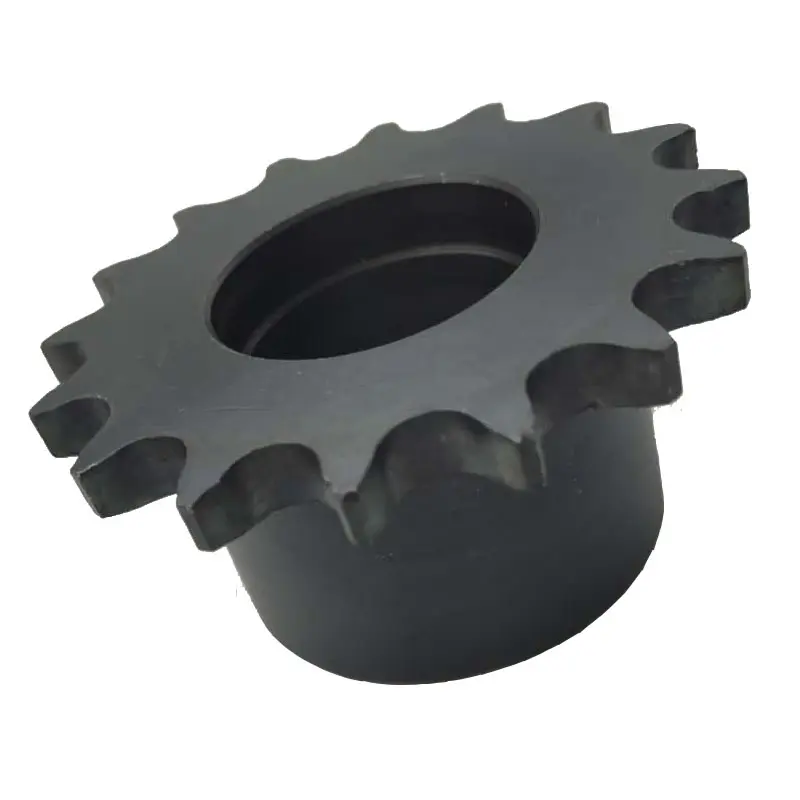
Kompatibilität von Kettenrädern mit Rädern
Im Allgemeinen sind Kettenräder für bestimmte Radtypen ausgelegt, und es gelten bestimmte Anforderungen, um die korrekte Kompatibilität zu gewährleisten:
- Kettengröße und Teilung: Das Kettenrad muss in Größe und Teilung zur Kette passen, mit der es verwendet werden soll. Beispielsweise benötigt man für eine Rollenkette mit einer Teilung von 0,625 Zoll ein Kettenrad mit derselben Teilung, um einen korrekten Sitz zu gewährleisten.
- Anzahl der Zähne: Die Zähnezahl des Kettenrads muss mit der Anzahl der Kettenglieder übereinstimmen. Die Kette muss reibungslos und ohne zu klemmen oder zu überspringen mit dem Kettenrad kämmen.
- Zahnprofil: Das Zahnprofil des Kettenrads sollte der Form der Kettenrollen entsprechen, um einen reibungslosen Eingriff zu gewährleisten und den Verschleiß zu minimieren.
- Schaftgröße: Die Mittelbohrung des Kettenrads muss dem Durchmesser der Welle entsprechen, auf der es montiert wird. Die Verwendung der richtigen Wellengröße gewährleistet einen sicheren Sitz und verhindert ein Wackeln.
- Hub-Konfiguration: Manche Kettenräder besitzen Naben, die als Verlängerungen an beiden Seiten des Kettenrads angebracht sind. Länge und Form der Nabe sollten den Anforderungen der jeweiligen Anwendung entsprechen.
- Material und Festigkeit: Berücksichtigen Sie Material und Festigkeit des Kettenrads entsprechend der Belastung und den Umgebungsbedingungen der Anwendung. Für Anwendungen mit hoher Beanspruchung können Kettenräder aus robusten Materialien erforderlich sein, um den auftretenden Kräften und Belastungen standzuhalten.
Bei der Auswahl eines Kettenrads für ein bestimmtes Rad ist es unerlässlich, die Spezifikationen und Richtlinien des Herstellers zu beachten. Die Kombination inkompatibler Kettenräder und Räder kann zu vorzeitigem Verschleiß, Leistungseinbußen und potenziellen Sicherheitsrisiken führen. Im Zweifelsfall bezüglich der Kompatibilität wenden Sie sich bitte an den Hersteller oder einen sachkundigen Experten, um das richtige Kettenrad für Ihre Anwendung auszuwählen.
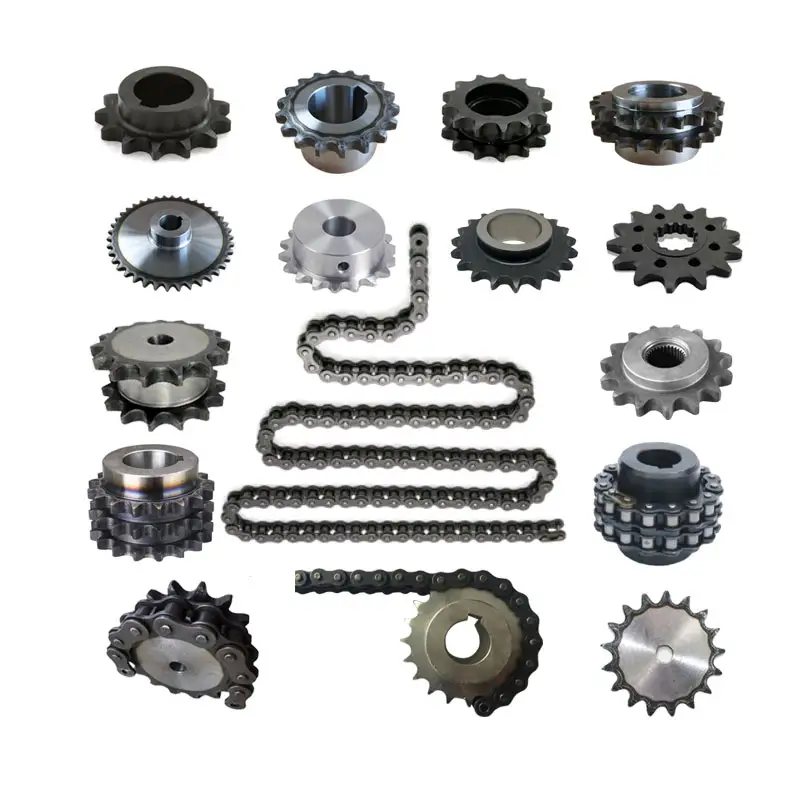
Noise and Vibration in wheel sprocket Configurations
In a wheel sprocket configuration, noise and vibration levels can vary depending on several factors:
- Quality of Components: The quality of the wheel sprocket components can significantly impact noise and vibration. Well-manufactured and precisely engineered components tend to produce less noise and vibration.
- Schmierung: Proper lubrication of the sprocket teeth and chain or belt can reduce friction, which in turn helps minimize noise and vibration.
- Alignment: Correct alignment between the wheel sprocket is crucial. Misalignment can lead to increased noise and vibration as the components may not mesh smoothly.
- Tension: Maintaining the appropriate tension in the chain or belt is essential. Insufficient tension can cause the chain to slap against the sprocket teeth, resulting in noise and vibration.
- Speed and Load: Higher speeds and heavier loads can lead to increased noise and vibration levels in the system.
- Wear and Damage: Worn-out or damaged components can create irregularities in motion, leading to increased noise and vibration.
To reduce noise and vibration in a wheel sprocket setup:
- Use high-quality components from reputable suppliers.
- Ensure proper lubrication with appropriate lubricants.
- Regularly inspect and maintain the system to detect any misalignment, wear, or damage.
- Follow manufacturer guidelines for chain or belt tensioning.
- Consider using vibration-damping materials or mounting methods if necessary.
Minimizing noise and vibration not only improves the comfort and safety of the machinery but also extends the life of the components by reducing wear and fatigue.
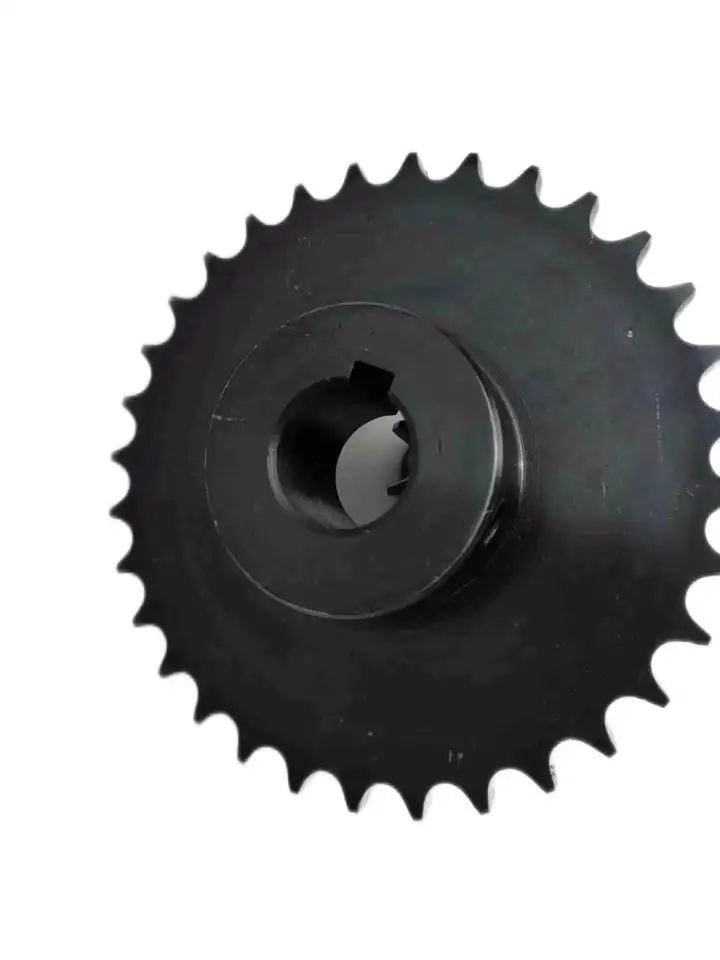
Advantages of Using a wheel sprocket Configuration
Using a wheel sprocket configuration for power transmission offers several advantages over other methods. Here are some key benefits:
1. Efficient Power Transmission:
The wheel sprocket assembly provide a highly efficient method of transmitting power between shafts with minimal energy loss. The teeth of the sprocket mesh with the links of the chain or the teeth of another sprocket, ensuring a positive engagement that reduces slippage and maximizes power transfer.
2. Versatility:
Wheels and sprockets are available in various sizes, configurations, and materials, making them highly versatile components for different applications. They can accommodate a wide range of speed and torque requirements, making them suitable for various mechanical systems.
3. Compact Design:
The compact design of wheel sprocket assemblies allows for space-saving installations in machinery. The concentric arrangement of the components minimizes the overall footprint, making it ideal for applications with limited space.
4. Precise Speed Control:
By selecting sprockets with different numbers of teeth, the gear ratio can be easily adjusted to achieve precise speed control in the driven shaft. This level of control is essential for many applications, such as conveyor systems, where different speeds are required for different processes.
5. High Torque Capacity:
wheel sprocket systems can handle high torque loads, making them suitable for heavy-duty applications. This high torque capacity is especially beneficial in industrial settings where large loads need to be moved or lifted.
6. Smooth and Quiet Operation:
When properly lubricated and maintained, the interaction between the sprocket and the chain or other sprockets results in smooth and quiet operation. This makes wheel sprocket systems preferable in applications where noise reduction is important.
7. Easy Installation and Maintenance:
Installing a wheel sprocket assembly is relatively straightforward, and they require minimal maintenance when used correctly. Periodic lubrication and tension adjustments are typically all that is needed to keep the system running smoothly.
8. Suitable for High-Speed Applications:
wheel sprocket configurations are well-suited for high-speed applications where belts or gears may not be as practical due to limitations in speed capabilities.
In summary, the wheel sprocket configuration offers efficient power transmission, versatility, compactness, precise speed control, high torque capacity, smooth operation, and ease of installation and maintenance. These advantages make it a popular choice in a wide range of mechanical systems and industrial applications.


editor by CX 2023-08-03